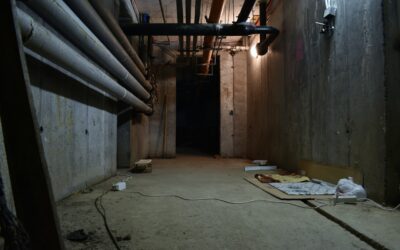
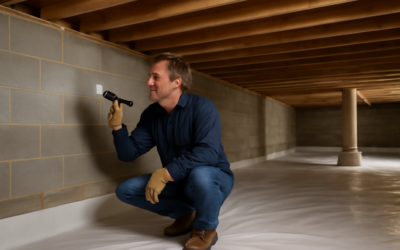
The air beneath your floor may be quietly rotting your house from underneath. Crawl space humidity that climbs above 60 percent creates the perfect conditions for mold, wood rot, musty odors, and pests, and because the space is out of sight, most homeowners never notice until the damage is expensive. The good news is that controlling crawl space moisture is a well-understood problem with reliable fixes ranging from simple to comprehensive. Getting the humidity into the right range protects your framing, your floors, and the air you breathe upstairs.
- What Ideal Crawl Space Humidity Looks Like
- Why the Stack Effect Makes This Matter
- Common Causes of High Crawl Space Humidity
- Warning Signs You Have a Problem
- Proven Fixes for Crawl Space Humidity
- Encapsulation vs. Simple Vapor Barrier
- What It Costs to Fix
- Maintaining a Dry Crawl Space
- Seasonal Patterns You Should Expect
- Insulation and Energy Savings
- Frequently Asked Questions
What Ideal Crawl Space Humidity Looks Like
Aim to keep relative humidity in your crawl space between 30 and 55 percent, with 50 percent as a solid target. Above 60 percent, mold spores begin to colonize wood and insulation. Above 70 percent, wood-decay fungus thrives and structural members start to soften. A cheap hygrometer placed in the crawl space, ideally a wireless model you can read from indoors, tells you exactly where you stand and whether your fixes are working.
Why the Stack Effect Makes This Matter
Here is a fact that surprises many homeowners: up to half of the air you breathe on your main floor comes up from the crawl space. Warm air rises and escapes through the upper part of the house, which pulls air upward from below in a process called the stack effect. If your crawl space is damp and moldy, those spores and odors ride that air current right into your living space. Controlling crawl space humidity is therefore an indoor air-quality issue, not just a structural one.
Common Causes of High Crawl Space Humidity
Moisture gets into a crawl space through several routes, often at the same time:
- Ground evaporation: Bare dirt floors release gallons of water vapor daily as ground moisture evaporates upward.
- Outside vents: Old building codes required foundation vents, but in humid climates warm outdoor air enters, hits cool surfaces, and condenses, making the problem worse.
- Poor drainage: Rainwater pooling against the foundation seeps in through walls and floor.
- Plumbing leaks: A dripping supply line or condensate line adds constant moisture.
- Missing or torn vapor barrier: Without a ground cover, the dirt floor pumps moisture nonstop.
- Uninsulated ductwork: Cold AC ducts sweat and drip onto the ground below.
Warning Signs You Have a Problem
You do not always need to crawl under the house to suspect trouble. Watch for musty smells drifting up through the floors, springy or sagging floorboards, condensation on windows, higher-than-usual energy bills, and increased allergy or asthma symptoms indoors. If you do inspect the crawl space, look for water droplets on the framing, white or black mold on joists, rusted metal, buckled insulation falling from the subfloor, and standing water or damp soil.
Proven Fixes for Crawl Space Humidity
Solutions range from quick wins to full encapsulation. Match the fix to the severity:
- Install a vapor barrier. Cover the dirt floor with 6-mil or thicker polyethylene, overlapping seams and running it up the foundation walls. This alone can dramatically cut ground moisture and is the single highest-value fix.
- Fix drainage and leaks first. Extend downspouts, grade soil away from the foundation, and repair any plumbing drips before addressing air moisture. You cannot dehumidify your way out of a running leak.
- Seal the vents. In most climates, sealing foundation vents and treating the crawl space as a conditioned zone works better than venting to humid outdoor air.
- Add a dehumidifier. A crawl-space-rated dehumidifier holds humidity at your target automatically. Choose one sized for the square footage and with a condensate pump to drain outside.
- Encapsulate fully. The comprehensive fix wraps the entire floor and walls in a heavy 12- to 20-mil liner, seals all penetrations, and adds a dehumidifier, essentially turning the crawl space into a clean, dry, semi-conditioned area.
Encapsulation vs. Simple Vapor Barrier
A basic vapor barrier laid loosely on the ground is a budget fix that helps but does not fully seal the space. Full encapsulation is a permanent, sealed system: thick liner across floor and walls, taped seams, sealed vents, insulated rim joists, and dehumidification. Encapsulation costs more but delivers dry, stable conditions, lower energy bills, and no more mold. If you have chronic moisture, ongoing mold, or plan to stay in the home long-term, encapsulation pays for itself in protected structure and improved air quality.
What It Costs to Fix
Prices depend on crawl space size and the approach:
- DIY vapor barrier: $150 to $600 in materials for a typical crawl space.
- Crawl space dehumidifier: $800 to $2,000 for a quality unit installed.
- Professional vapor barrier and vent sealing: $1,500 to $4,000.
- Full encapsulation: $5,000 to $15,000 depending on size, liner thickness, and drainage work.
- Mold remediation, if needed: $500 to $4,000 before any moisture control begins.
Maintaining a Dry Crawl Space
Even after a fix, check in periodically. Read your hygrometer monthly and confirm humidity stays below 55 percent. Inspect the vapor barrier once or twice a year for tears from pests or foot traffic. Empty or verify the dehumidifier drain, and after heavy storms, look for any new water intrusion. Keep gutters clean and downspouts extended so rainwater never collects against the foundation. A little attention keeps a dry crawl space dry for the long haul.
Seasonal Patterns You Should Expect
Crawl space humidity is not constant; it swings with the seasons, and understanding the pattern helps you diagnose problems. In summer, warm, moisture-laden outdoor air is the main threat, especially in vented crawl spaces where that air hits cool foundation walls and pipes and condenses. This is counterintuitive to many homeowners who assume opening vents in summer helps, when it usually makes things worse. In winter, humidity often drops as cold air holds less moisture, but frozen or saturated ground and interior plumbing leaks can still cause problems. Spring brings snowmelt and rain that raise the water table and push moisture up through the soil. Log your hygrometer readings across a full year, and you will see where your worst months fall, which tells you whether a dehumidifier alone will suffice or whether you need full encapsulation and drainage work.
Insulation and Energy Savings
Moisture control and energy efficiency go hand in hand in a crawl space. When you seal and encapsulate, you also gain the chance to insulate the foundation walls with rigid foam board rather than stuffing fiberglass batts between the floor joists, where they sag, trap moisture, and grow moldy over time. Wall insulation keeps the now-sealed crawl space closer to your home’s indoor temperature, which reduces condensation and can trim heating and cooling bills by several percent. Insulating and sealing crawl space ductwork stops those ducts from sweating and losing conditioned air. The combination of a dry, sealed, insulated crawl space often pays back part of its cost through lower energy bills while protecting the structure above.
Frequently Asked Questions
What is a healthy crawl space humidity level?
Keep relative humidity between 30 and 55 percent, targeting around 50 percent. Above 60 percent, mold grows; above 70 percent, wood rot sets in. A wireless hygrometer lets you monitor the level from inside the house.
Should crawl space vents be open or closed?
In most US climates, sealing the vents and treating the crawl space as a conditioned zone controls humidity better than venting. Open vents let humid outdoor air in, where it condenses on cool surfaces and raises moisture.
Do I need a dehumidifier in an encapsulated crawl space?
Usually yes. Encapsulation seals out most moisture, but a crawl-space-rated dehumidifier holds humidity at your target year-round and handles any residual moisture. Together they keep the space reliably dry.
How much does crawl space encapsulation cost?
Full encapsulation typically costs $5,000 to $15,000 depending on size, liner thickness, and drainage needs. A basic DIY vapor barrier runs $150 to $600, and a professional vapor barrier with vent sealing runs $1,500 to $4,000.
Can high crawl space humidity affect my home’s air?
Yes. Because of the stack effect, up to half the air on your main floor rises from the crawl space. Damp, moldy crawl space air carries spores and musty odors upstairs, worsening indoor air quality and allergies.