
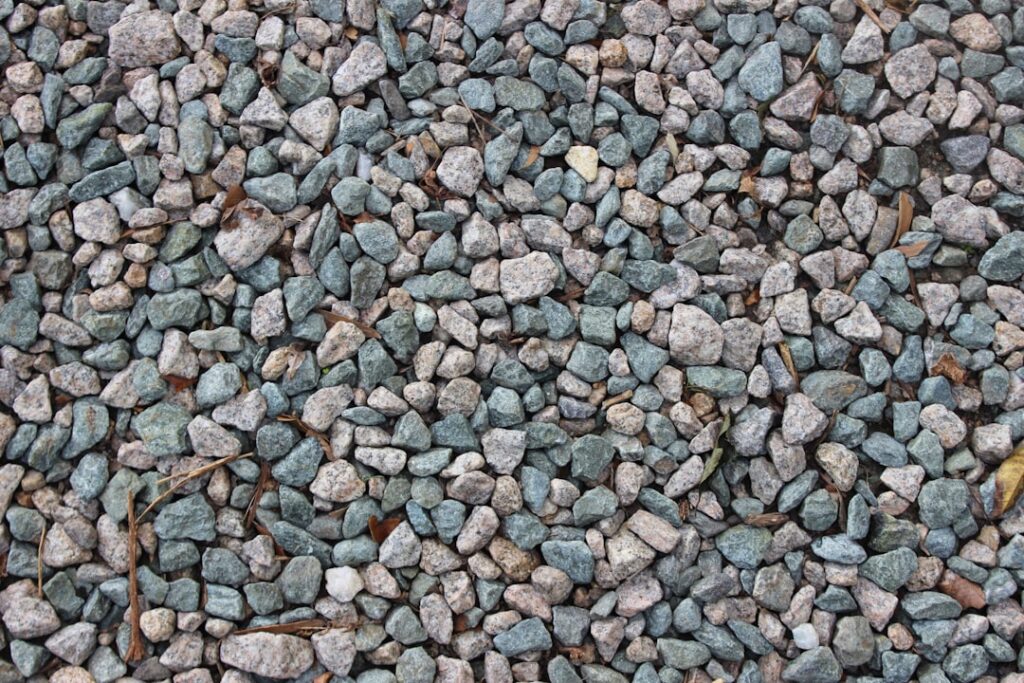
Crushed granite gravel is one of the most versatile and hard-wearing landscaping materials you can put down, used for everything from driveways and walking paths to patios, drainage beds, and decorative ground cover. Made by mechanically crushing quarried granite into angular fragments, it combines the natural beauty of stone with the locking, compacting behavior that makes a stable, long-lasting surface.
Part of our Countertops guide — explore the full guide →
It is also affordable and low-maintenance, which is why landscapers and homeowners alike reach for it so often. Knowing the types and how to install it correctly is what separates a clean, durable surface from a loose, weedy mess.
What Sets Crushed Granite Apart
Unlike smooth river rock, crushed granite has sharp, angular edges from the crushing process. Those edges interlock when compacted, creating a firm surface that resists shifting underfoot or under tires. The material also includes a mix of particle sizes, from larger chips down to fine dust, and that gradation is what allows it to pack tight.
Granite is an extremely hard igneous rock, so the gravel resists weathering, crushing, and breakdown far better than softer stones. It holds its color and structure for years with minimal fuss.
Common Types and Grades
Crushed granite comes in several forms, and the right one depends on your project.
- Decomposed granite (DG): The finest grade, a sandy mix of small particles and dust that compacts into a smooth, natural-looking surface ideal for paths and patios.
- Crushed granite with fines: A blend of angular chips and dust that compacts firmly, excellent for driveways and high-traffic walkways.
- Clean or washed granite: Larger uniform pieces with the fines removed, used for drainage, French drains, and areas where you want loose stone rather than a packed surface.
- Granite chips and decorative gravel: Uniform sized stone in various colors used purely for ornamental ground cover and beds.
Popular Uses Around the Home
Driveways are a classic application, where the angular stone compacts into a stable, well-draining surface at a fraction of the cost of asphalt or concrete. Garden paths and walkways benefit from decomposed granite’s smooth, firm feel, and patios topped with compacted DG offer a relaxed, natural alternative to pavers.
Beyond surfaces, crushed granite excels at drainage, filling French drains and dry creek beds, and serving as a base layer under pavers and slabs. As decorative gravel, it dresses up planting beds, tree rings, and xeriscaped yards while suppressing weeds and conserving moisture.
Installing Crushed Granite Gravel
A surface that lasts starts with proper groundwork.
- Excavate the area to the needed depth, typically a few inches for paths and more for driveways that bear vehicle weight.
- Grade the base for drainage, sloping slightly away from structures.
- Lay landscape fabric over the soil to block weeds and keep the gravel from sinking into the dirt.
- Install edging, such as steel, stone, or composite, to contain the gravel and hold its shape.
- Add the gravel in layers, compacting each layer with a plate compactor and lightly watering the fines to help it bind.
For driveways, a base of coarser road-base material under the finish layer adds strength. Compaction is the step DIYers most often skimp on, and it is the one that determines whether the surface stays firm.
Crushed Granite Versus Other Gravels
It helps to see how crushed granite stacks up against alternatives. Compared with pea gravel, which is smooth and rounded, crushed granite’s angular edges lock together and stay put, while pea gravel tends to scatter and shift underfoot. That makes crushed granite the better choice for driveways and firm paths and pea gravel better for purely decorative, loose applications.
Against limestone gravel, crushed granite is harder and more weather-resistant, holding up longer without breaking down, though limestone’s fines can bind a touch tighter. Crushed granite also resists the dusting and rutting that plague softer stone over time. For a surface that combines durability, drainage, and natural good looks, it is hard to beat across most residential projects.
Color and Appearance Options
Crushed granite is not limited to plain gray. Depending on the quarry, it comes in warm tans and golds, pinkish and reddish hues, salt-and-pepper blends, and darker charcoal tones, letting you match the stone to your home and landscape. Decomposed granite in particular often carries warm earthy colors that blend beautifully into garden settings.
Keep in mind that natural stone color varies between batches and can look different when wet versus dry, so request a sample and view it on site before ordering a large quantity. The finished look also depends on grade: a compacted decomposed-granite path reads smooth and uniform, while larger decorative chips create more visible texture and contrast in planting beds. Choosing color and grade together gives you the appearance you want along with the right performance.
What It Costs
Crushed granite is economical. Bulk material typically runs roughly $30 to $70 per cubic yard, or about $40 to $80 per ton, depending on grade, color, and your region, with delivery added on top. Decorative and specialty-color products cost more than standard gray crushed granite.
For a project, estimate volume by multiplying length by width by depth in feet, then converting to cubic yards. Compared with poured concrete or pavers, crushed granite delivers a finished surface at a small fraction of the price, which is a big part of its appeal.
Maintenance and Longevity
Crushed granite is low-maintenance but not no-maintenance. Foot and vehicle traffic gradually displaces material, so plan to rake the surface level periodically and top-dress with fresh gravel every few years to maintain depth and appearance. Refreshing the fines and re-compacting high-traffic spots keeps a driveway firm.
Sturdy edging prevents migration into lawns and beds, and the landscape fabric beneath keeps weeds in check, though occasional spot-weeding may still be needed. In snowy regions, take care when plowing or shoveling, since metal blades can scoop up loose surface gravel along with the snow. With basic upkeep, crushed granite gravel provides a durable, attractive, and budget-friendly surface that holds up for many years in driveways, paths, and gardens alike.


