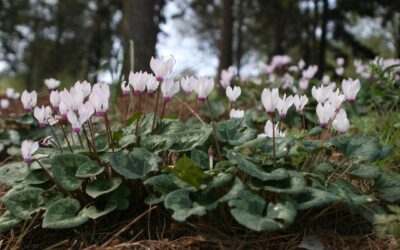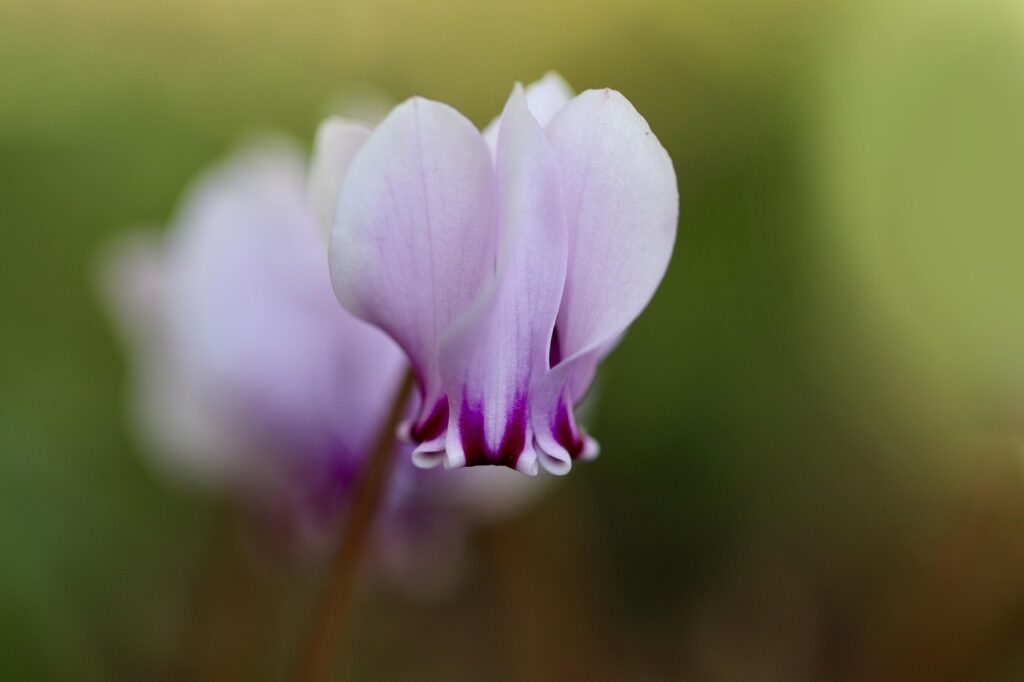
Most cyclamen sold at grocery stores are dead within six weeks because the average heated home runs 70-75 degrees and humidity hovers below 30%. Cyclamen evolved in cool, mountainous regions of Greece and Turkey — give them a window where the temperature drops below 65 at night and they will reward you with months of blooms. Cyclamen care indoor comes down to mimicking those mountain conditions in a corner of your house.
Part of our Windows & Doors guide — explore the full guide →
Once you understand the cool-and-humid rule, the rest is easy. Below is the schedule I follow with mine, including how to nudge them into a summer dormancy and bring them back for a second year of bloom.
The Cool-Spot Rule
Cyclamen thrive at 50-65 degrees Fahrenheit. Above 70, leaves yellow and the flower stems flop. Find the coolest indoor spot you have — usually an unheated entryway, a north-facing windowsill in winter, or a sunroom that runs 5-10 degrees below the rest of the house.
If your home stays at 72+ year-round, cyclamen will struggle no matter how perfect everything else is. In those cases, treat the plant as a 6-8 week seasonal display rather than a long-term houseplant.
Light Requirements
Bright indirect light works best. An east-facing window gives the soft morning sun without afternoon heat. A south-facing window during winter is also fine, but pull the plant back 2-3 feet from the glass during summer, or move it elsewhere entirely.
Watch the leaves. Yellow new growth signals too much direct sun. Stretchy stems with sparse blooms mean too little light. The sweet spot is bright enough to read by without direct rays hitting the leaves for more than 1-2 hours at a time.
Watering — The Most Common Killer
More cyclamen die from improper watering than from any other cause. The corm (the bulb-like base) rots fast if water sits on top of it.
Water from below. Place the pot in a saucer of room-temperature water for 10-15 minutes, then let it drain fully. The soil wicks up exactly what it needs, and the corm stays dry. Top-watering is acceptable only if you carefully aim around the corm and avoid splashing the crown.
- Water when the top 1 inch of soil is dry — usually every 4-7 days during active bloom.
- Use room-temperature water; cold water shocks the roots.
- Let the pot drain fully — never let the corm sit in standing water.
- Reduce frequency if leaves yellow or the corm feels soft.
- Stop watering completely once dormancy begins (more on that below).
Humidity Without a Humidifier
Cyclamen want 50-70% humidity, but spraying the leaves causes spots and disease. The trick is the pebble tray method.
Fill a wide saucer with 1/2 inch of decorative pebbles, add water just below the top of the pebbles, and set the cyclamen pot on top. Evaporation lifts local humidity 10-20% without wetting the foliage. Refill the tray every 2-3 days during dry winter heat.
If you have multiple plants, group them together — combined transpiration creates a small humid microclimate that benefits all of them.
Fertilizing Lightly
Use a half-strength bloom fertilizer (low nitrogen, higher phosphorus and potassium) every 3-4 weeks during active growth. Look for an N-P-K ratio around 5-10-10 or 7-9-5. Espoma Indoor Bloom and Dyna-Gro Bloom both work well.
Skip fertilizer during the summer dormancy and the first 2-3 weeks after you bring the plant out of dormancy — the corm needs to wake up before getting fed.
The Dormancy Cycle
Indoor cyclamen are not annuals. They want a summer rest. Around late spring, leaves yellow and droop. New gardeners usually toss the plant at this stage. Don’t.
- When 75% of leaves yellow, stop fertilizing.
- Let the soil dry out gradually over 2-3 weeks. Cut back to one watering every 10-14 days, then stop entirely.
- Move the pot to a cool, dry, shaded location — basement shelf, garage in mild climates, or back of a closet.
- Leave the corm in dry soil for 8-12 weeks. Do not water at all.
- In late summer, bring the pot back out. Water lightly. New leaves should appear in 2-4 weeks.
Year-two and year-three blooms can be heavier than the first year if the corm gets a real rest. Skipping dormancy gives you a stressed plant that may bloom weakly and rarely.
Repotting and Soil
Repot every 2 years in late summer just as new growth begins. Use a well-draining mix — 60% peat-based potting soil, 30% perlite, 10% coarse sand. African violet mix works as a shortcut.
Plant the corm so the top 1/3 sits above the soil line. Burying the crown invites rot. Choose a pot only 1 inch wider than the corm; cyclamen bloom better when slightly root-bound.
Pests and Common Problems
Indoor cyclamen rarely face serious pests, but a few show up regularly.
- Cyclamen mites — invisible to the naked eye but cause distorted, curled new growth. Discard heavily infected plants; treatment rarely works.
- Aphids — cluster on flower stems. Spray off with lukewarm water or apply diluted neem oil at 1 teaspoon per quart.
- Botrytis (gray mold) — fuzzy gray fungus on damp leaves and flowers. Improve airflow, remove infected tissue, and water from below only.
- Yellow leaves with healthy new growth — natural shedding of older leaves; nothing to worry about.
- All leaves yellowing at once — usually overwatering or excessive heat. Check the corm; if it is mushy, the plant cannot be saved.
Choosing a Healthy Plant at the Store
The best cyclamen care indoor starts before purchase. Pick a plant with:
- Many unopened flower buds nestled below the leaves — these will bloom over the next 6-8 weeks.
- Firm, glossy leaves with clear silvery patterns.
- A firm, pale-tan corm without mushy spots or visible mold.
- Soil that is moist but not soggy.
Avoid plants with all open flowers and no buds left — that one is at the end of its blooming run, not the beginning. Pick the right plant, give it cool air, indirect light, and bottom watering, and a single $10 cyclamen can give you blooms every winter for 5+ years.