Green has quietly taken over kitchen design, and the deeper, moodier end of the spectrum is where the real drama lives. A dark green backsplash brings depth, warmth, and a grounded, natural quality that plain white tile simply cannot match, and it works beautifully as either a bold statement or a rich neutral. From glossy emerald zellige to matte forest-green subway tile, the options let you dial the look from glamorous to earthy. This guide covers the shades, tile styles, and cabinet and metal pairings that make a dark green backsplash sing rather than overwhelm.
Part of our Kitchen Remodeling guide — explore the full guide →
Why Choose Dark Green?
Dark green occupies a rare middle ground: it is bold enough to give a kitchen personality, yet it behaves almost like a neutral because it draws from nature and pairs with so many other colors. It reads as sophisticated and timeless rather than trendy, borrowing the same enduring appeal that has kept navy and deep charcoal popular. Green also brings a calming, organic feeling into the busiest room in the house, and its depth hides the small splatters and water spots that show instantly on white tile. For homeowners who want their kitchen to feel warm, characterful, and a little unexpected, dark green delivers.
Shades of Dark Green to Consider
Not all dark greens read the same way, and the undertone changes the whole mood. Choosing the right shade is the first real decision.
- Emerald green: Vivid, jewel-toned, and slightly blue, emerald feels glamorous and luxurious, especially in a glossy finish that catches the light.
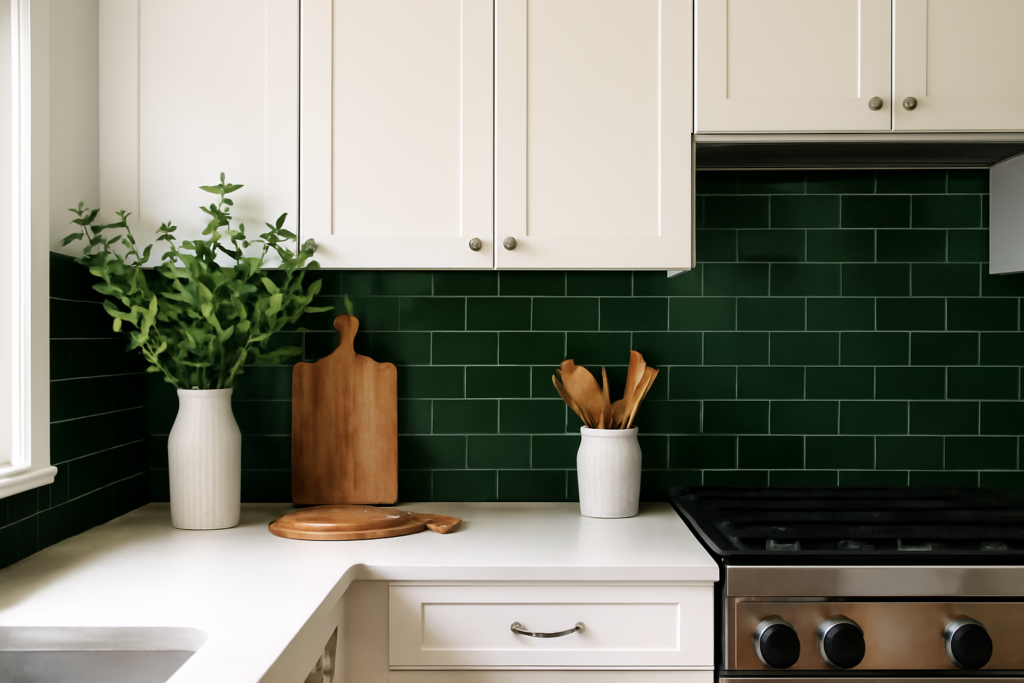
- Forest green: Deep and slightly cooler, forest green is the classic, versatile choice that feels rich without being flashy.
- Hunter green: Dark and traditional with a timeless, almost heritage quality that suits classic and English-style kitchens.
- Olive and sage-leaning darks: Warmer, earthier greens with a gray or yellow undertone that lean organic and modern-rustic.
Tile Styles That Work
The tile shape and finish matter as much as the color. Glossy green subway tile is the most approachable and budget-friendly, reflecting light so the dark color does not feel heavy. Zellige, the handmade Moroccan-style tile, is a standout in emerald or forest green, because its subtle color variation and uneven glaze give the wall a living, artisanal depth that flat tile cannot replicate. For a more modern look, large-format green porcelain or a green slab backsplash reads sleek and minimal. Textured tiles, like fluted or fish-scale shapes, add dimension and are especially striking in a deep green that plays with light and shadow.
Pairing with Cabinets
The cabinet color decides whether your dark green backsplash is the star or a supporting player. Against white or cream cabinets, a dark green backsplash pops as a fresh, high-contrast accent that keeps the kitchen bright. With natural wood cabinets, especially warm oak or walnut, green feels organic and cozy, a pairing that leans into the natural-materials trend. Paired with matching or tonal green cabinets, the backsplash creates an immersive, saturated, monochromatic kitchen that feels intentional and enveloping. Dark green even works with black or charcoal cabinets for a dramatic, moody scheme, as long as you bring in warm metals or lighting to keep it from feeling cave-like.
Choosing the Right Metals and Hardware
Metal finishes are where a dark green backsplash truly comes to life, and warm metals are the natural partners. Brass and brushed gold against deep green is a classic, luxurious combination that echoes forest-and-brass palettes found in high-end design. Copper brings a warm, earthy glow that suits olive and forest greens. For a cooler, more modern take, matte black hardware and fixtures give crisp contrast, while polished nickel or chrome keeps things clean and contemporary. Pick your metal early and carry it through the faucet, cabinet pulls, and light fixtures so the whole kitchen feels coordinated around the green.
Countertops and Grout
The counter and grout round out the look. White or light quartz countertops keep a dark green backsplash from feeling too heavy and provide a crisp, bright contrast. Warm-veined marble or marble-look quartz, especially with gold or beige veining, pairs beautifully and reinforces a warm, luxurious palette. Butcher block and wood counters lean into the earthy, natural direction. For grout, a tone-on-tone green or a soft gray keeps the focus on the tile, while a contrasting white grout with green subway tile creates a graphic, crisp grid; just know that white grout in a busy kitchen shows dirt faster and needs sealing.
Making It Work in Your Kitchen
Dark colors can shrink a small space, so lighting matters more than usual with a deep green backsplash. Add under-cabinet lighting to keep the counter workspace bright, and lean toward a glossy or reflective tile finish in a small or low-light kitchen so the green bounces light rather than absorbing it. In a large, sunny kitchen you have more freedom to use matte finishes and go fully saturated. Bring in a few lighter, natural elements, like wood open shelving, greenery, or brass accents, to balance the depth and keep the room feeling warm and inviting rather than dark.
Cost and Installation Notes
A dark green backsplash need not be expensive, and cost depends mostly on the tile you choose. Glossy green ceramic subway tile is the budget-friendly workhorse, often landing between $6 and $15 per square foot, and it covers an average 30-square-foot kitchen backsplash for a modest material outlay. Handmade zellige and specialty textured tiles cost more, frequently $20 to $40 per square foot, because of their artisanal production and the extra care they require to set. Green slab or large-format porcelain sits at the higher end but installs quickly with fewer grout lines.
Installation follows the same steps as any tile backsplash, with one green-specific caution: darker glazes can show thin-set shadowing through the tile if the mortar is applied unevenly, so use a white thin-set and a consistent trowel technique. Zellige in particular has natural color and thickness variation, which is part of its charm but means you should dry-lay it, blend tiles from several boxes, and expect a more organic, less uniform grid. Whether you hire a tile setter or do it yourself, order about 10 percent extra tile to cover cuts and breakage, and buy it all in one lot so the dye and glaze match across the whole wall.
Final Thoughts
A dark green backsplash is one of the most rewarding ways to give a kitchen genuine character while staying within a palette that feels timeless rather than faddish. Choose a shade whose undertone matches the mood you want, from glamorous emerald to earthy olive, pick a tile style and finish suited to your light levels, and pair it with warm brass or clean black hardware and a light countertop to keep the balance. Done thoughtfully, deep green reads as rich, calming, and sophisticated, and it is the kind of choice you will still love long after brighter trends have come and gone.