Dark floors photograph beautifully and sell magazines, but every flooring installer in the country has scraped finish off a vacuumed-once-a-week espresso floor that aged a customer ten years. The visual payoff of dark hardwoods is real, the lifestyle commitment is real too, and matching the wrong species or finish to the wrong household ends in resentment. This guide breaks down the species that actually go dark naturally, the stains that hold up, and what to expect from each in terms of pricing, hardness, and daily care.
- Naturally Dark Versus Stained
- Species Worth Considering
- How Light, Dust, and Hair Behave on Dark Floors
- Engineered Versus Solid for Dark Looks
- Realistic Installation Costs
- Finishes That Hold Up
- Furniture, Rugs, and Color Coordination
- When Dark Is the Wrong Call
- Acclimation and Subfloor Prep
- Final Decision
Naturally Dark Versus Stained
There are two paths to a dark floor, and they age very differently. Naturally dark species such as American walnut, Brazilian walnut, and wenge carry the color in the wood fibers themselves. Scratch them and you reveal more dark wood. Stained floors, most often white oak or red oak finished with a dark coffee or ebony, only carry color in the top 1 to 2 millimeters. Scratch them and you reveal raw blonde wood underneath, which is why a single dog-claw line on a stained floor can look like a chalk mark.
If you have pets or kids, lean toward naturally dark species or accept that touch-ups will be part of life.
Species Worth Considering
Here is how the major dark options compare across hardness, color, and price.
- American black walnut: Janka 1010, $9 to $14 per sq ft material. Chocolate brown with purple undertones. Lightens slightly with UV exposure, the opposite of most species.
- Brazilian walnut (ipe, jatoba): Janka 3,684 to 3,684, $11 to $16 per sq ft. Deep reddish-brown, almost bulletproof, dulls cutting tools fast during install.
- Wenge: Janka 1,630, $15 to $22 per sq ft. Near-black with chocolate streaks. Dust is a respiratory irritant; insist on HEPA-filtered sanding.
- Smoked or fumed white oak: Janka 1,360, $8 to $13 per sq ft. Ammonia-treated for through-body darkening. Holds color far better than surface stain.
- Stained white oak (Bona Espresso or DuraSeal Ebony): Janka 1,360, $6 to $10 per sq ft. Most affordable dark look but susceptible to scratch reveal.
How Light, Dust, and Hair Behave on Dark Floors
Three realities surprise homeowners after install. First, every pet hair and dust bunny becomes visible from across the room, even in dim light. Plan on vacuuming twice a week minimum. Second, north-facing rooms with dark floors can read cave-like in winter, so add layered lighting at three heights before you commit. Third, footprints from skin oils show up within hours on satin or matte finishes.
Pick a low-sheen UV-cured aluminum oxide finish like Mohawk’s RevWood or Bruce’s Liquid Armor to hide oil prints. Glossy finishes amplify every smudge.
Engineered Versus Solid for Dark Looks
Engineered dark hardwood from manufacturers like Mirage, Lauzon, and DuChateau gives you a thicker wear layer over a multi-ply plywood core, typically 4-mm sawn-face top with 7-ply Baltic birch. That stability matters in basements, over radiant heat, and in climates that swing humidity 30 percent between seasons. Solid 3/4-inch walnut moves more, cups in damp basements, and gaps in dry winters.
For a primary level with hydronic radiant heat, engineered is the only safe call. Solid walnut over radiant voids most manufacturer warranties.
Realistic Installation Costs
Across most US markets in 2026, expect these installed totals.
- Stained 3/4-inch site-finished white oak: $11 to $16 per sq ft installed.
- Prefinished engineered walnut, 5-inch plank: $13 to $19 per sq ft installed.
- Wide-plank smoked white oak (8 to 10 inches): $18 to $26 per sq ft installed.
- Solid Brazilian walnut with stainless cleats: $19 to $28 per sq ft installed because of fastener and tooling wear.
Subfloor prep, demolition, and trim add $2 to $5 per sq ft on top. Sand-and-finish to refresh existing oak to a dark stain runs $4.50 to $7 per sq ft.
Finishes That Hold Up
Skip oil-based polyurethane on dark floors unless you want amber bloom over the next 24 months. Waterborne finishes like Bona Traffic HD, Loba 2K Supra AT, and Pallmann Magic Oil 2K stay clear, dry in two hours per coat, and let the wood tone read true. For naturally dark walnut, a hardwax oil finish from Rubio Monocoat or Osmo Polyx-Oil deepens the grain and spot-repairs without recoating the entire floor.
Three coats minimum on commercial-grade waterborne, four on a household with dogs.
Furniture, Rugs, and Color Coordination
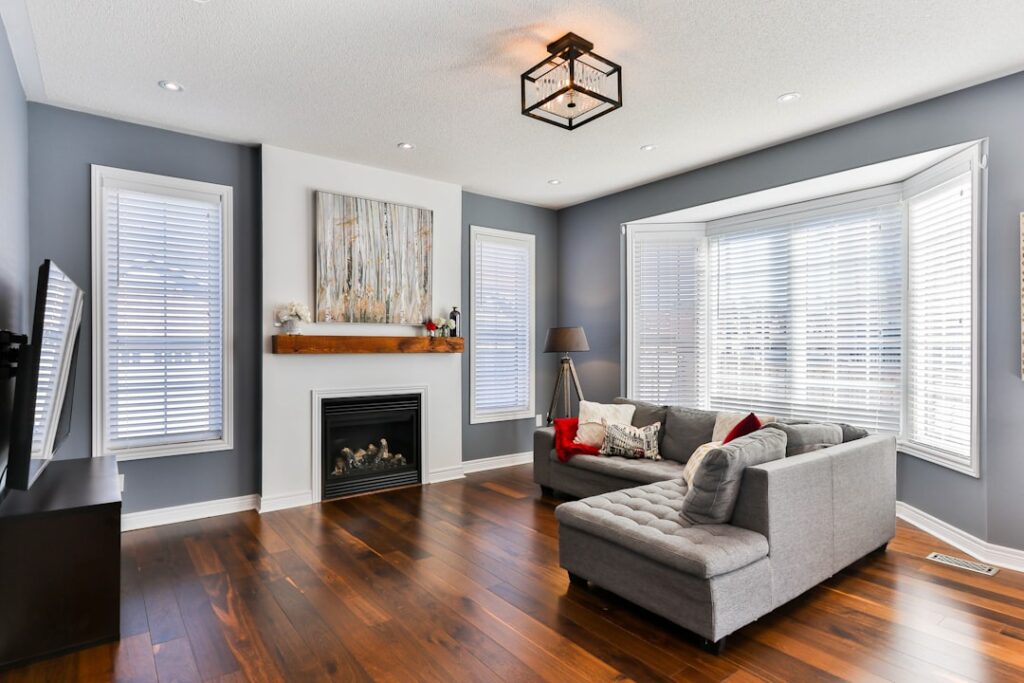
Dark floors absorb light, so heavy dark furniture on top reads as a black hole. Lighten the ceiling, walls, or upholstery to keep contrast. A 9-by-12 wool rug under the dining table or sofa protects the highest-wear lanes and gives the eye a place to rest.
Avoid latex-backed mats on dark hardwood. They trap moisture and can leach a yellow ring into the finish within six months.
When Dark Is the Wrong Call
Two situations make dark a regret. Households with three or more shedding pets, where vacuuming twice weekly is unrealistic, and homes in dry climates without humidification, where every gap between planks shows up as a bright line against the dark color. In both cases, a mid-tone natural oak or hickory will photograph nearly as well and live far easier.
Acclimation and Subfloor Prep
Skip acclimation and the floor will gap or cup within six months. Stack the boxes in the installation room for 5 to 10 days before install, opened and stickered so air can move between planks. Run a humidifier or dehumidifier to bring the room to 35 to 55 percent relative humidity, the range most US manufacturers warrant. Test subfloor moisture with a Tramex Concrete Moisture Encounter or a pin-style Lignomat, accepting up to 4 percent for plywood and 75 percent relative humidity for concrete.
Flatten the subfloor to within 3/16 inch over 10 feet using floor leveler or belt sander. Dark, wide planks magnify every dip.
Final Decision
Done with eyes open, dark hardwoods deliver a depth and sophistication that no other floor matches. Pick the species, finish, and household honestly, and the floor still looks dramatic 20 years in.
Prefer to explore on your own?
See how new flooring looks in your actual room in seconds — free, no signup.
Try the free Floor Studio →