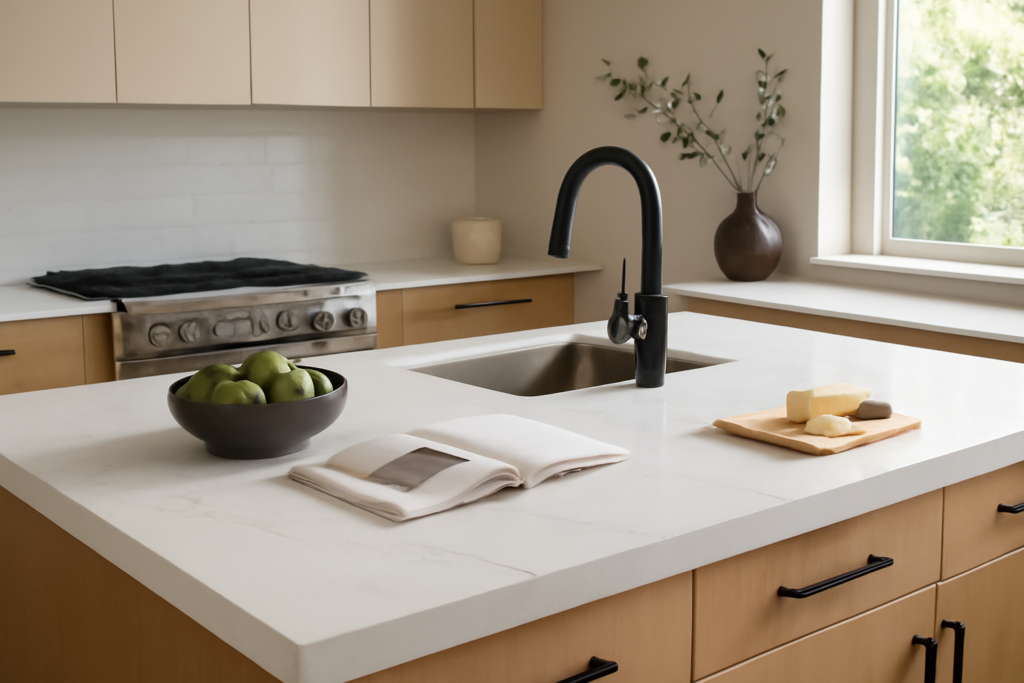
If you want a countertop that shrugs off hot pans, sharp knives, and red wine without flinching, the ultracompact surface category deserves a serious look. A Dekton countertop, made by Cosentino, is engineered from a blend of materials used in glass, porcelain, and quartz, then compressed and fired into one of the toughest surfaces you can put in a kitchen. This guide covers what Dekton is, how it performs, what it costs, and where it makes sense.
Part of our Countertops guide — explore the full guide →
What Is Dekton
Dekton is a brand of ultracompact surface produced by Cosentino, the Spanish company also known for Silestone quartz. It is made through a process the company calls particle sintering technology, which uses intense heat and pressure to fuse mineral particles into a dense, nonporous slab. The result is a material with very low porosity and high resistance to many common forms of kitchen damage.
Slabs come in large formats and a range of thicknesses, and the surface can be used indoors and outdoors, on countertops, floors, facades, and even as flooring. Its consistency throughout the slab is part of what makes it durable.
Key Benefits
Dekton’s appeal comes from a stack of performance features that few surfaces match all at once.
- Heat resistant: It tolerates direct contact with hot cookware far better than quartz, which can scorch or discolor.
- Scratch resistant: The hard surface holds up well to knives and abrasion, though a cutting board is still smart.
- Stain resistant: Its nonporous nature means coffee, wine, and oil wipe away without soaking in.
- UV stable: Colors resist fading in sunlight, which makes it suitable for outdoor kitchens.
- No sealing required: Unlike granite and marble, it never needs periodic sealing.
Drawbacks to Consider
No surface is perfect, and Dekton has trade-offs worth weighing. The biggest is brittleness at edges and during fabrication. The same hardness that resists scratches makes the material prone to chipping under sharp impact, so fabricators need diamond tooling and care, which can raise labor costs.
It is also a premium product, so the price sits at the higher end of the countertop market. Some homeowners find the matte and concrete-look finishes show fingerprints or water spots more than expected, though a quick wipe handles it.
Dekton vs. Quartz
Both are engineered surfaces, but they behave differently. Quartz is bound with resin, which makes it more forgiving to fabricate and softer underfoot, but that same resin can scorch under a hot pan and is not UV stable for outdoor use. Dekton has no resin, so it handles heat and sunlight far better, but it is harder to cut and can chip.
For an indoor kitchen where you want a warm look and rarely set hot pans directly on the counter, quartz is a great value. For a heavy-use kitchen, an outdoor setup, or a home where heat and UV exposure are real concerns, Dekton’s durability earns its premium.
Cost Expectations
Dekton is a premium surface, and pricing reflects that. Installed costs commonly fall in the range of $60 to $120 or more per square foot, depending on the color, thickness, slab availability, and the complexity of your layout. Edge details, cutouts, and waterfall ends add to the total.
For a typical kitchen with 40 to 50 square feet of counter, that puts most projects in the several-thousand-dollar range. Always get a firm quote from a certified fabricator, since labor for ultracompact material runs higher than for standard stone.
Care and Maintenance
Daily care could not be simpler. Wipe the surface with warm water and a mild soap or a pH-neutral cleaner. Because it is nonporous, you never need to seal it, and most stains lift with a soft cloth. For stubborn residue, a non-abrasive cleaner works without harming the finish.
Despite the scratch resistance, use a cutting board to protect your knives and avoid dropping heavy objects on the edges, where chipping is most likely. With minimal effort, a Dekton counter keeps its look for many years.
Colors, Finishes, and Looks
Dekton comes in a broad palette, from solid neutrals to convincing marble and concrete looks. Finishes range from polished to matte to textured, each affecting both appearance and feel. Marble-look designs let you get the veined elegance of natural stone without the staining and etching marble suffers, which is a major draw for kitchens.
Because the material is consistent throughout the slab in many designs, edges and cutouts look clean and uniform. The large slab format also means fewer visible seams on big runs and islands, which gives the counter a seamless, high-end appearance.
Indoor and Outdoor Versatility
One of Dekton’s strongest selling points is that the same material works indoors and out. Its UV stability means colors hold up in direct sunlight, so it is a natural fit for outdoor kitchens, grilling stations, and poolside bars where quartz would fade and discolor. It also resists freeze-thaw cycles better than many surfaces.
Inside, the same heat and stain resistance that suit an outdoor kitchen make it excellent around a busy cooktop. Some homeowners use it for both their indoor counters and a matching outdoor setup for a cohesive look across the home.
Is Dekton Right for You
Choose Dekton if you cook hard, want an outdoor-capable surface, or value a maintenance-free counter that handles heat and UV without complaint. Look elsewhere if your budget is tight or you prefer a softer, warmer surface. Either way, work with an experienced fabricator, because installation quality makes or breaks this material.
Ask any fabricator you consider about their experience specifically with ultracompact surfaces. Cutting and installing Dekton requires the right diamond tooling and technique, and a shop that mostly handles granite or quartz may struggle. A skilled installer minimizes the chipping risk and delivers crisp edges, which is where much of the material’s value shows.
Final Thoughts
A Dekton countertop is one of the most durable surfaces on the market, combining heat, scratch, stain, and UV resistance with zero sealing. The premium price and the need for skilled fabrication are the main trade-offs. For homeowners who want a counter built to take real abuse indoors or out, it is hard to beat.