Pairing quartz countertops and backsplash in the same material is one of the cleanest looks in modern kitchen design, and it solves a maintenance headache at the same time. When the counter runs up the wall in a continuous slab, you eliminate grout lines entirely, no more scrubbing stained grout behind the stove or worrying about water seeping into seams. Quartz brings consistent color, serious durability, and near-zero upkeep to both surfaces. Whether you want a full-height slab backsplash or a simple quartz strip behind the counter, knowing how the material behaves and what it costs will help you plan it right.
Part of our Countertops guide — explore the full guide →
Why Match the Counter and Backsplash
Running quartz from the countertop up the wall creates a seamless, monolithic surface that looks high-end and feels intentional. Beyond the aesthetics, it is genuinely practical. There is no grout to clean, no tile to reseal, and no joint where grease and water can collect. Cleanup behind the stove becomes a single wipe of a smooth surface.
Visually, a matching backsplash makes a kitchen feel calm and cohesive, especially with a dramatic veined quartz where the pattern flows up the wall uninterrupted. It is the look you see in luxury kitchens, and quartz makes it achievable and durable.
Backsplash Options With Quartz Counters
You have a few ways to handle the backsplash when your counters are quartz.
Full-Height Slab Backsplash
The quartz runs from the counter all the way to the upper cabinets or higher. It is the most dramatic, seamless option, and the easiest to clean. It uses more material, so it costs the most.
Standard 4-Inch Quartz Backsplash
A short quartz strip, typically 4 inches tall, sits behind the counter. It is affordable, ties the look together, and protects the wall from splashes without the cost of a full slab.
Quartz Counter With Tile Backsplash
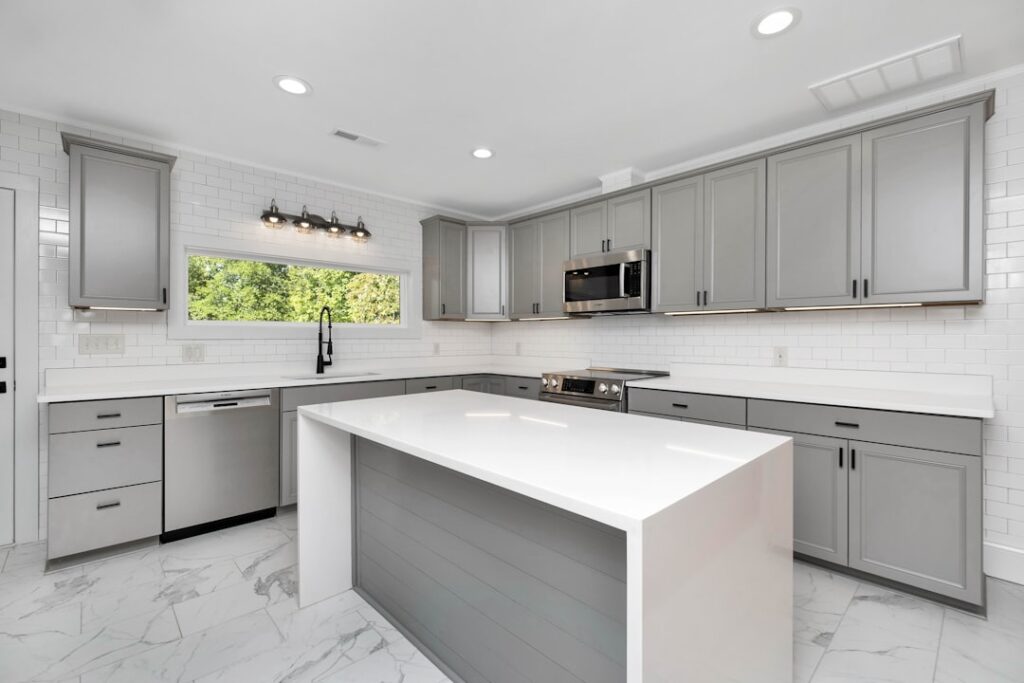
Many homeowners pair quartz counters with a tile backsplash for contrast and texture. This brings back grout but lets you add color, pattern, and personality the slab look cannot.
What Quartz Actually Is
Quartz countertops are engineered stone, made of roughly 90 percent ground natural quartz combined with resins and pigments. That manufacturing is why quartz offers consistent color and pattern from slab to slab, unlike natural granite or marble, which vary. The resin binder makes the surface non-porous, which is the source of most of quartz’s practical advantages.
Because it is non-porous, quartz does not need sealing, resists staining, and does not harbor bacteria the way a porous unsealed stone can. That is a big part of why it has overtaken granite as the most popular countertop material in many kitchens.
Pros and Cons
Quartz earns its popularity, but it is not perfect for every situation.
- Pros: Non-porous and stain-resistant, never needs sealing, consistent color, durable and scratch-resistant, huge range of colors and patterns including convincing marble looks.
- Cons: Less heat-resistant than granite, the resin can scorch or discolor from a hot pan, so always use trivets; can fade or yellow under prolonged direct sunlight, making it less ideal for sun-drenched outdoor use; and premium slabs are not cheap.
For an indoor kitchen, the cons are easily managed with trivets and a little care. The maintenance savings over a lifetime are substantial.
Cost Expectations
Quartz pricing depends on the brand, color, and complexity of the job. As a general guide, expect roughly $50 to $120 per square foot installed for the countertops. A full-height slab backsplash adds significant material, so budget accordingly; it can add several hundred to a couple of thousand dollars depending on the wall area. A standard 4-inch quartz backsplash is far cheaper, often a modest add-on to the counter price. Get measured quotes from local fabricators, since labor, seam work, and edge profiles all affect the final number.
Installation Notes
Quartz is heavy and requires professional fabrication and installation. The slabs are templated to your exact kitchen, cut, and edge-finished in a shop, then set on site. A full-height backsplash demands precise measurement, since the wall must be reasonably flat and the cutouts for outlets exact. This is not a DIY material; the weight, the precision, and the cost of a slab all argue for an experienced installer. Plan for a template-to-install timeline of a couple of weeks in most markets.
Care and Maintenance
Daily care could not be simpler. Wipe quartz with warm water and mild soap or a gentle pH-neutral cleaner. Because it is non-porous, you never seal it. Avoid abrasive scrubbers and harsh chemicals like bleach or strong degreasers over time, which can dull the finish. The two rules to remember: always use trivets or hot pads under hot cookware to protect the resin, and use a cutting board rather than knifing directly on the surface. Follow those and a quartz counter and backsplash will look new for many years.
Popular Quartz Looks for Counters and Backsplash
The huge range of quartz patterns is part of the appeal, and the right choice depends on the statement you want the kitchen to make. Marble-look quartz, with soft gray veining on a white or cream base, is the most popular by far; run up the wall as a full-height splash, the veining flows continuously for a luxurious, organic effect. Solid and lightly speckled quartz in white, gray, or black gives a clean, modern, low-fuss look that suits contemporary kitchens.
For a bolder kitchen, dramatic veined quartz with heavy movement turns the backsplash into a piece of art behind the range. Concrete-look and warm-toned quartz have also grown popular for industrial and transitional designs. Whatever the pattern, because quartz color is engineered and consistent, the counter and a slab backsplash from the same run will match precisely, which is something natural stone cannot always promise.
Final Thoughts
Quartz countertops and backsplash together give you a seamless, low-maintenance, durable kitchen surface that wipes clean in seconds and never needs sealing. Decide between a dramatic full-height slab, a budget-friendly short splash, or a contrasting tile, plan for professional installation, and protect the surface from direct heat. Do that, and you will have one of the most practical and good-looking kitchen upgrades available.