Choosing the right quartz countertop thickness is a decision that affects the look, cost, durability, and installation of your kitchen or bathroom surface, yet it often gets overlooked until the fabricator asks. The two standard thicknesses each carry trade-offs in appearance and price, and there are clever ways to get a thick look without paying for solid slabs. This guide explains the common thickness options, how they compare, and how to pick the one that fits your design and budget.
Part of our Countertops guide — explore the full guide →
- The Standard Quartz Thickness Options
- 2 cm Versus 3 cm: The Core Comparison
- Why 3 cm Dominates Kitchens
- When 2 cm Makes Sense
- Creating a Thick Look With Edge Buildup
- How Thickness Affects Cost
- Thickness and Edge Profile Options
- Installation and Support Considerations
- Which Thickness Should You Choose?
- How Thickness Affects Seams and Overhangs
- Matching Thickness to Your Backsplash and Cabinets
- Final Thoughts
The Standard Quartz Thickness Options
Quartz slabs are manufactured in a few standard thicknesses, measured in centimeters:
- 2 cm (about 3/4 inch) — a thinner, more economical slab common in bathrooms and budget kitchens.
- 3 cm (about 1 1/4 inch) — the most popular kitchen thickness, prized for its substantial look and strength.
- 1.2 cm (about 1/2 inch) — a thin option used mainly for vertical applications, waterfall accents, or where weight is a concern.
For kitchens, the real choice comes down to 2 cm versus 3 cm, and understanding the differences helps you decide.
2 cm Versus 3 cm: The Core Comparison
These two thicknesses dominate the market, and each has clear strengths:
- 3 cm — thicker, stronger, and more resistant to cracking; it can often span cabinets and small overhangs without plywood support and delivers a bold, high-end look.
- 2 cm — lighter and less expensive per square foot, but usually requires a plywood substrate for support and a built-up edge to look thick.
In North America, 3 cm has become the default for kitchen countertops because of its strength and premium appearance, while 2 cm remains common for bathroom vanities and commercial jobs where cost and weight matter more.
Why 3 cm Dominates Kitchens
The 3 cm slab has become the American kitchen standard for several practical reasons. Its extra thickness makes it strong enough to handle the daily abuse of a kitchen, including leaning, impacts, and unsupported overhangs at breakfast bars. It can typically be installed without a plywood subtop, giving a clean look at the edge. And the solid 1 1/4-inch profile reads as luxurious and substantial, matching current design preferences. For most homeowners renovating a kitchen, 3 cm is the safe, popular choice.
When 2 cm Makes Sense
Despite 3 cm’s popularity, 2 cm has its place. It is a smart choice when:
- Budget is tight — 2 cm costs less per square foot as a material.
- Weight is a concern — thinner slabs are lighter, easier to handle, and gentler on cabinets or upper installations.
- You want a sleek, minimalist edge — some modern designs favor the thin profile of 2 cm.
- Bathroom vanities — 2 cm is more than adequate for the lighter demands of a bathroom.
Keep in mind that 2 cm usually needs a plywood support layer and often a laminated edge to appear thicker, which can offset some of the material savings.
Creating a Thick Look With Edge Buildup
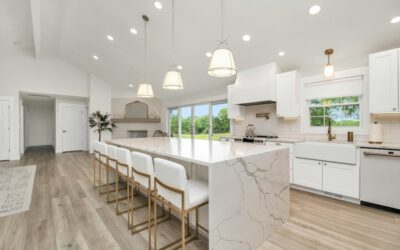
One of the most useful things to understand is the built-up or laminated edge. Fabricators can take a 2 cm slab and glue a strip of the same material to the underside of the edge, creating a thicker visible profile, commonly a “mitered” edge that can look like a 4 cm or even a chunky 6 cm countertop. This lets you achieve a dramatic, thick edge without paying for a fully solid slab of that thickness. Even 3 cm tops are often mitered to create bold waterfall edges and oversized profiles. The trade-off is added fabrication labor and cost per linear foot.
How Thickness Affects Cost
Thickness is a meaningful cost driver, but the picture is nuanced:
- 3 cm material costs more per square foot than 2 cm, often 10 to 25 percent more.
- 2 cm installations add the cost of a plywood substrate and, usually, a built-up edge, narrowing the gap.
- Mitered and laminated edges add labor cost per linear foot regardless of slab thickness.
When comparing quotes, look at the total installed price rather than just the slab price, since the support and edge work can change the math significantly between 2 cm and 3 cm.
Thickness and Edge Profile Options
Your thickness choice interacts with the edge profiles available. A 3 cm slab offers the most flexibility for detailed edges like ogee, bullnose, and beveled profiles because there is more material to shape. A 2 cm slab is limited to simpler edges unless it is built up. Popular edge profiles include:
- Eased or straight edge — a clean, modern square edge, popular on 3 cm.
- Beveled edge — an angled cut for a subtle detail.
- Bullnose — a fully rounded edge, softer and traditional.
- Mitered waterfall — a dramatic thick edge or a side panel running to the floor.
Installation and Support Considerations
Thickness affects how the countertop is supported. A 3 cm slab is stiff enough to bridge standard cabinet spans and modest overhangs on its own, though overhangs beyond about 10 to 12 inches still need support brackets or corbels. A 2 cm slab almost always sits on a plywood subtop for rigidity and to prevent flexing over dishwashers and open spans. Regardless of thickness, any overhang for seating must be properly supported to prevent cracking, and cutouts for sinks and cooktops must be reinforced. A good fabricator will spec the support based on your layout.
Which Thickness Should You Choose?
For most kitchen renovations, 3 cm is the recommended default: it looks substantial, resists damage, simplifies installation, and matches buyer expectations at resale. Choose 2 cm when budget or weight is the priority, or when a sleek thin profile suits your design, and plan for a plywood subtop and possibly a built-up edge. For bathroom vanities, 2 cm is perfectly adequate and cost-effective. If you love a bold, chunky edge, either thickness can deliver it through mitering, so let your edge preference and budget guide the final call.
How Thickness Affects Seams and Overhangs
Thickness plays a quiet but important role in how seams and overhangs are handled. Thicker 3 cm slabs provide more material at a seam, which fabricators can glue and support more robustly, often resulting in a stronger, less noticeable joint. For breakfast bars and peninsulas, a 3 cm slab can safely cantilever roughly 10 to 12 inches without extra support, while anything beyond that, and virtually any overhang on a 2 cm top, requires steel support brackets or corbels hidden beneath the counter to prevent cracking. Around sink and cooktop cutouts, thicker material also resists the stress concentrations that can start a crack. If your design includes a large seating overhang or an undermount sink, discussing thickness and support with your fabricator early ensures the finished counter is both beautiful and structurally sound.
Matching Thickness to Your Backsplash and Cabinets
The visual proportion of your countertop thickness should complement the rest of the kitchen. A bold 3 cm or built-up mitered edge pairs well with substantial shaker cabinets, farmhouse styling, and a full-height quartz backsplash, reinforcing a solid, high-end feel. A slim 2 cm profile suits minimalist, contemporary kitchens with flat-panel cabinets and thin hardware, where a delicate edge reads as sleek and modern. Consider how the counter edge will sit against the cabinet doors and any waterfall panels, since a mismatched proportion can look off even when the material is beautiful. If you are also selecting a backsplash, a thicker counter edge tends to anchor a busy backsplash, while a thin edge lets a dramatic backsplash take center stage. Thinking about these proportions together produces a more cohesive, deliberate design.
Final Thoughts
Quartz countertop thickness comes down mainly to the choice between 2 cm and 3 cm, and understanding the trade-offs lets you make a confident decision. The 3 cm slab is the popular kitchen standard for its strength, clean edge, and premium look, while 2 cm offers savings and a lighter, sleeker option that pairs well with a plywood subtop and a built-up edge. Whichever you choose, remember that mitered edges can create any thick profile you want, and always evaluate the total installed cost rather than the slab price alone. Match the thickness to your room, your design, and your budget, and your quartz counters will look and perform beautifully for decades.