Homeowners spend weeks choosing a quartz color, then decide the edge in five minutes at the fabricator — a mistake, because the edge profile shapes both the look and the final price more than most people realize. Quartz countertop edge profiles range from simple, included eased edges to dramatic mitered waterfalls that add hundreds or thousands to a job. Knowing the options ahead of time helps you match the edge to your kitchen’s style and budget rather than defaulting to whatever the shop suggests.
Part of our Countertops guide — explore the full guide →
- Why the Edge Profile Matters
- Standard (Included) Edge Profiles
- Rounded Edge Profiles
- Decorative and Premium Edge Profiles
- Mitered Edges for a Thick Look
- How Edge Choice Affects Cost
- Matching Edge to Style
- Practical Tips Before You Decide
- Edge Thickness Options
- Coordinating Edges Throughout the Home
- Final Thoughts
Why the Edge Profile Matters
The edge is where your countertop meets the eye and the hand. It sets the design tone — a sharp square edge reads modern, while a rounded bullnose feels traditional. It also affects function: softer edges are gentler on hip bumps and easier to wipe clean, while intricate profiles can trap crumbs. And because more complex edges require more fabrication labor, the profile directly influences your total cost.
Standard (Included) Edge Profiles
Most fabricators include one or two basic edges in the base price. These are clean, versatile, and popular for good reason.
Eased Edge
The most common choice, an eased edge is essentially a square edge with the sharp corner slightly softened. It looks crisp and contemporary, suits nearly any kitchen, and is almost always included at no extra charge.
Beveled Edge
A beveled edge cuts a 45-degree angle along the top, adding a subtle decorative line. It bridges modern and traditional styles and is usually included or a small upcharge.
Rounded Edge Profiles
Rounded edges soften the countertop’s appearance and feel. They are a smart pick for homes with young children because there are no hard corners.
- Bullnose: a fully rounded edge, top and bottom, for a soft traditional look
- Half bullnose (demi-bullnose): rounded on top, flat on the bottom — a popular middle ground
- Pencil edge: a slight, tight radius that softens the corner without full rounding
Rounded profiles are easy to clean and forgiving in busy kitchens. Half bullnose in particular is one of the most requested upgrades.
Decorative and Premium Edge Profiles
For a more custom or luxury look, decorative edges add carved detail. These require extra labor and carry the highest upcharges.
- Ogee: an S-shaped curve that reads elegant and traditional, common in upscale kitchens
- Dupont: a straight drop into a curve, a modern-classic hybrid
- Cove: a concave scoop for a soft, sculpted line
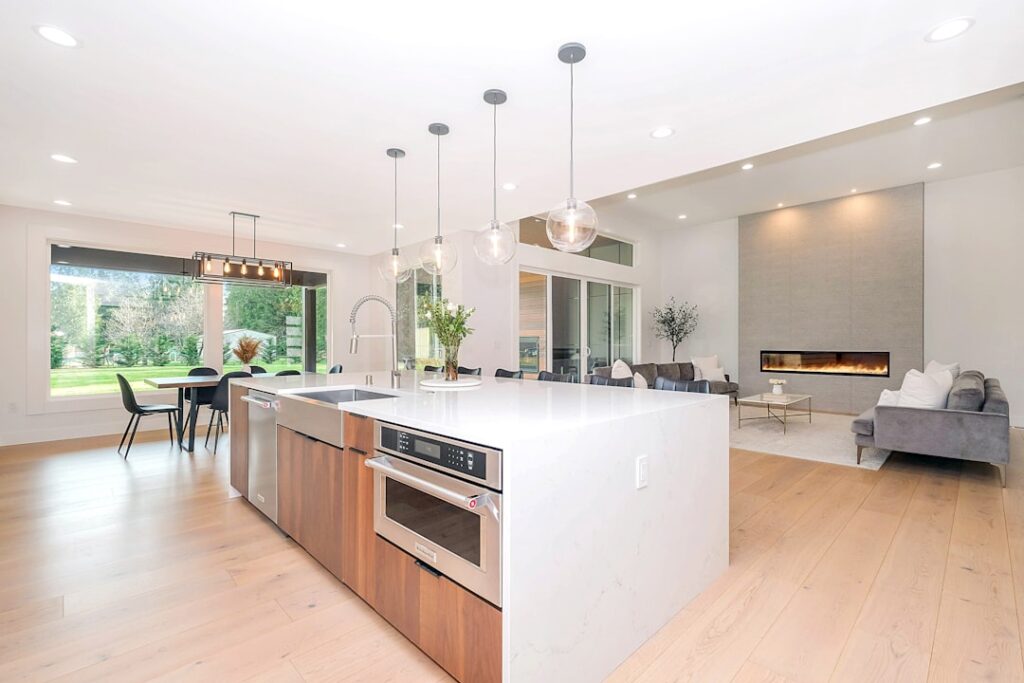
- Waterfall: the quartz continues vertically down the side of an island to the floor
Decorative edges can add roughly $10 to $30 per linear foot, and a waterfall island edge can add several hundred to over a thousand dollars because it uses a full extra slab section and precise mitering.
Mitered Edges for a Thick Look
A mitered edge joins two pieces of quartz at a 45-degree angle to create the illusion of a thicker slab — often a 2-inch or 3-inch apron — without the weight and cost of solid thick stone. This is how designers achieve that chunky, high-end countertop look you see in magazines. Mitering is labor-intensive and premium-priced, typically adding $20 to $40 per linear foot, but it delivers major visual impact.
How Edge Choice Affects Cost
Here is a rough hierarchy from least to most expensive. Actual pricing varies by fabricator and region, so always get a quote.
- Eased and beveled: usually included in the base price
- Bullnose and half bullnose: $5 to $15 per linear foot upcharge
- Ogee, cove, and dupont: $10 to $30 per linear foot
- Mitered thick edge: $20 to $40 per linear foot
- Waterfall edge: often $300 to $1,200-plus per island
On a typical kitchen with 30 to 40 linear feet of counter, upgrading from an included edge to a decorative one can add $300 to $1,000 to the project.
Matching Edge to Style
Let your kitchen’s design guide the edge. Modern and minimalist kitchens look best with eased, square, or mitered edges that emphasize clean lines. Traditional and transitional spaces suit ogee, bullnose, or beveled profiles that add warmth and detail. If you are unsure, an eased or half-bullnose edge is the safe, timeless choice that works in almost any setting and rarely dates.
Practical Tips Before You Decide
Ask your fabricator to show physical edge samples in your chosen quartz color — profiles look different across colors and patterns. Consider maintenance: intricate edges collect more grime near the seam. Think about safety if you have small children, where rounded edges reduce injury risk. And always confirm exactly which edges are included versus upcharged before signing the contract.
Edge Thickness Options
Beyond the profile shape, the apparent thickness of your countertop is a design lever. Standard quartz slabs come in 2cm (about 3/4 inch) and 3cm (about 1 1/4 inch) thicknesses. The 3cm slab is the most popular in the US because it is sturdy enough to install without plywood support and looks substantial on its own. If you want a thicker, more dramatic edge without paying for a solid slab of stone, a laminated or mitered edge builds up the front face to 2 inches, 3 inches, or more. This is purely a look — the working surface stays the same — but it dramatically changes the countertop’s presence in the room.
Coordinating Edges Throughout the Home
If you are installing quartz in multiple rooms, decide whether to keep the edge profile consistent. Using the same edge in the kitchen, bathroom vanities, and any bar areas creates a cohesive, deliberate feel throughout the home. Alternatively, some homeowners choose a bolder mitered edge for the kitchen island as a focal point while keeping simpler eased edges elsewhere to control cost. Either approach works, but making the choice on purpose rather than by accident keeps your home feeling designed rather than pieced together over separate projects.
Final Thoughts
Your edge is a design decision worth more than a five-minute afterthought. The right quartz countertop edge profiles tie your counters to the rest of your kitchen while keeping the budget in check. Eased and half-bullnose edges cover most homes affordably, while mitered and waterfall profiles deliver drama for those willing to invest. Request samples, weigh cleaning and safety, and confirm the pricing tier so the edge you love does not become an expensive surprise on the final invoice.