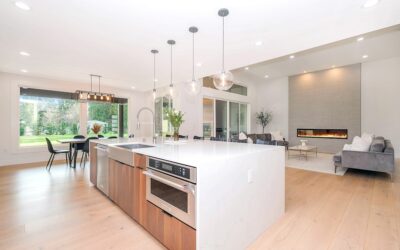
When you start comparing pictures of quartz countertop edges, it quickly becomes clear that the edge profile is one of the biggest style decisions in a countertop project, and one of the most overlooked. The same slab of quartz can read as sleek and modern or ornate and traditional depending entirely on how the edge is cut and polished. Studying pictures of quartz countertop edges before you meet your fabricator helps you name exactly the profile you want and understand which ones cost extra. This guide walks through every common edge, describes precisely what it looks like, and tells you where each one belongs and what it adds to the price.
Part of our Countertops guide — explore the full guide →
- Why the Edge Profile Matters
- Standard Edges (Usually Included)
- Rounded Edges (Soft and Traditional)
- Decorative Edges (Premium Upgrades)
- Built-Up and Mitered Edges (The Thick Look)
- How to Choose the Right Edge
- Edge Costs Broken Down
- Matching the Edge to a Waterfall or Island
- Questions to Ask Before You Commit
Why the Edge Profile Matters
The edge is the part of your countertop you touch and see up close every day. It frames the whole surface and sets the design tone: crisp square edges signal contemporary, rounded edges feel soft and traditional, and decorative curved profiles read as formal and elegant. Beyond looks, edge choice affects practicality, since some profiles are gentler on hips and children’s heads, while others show water marks more.
Edges also drive cost. Basic profiles are usually included in the base fabrication price, while decorative and built-up edges add per-linear-foot charges that can total hundreds of dollars across a kitchen. Knowing the trade-offs before you choose keeps both the look and the budget under control.
Standard Edges (Usually Included)
These simple profiles come standard with most quartz installations at no extra charge:
Eased Edge (Square)
The most popular modern choice. It is a nearly square edge with the top and bottom corners very slightly softened so they are not razor-sharp. Clean, minimal, and versatile, the eased edge suits contemporary and transitional kitchens and lets the stone’s pattern take center stage. On a 3cm slab it looks substantial and architectural.
Beveled Edge
A beveled edge cuts a flat 45-degree angle along the top, creating a crisp chamfer. It reads as clean and slightly more detailed than a plain square, working well in both modern and traditional spaces. The bevel can be small (a subtle 1/8-inch cut) or larger for more presence.
Rounded Edges (Soft and Traditional)
Rounded profiles soften the look and are gentle on contact, a plus in family kitchens and bathrooms:
Bullnose and Half-Bullnose
A full bullnose rounds the entire edge into a smooth half-circle, top to bottom. It is soft, safe, and traditional, though some homeowners find water can drip down its curve toward the cabinets. A half-bullnose (also called demi-bullnose) rounds only the top portion and leaves the bottom more squared, offering the softened top with better drip control. Both are timeless and forgiving.
Pencil Round
A pencil edge rounds just the top corner into a small, tight radius, like the edge of a pencil, while keeping the face mostly vertical. It is a subtle softening that avoids the fuller curve of a bullnose, popular for a clean look that is still gentle to the touch.
Decorative Edges (Premium Upgrades)
These ornate profiles make a statement and typically add $10 to $30 per linear foot:
Ogee Edge
The ogee is the classic formal edge, an elegant S-shaped curve that flows from a concave sweep into a convex one. It catches light dramatically and defines traditional, luxury, and old-world kitchens. It is beautiful but demands more cleaning, since the grooves collect crumbs and water spots.
Cove and Dupont
A cove edge carves a concave scoop below a squared top, while a Dupont profile drops straight down then curves, blending square and ogee elements. Both are upscale, architectural choices for homeowners who want detail beyond the basic profiles.
Built-Up and Mitered Edges (The Thick Look)
For a bold, substantial edge, fabricators join pieces to fake extra thickness:
Mitered Edge
Two pieces of quartz are cut at 45 degrees and joined at the edge to create the illusion of a super-thick slab, commonly 6cm, 8cm, or even chunkier, from standard material. This is the go-to for a dramatic, modern look and is essential for a waterfall island, where the countertop appears to pour straight down the sides to the floor. Mitered edges are labor-intensive and among the priciest options, but the impact is unmatched.
Laminated / Stacked Edge
Similar in effect, a laminated edge bonds a second strip of quartz under the front edge to double or triple the apparent thickness with a visible or seamless build-up. It delivers presence on a budget-friendlier basis than a full miter.
How to Choose the Right Edge
Let your kitchen’s style lead the decision. Match the profile to the room:
- Modern / contemporary: eased square, beveled, or a mitered waterfall.
- Transitional: eased, half-bullnose, or pencil round, the safe crowd-pleasers.
- Traditional / formal: ogee, Dupont, or full bullnose.
- Family-friendly: bullnose or pencil round for softer, safer edges.
Consider maintenance too: intricate profiles like ogee trap crumbs and show water spots, while simple eased edges wipe clean in a swipe. Ask your fabricator to show you physical edge samples, not just pictures, since a profile feels different in hand than it looks in a photo. Run your fingers along each one, imagine wiping it down daily, and confirm the price before you commit. The edge is a small detail with an outsized effect on how your finished quartz countertop looks and lives, so it is worth the time to choose it deliberately.
Edge Costs Broken Down
Understanding the price ladder helps you budget without surprises at the fabrication shop. Fabricators generally sort edges into tiers, and the labor to cut and polish each one drives the cost:
- Standard tier (usually free): eased square and small bevel. Included in most base quotes at no extra charge.
- Premium tier (about $8 to $15 per linear foot): full and half bullnose, pencil round, and cove.
- Decorative tier (about $15 to $30 per linear foot): ogee, Dupont, and other multi-curve profiles that require more machine passes and hand polishing.
- Built-up tier (about $20 to $45 per linear foot): mitered and laminated edges, the most labor-intensive because two pieces must be cut, glued, and seamed invisibly.
To put that in real numbers, a typical kitchen has 25 to 35 linear feet of finished edge. Upgrading from a free eased edge to a decorative ogee at $20 per foot on 30 feet adds roughly $600 to the project. A full waterfall island with mitered edges can add $1,000 or more on its own. Ask your fabricator to price your exact linear footage so the edge choice is a deliberate line item, not a surprise on the final invoice.
Matching the Edge to a Waterfall or Island
Islands deserve special thought because they are the visual centerpiece of most kitchens, and the edge you pick reads from every angle. A dramatic mitered waterfall, where the quartz appears to spill vertically down both ends to the floor, has dominated modern kitchen design for years and pairs best with bold-veined or solid slabs where the pattern flows continuously around the corner. This requires a fabricator skilled in “vein-matching” the miter so the pattern appears unbroken around the 90-degree turn.
For a more traditional island, a full bullnose or ogee edge softens the profile and signals craftsmanship. If the island doubles as a seating and homework surface for kids, lean toward a rounded pencil or bullnose edge that is kinder to elbows and heads. Whatever you choose for the island, most designers repeat the same profile on the perimeter counters so the kitchen reads as one cohesive design rather than a mix of ideas.
Questions to Ask Before You Commit
Bring this short checklist to your fabricator meeting so nothing gets lost in translation. First, confirm which edges are included in the base price versus upcharged, and get the per-linear-foot cost in writing. Second, ask to hold a physical sample of your top two profiles, since photos flatten the subtle differences between, say, a half-bullnose and a pencil round. Third, ask how each profile handles daily cleaning, because intricate grooves in an ogee trap crumbs and show hard-water spots more than a simple eased edge. Finally, if you are considering a waterfall, ask to see photos of the fabricator’s previous vein-matched miters; the quality of that seam separates a stunning island from a distracting one. Taking these steps turns a browse through pictures of quartz countertop edges into a confident, well-priced decision you will be happy with for decades.