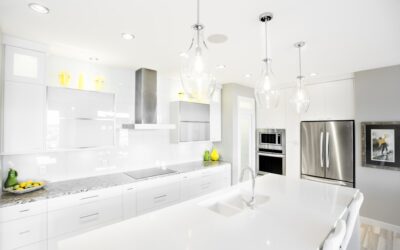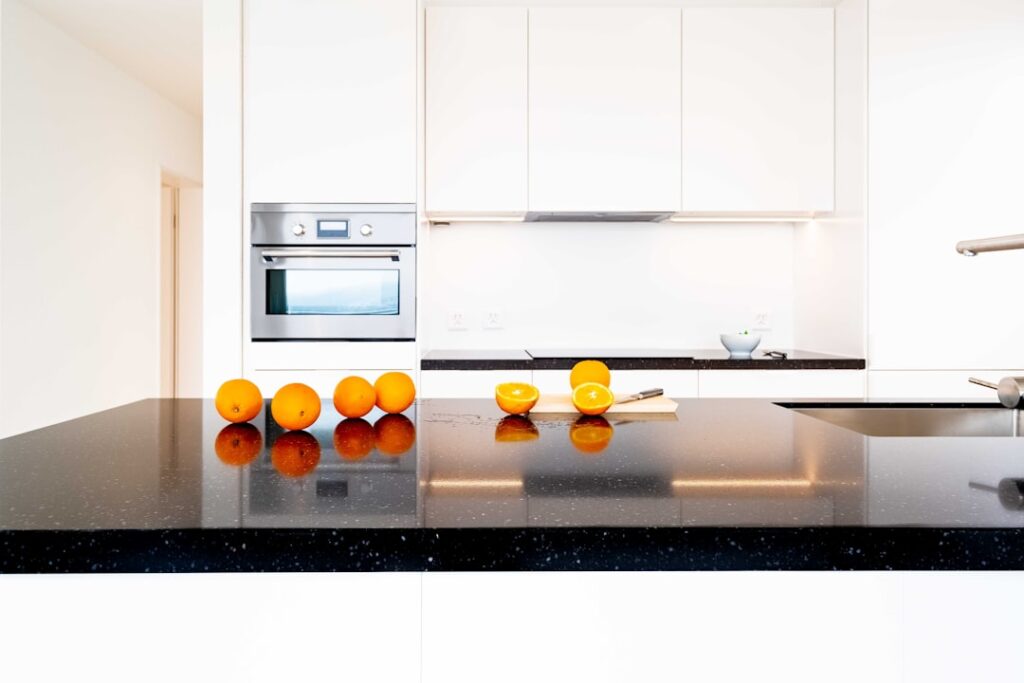
Walk into any showroom and you will discover that white is not one color but dozens, and the wrong white can make an expensive countertop clash with everything around it. White quartz countertop colors span cool bright whites that read almost blue, warm creamy whites with a hint of ivory, and dramatic whites laced with gray or gold veining that mimics natural marble. Because quartz is an engineered stone, manufacturers can dial in these tones and patterns with remarkable consistency, giving you the marble look without marble’s staining problems. Picking the right white comes down to understanding undertones and matching them to your kitchen’s light and finishes.
Part of our Countertops guide — explore the full guide →
- Why White Quartz Is So Popular
- The Main Families of White
- Undertones Make or Break the Match
- Matching White Quartz to Cabinets
- Finish Options Change the Look
- Living With White Quartz
- Pairing White Quartz With Backsplash and Flooring
- Confirming Specifics Before You Buy
- Buying Pure White Quartz: What to Inspect Before Fabrication
Why White Quartz Is So Popular
Quartz countertops are made from roughly 90 percent or more ground natural quartz bound with resins and pigments, which makes them hard, nonporous, and low maintenance. Unlike marble, quartz does not need sealing and resists staining from wine, coffee, and citrus far better. White specifically stays the perennial favorite because it brightens kitchens, reflects light, makes small spaces feel larger, and pairs with virtually any cabinet color. It is the safe, timeless choice that also happens to look clean and current.
The catch is that white shows the differences between shades vividly. A crisp bright white next to warm cream cabinets can look mismatched, so the exact white matters more than with a busy pattern that hides its base tone.
The Main Families of White
- Pure bright white: The whitest whites, sometimes with cool blue or gray undertones, deliver a crisp, modern, high-contrast look. Stunning against dark cabinets and in contemporary kitchens, though a very stark white can read clinical in a room with warm finishes.
- Warm or creamy white: Whites with ivory, beige, or soft yellow undertones feel cozy and traditional. They flatter warm woods, brass hardware, and cream cabinets, and they hide everyday smudges slightly better than stark white.
- White with gray veining: Whites threaded with soft gray veins imitate classic marble like Carrara. Versatile and popular, they add movement without committing to a bold color.
- White with bold or gold veining: Dramatic whites with thick gray, charcoal, or golden veining echo Calacatta marble and become a statement centerpiece, especially on a large island.
- White with fine speckle: Whites with tiny flecks of gray or translucent quartz give a subtle texture that reads as solid white from a distance and hides crumbs well.
Deciding among these starts with whether you want a solid, quiet surface or a veined, marble-inspired statement.
Undertones Make or Break the Match
The most common mistake is ignoring undertones. Every white leans slightly cool (blue or gray) or warm (yellow, beige, or pink). A cool white beside warm-toned wood cabinets can make the wood look orange, while a warm white next to cool gray cabinets can look dingy. Before choosing, identify the undertones of your cabinets, flooring, and wall color, then pick a white that harmonizes.
Get a large sample and view it in your actual kitchen, not just under showroom lights. Set the sample against your cabinets and see it in morning light, afternoon sun, and evening artificial light, since a white shifts dramatically across those conditions. What looks perfectly white at the store can turn gray or yellow at home under different bulbs.
Matching White Quartz to Cabinets
Different cabinet colors call for different whites:
- White cabinets: A monochrome white-on-white kitchen looks serene, but choose a countertop white with subtle veining or a slightly different tone so the counter does not disappear into the cabinets. A gray-veined white adds definition.
- Gray cabinets: Cool bright whites and gray-veined whites echo the cabinet undertone and feel crisp and modern.
- Navy or dark cabinets: A bold veined white or a pure bright white creates striking high contrast that shows the counter off.
- Wood or warm cabinets: Warm, creamy whites keep the room cohesive; a stark cool white can fight the wood tones.
The island is a chance to play with contrast, pairing a bold-veined white slab on the island with a quieter white on the perimeter, or vice versa.
Finish Options Change the Look
Beyond color, the surface finish affects the final appearance. A polished finish is the most common, giving a glossy, reflective surface that makes white look bright and easy to wipe clean. A honed or matte finish delivers a soft, low-sheen look closer to natural marble, which reads elegant and hides some fingerprints but can show more marks from oils. Some lines offer textured or suede finishes for a tactile, contemporary feel. Availability of finishes varies by brand and color, so confirm which finishes your chosen slab comes in.
Living With White Quartz
White quartz is forgiving but not indestructible. It resists stains because it is nonporous, so spills wipe up without soaking in, and it never needs sealing. Clean it with mild soap and water or a gentle stone-safe cleaner; skip harsh chemicals, abrasive pads, and bleach, which can dull the surface over time. Quartz resins can be sensitive to high heat, so use trivets and never set a hot pan directly on the surface. It is scratch resistant but still cut on a board, not the countertop.
Bright pure white shows crumbs and coffee rings the moment they land, which some people love for the visual cue to wipe up, while creamy and speckled whites disguise daily mess a bit more. Consider your tolerance for wiping when choosing between a stark and a softer white.
Pairing White Quartz With Backsplash and Flooring
A countertop never stands alone, and the white you choose has to work with the backsplash and floor it sits above and below. With a solid or lightly speckled white counter, you have freedom in the backsplash: a classic white subway tile keeps things clean and bright, while a bold patterned or colored tile becomes the room’s focal point without competing. If you chose a dramatic veined white counter, keep the backsplash quieter, a simple tile or even a matching quartz slab backsplash, so the two surfaces do not fight for attention.
Flooring interacts with the counter through undertone. Warm-toned wood or wood-look floors pair naturally with creamy, warm whites, keeping the room cohesive, while cool gray floors and cool bright whites reinforce a modern, crisp palette. A mismatch, a stark cool white counter over a very warm orange-toned floor, can make both surfaces look slightly off. When you finalize the countertop, lay your samples together: cabinet door, counter, backsplash tile, and a flooring sample, and view them as a group in your kitchen’s light.
Think about maintenance across these surfaces too. A bright white counter paired with white grout on the backsplash creates a beautifully clean look but shows every splash, so factor in how much upkeep you want. A slightly warmer white or a speckled quartz forgives daily life a bit more, which matters in a hardworking family kitchen. Balancing the look you love against the cleaning you will actually do leads to a choice you stay happy with.
Confirming Specifics Before You Buy
Quartz is sold under many brand names, and each offers its own palette of white colors, patterns, and finishes with names that do not carry across manufacturers. Colors, availability, and pricing change over time, so once you narrow your preference, confirm the exact color, finish options, slab dimensions, and warranty on the manufacturer’s current product page or with your fabricator rather than relying on a photo. Always inspect the actual slab you are buying, since veining and tone vary piece to piece even within one named color.
If your project uses more than one slab, and larger kitchens usually do, ask to see all the slabs together and confirm they come from the same lot or bundle so the color and pattern match across your countertops. Two slabs of the same named color from different production runs can differ enough to be noticeable at a seam. Talk through seam placement with your fabricator as well, since a well-planned seam in a veined white falls where the pattern hides it and where the counter is less conspicuous, while a poorly placed seam interrupts a flowing vein. On a large island cut from a single slab, you may avoid a seam entirely, which is worth asking about for a showpiece surface.
Get realistic cost expectations before you fall for a particular look. As a broad planning range, installed quartz commonly runs from roughly 50 to well over 100 dollars per square foot depending on the brand, the pattern complexity, the edge profile, and your region, with dramatic veined whites that mimic high-end marble sitting toward the upper end. Simpler solid and lightly speckled whites are usually more affordable than bold Calacatta-style patterns. Because pricing shifts with material costs and market, confirm current per-square-foot pricing, including fabrication and installation, with your local fabricator rather than budgeting from a showroom sticker alone.
Bring it all together by identifying your undertones, viewing large samples in your own light, and matching the white to your cabinets and finishes. Whether you land on a crisp bright white for a modern look or a warm, gently veined white for classic warmth, taking time with the white quartz countertop colors in front of you ensures the surface you install still looks right years down the road.
Buying Pure White Quartz: What to Inspect Before Fabrication
A solid, unveined slab is the hardest quartz to get right because there is nothing to hide behind. Pure white quartz shows manufacturing flaws, seam lines and everyday wear far more than a patterned surface does, so the inspection and planning steps matter more here than with almost any other color.
Check the Slab Surface Under Raking Light
Ask the yard to tilt a work light low across the slab so the beam skims the surface. On a solid white, small defects that would vanish in a veined pattern become obvious. Look for:
- Dark specks or stray pigment flecks, which read as crumbs that never wipe away.
- Cloudy patches or faint swirls where the resin and quartz did not blend evenly.
- Pinholes or tiny pits on a polished face, which can trap dirt over time.
- Slight tone shifts from one end of the slab to the other.
Mark any flaw you find with tape and ask the fabricator to place it in a sink cutout or a cooktop opening, where it will be removed, or to swap the slab if the defect falls in a visible spot.
Plan Seams Carefully on a Solid White
Veining can disguise a joint, but pure white quartz cannot. A seam on a solid white usually shows as a thin line, so placement and color matching carry the whole result. Ask the fabricator to tint the seam adhesive to match your exact slab rather than using a generic white, and to keep seams away from the front of a long run and out of the middle of an island where light hits directly. Where possible, choose a layout or slab size that lets the island come from a single piece.
Protecting the Bright White Over Time
Quartz is nonporous, yet a bright white still has a few specific weaknesses. Strongly pigmented foods such as turmeric, beet juice and some spice blends can leave a faint tint if they sit for hours, and permanent marker can shadow the surface. Wipe these right away with mild soap and water. Avoid high-alkaline oven cleaners and strong solvents, which can dull or discolor the resin. Pale white surfaces near a sunny window or close to a hot cooktop can slowly shift toward a warmer, slightly yellow tone if exposed to strong heat or long-term direct sun, so use trivets and consider window treatments on a bright south wall.
Safety Note on Cutting and Modifying Quartz
Engineered quartz contains a very high share of crystalline silica, and cutting, grinding or polishing it releases fine dust that can cause serious lung disease. Leave cutouts, edge work and modifications to a fabricator who uses wet cutting and proper dust control. If you must make a small adjustment at home, cut wet, wear a well-fitted P100 respirator and eye protection, and clean up with a HEPA vacuum rather than sweeping. Planning every cutout before fabrication keeps on-site cutting of your pure white quartz to a minimum.