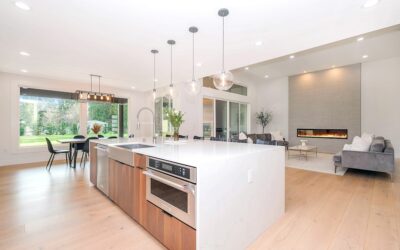
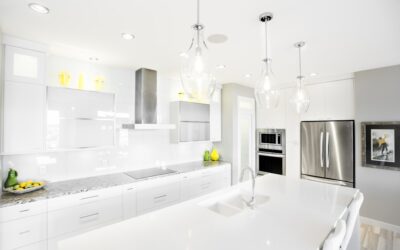
There is a reason the combination of medium brown cabinets with white quartz countertop keeps showing up in the kitchens designers photograph most. The warm wood grounds the room while the crisp white counter lifts and brightens it, striking a balance that pure white or all-wood kitchens rarely achieve. It reads timeless rather than trendy, which is exactly what you want in a surface you will look at for a decade.
Part of our Countertops guide — explore the full guide →
Pairing medium brown cabinets with white quartz countertop is really an exercise in undertone matching. Get the warm and cool tones to talk to each other and the kitchen feels intentional; ignore undertones and the wood can look muddy or the quartz can look cold and disconnected.
- Why This Pairing Works So Well
- Choosing the Right White Quartz
- Reading Wood Undertones
- Backsplash Options That Tie It Together
- Hardware and Fixture Finishes
- Flooring and Wall Color Choices
- Lighting to Flatter the Palette
- Adding Texture and Contrast
- Common Pairing Mistakes
- Sink and Faucet Choices
- Bringing the Look Together
Why This Pairing Works So Well
Medium brown sits in the sweet spot of wood tones, warm enough to feel cozy but not so dark that it shrinks the room. White quartz reflects light and expands the space visually, so the two balance each other. The wood adds texture and depth that a flat white counter lacks, while the quartz keeps the overall look fresh instead of heavy.
This combination also ages gracefully. Wood tones and white counters have anchored American kitchens for generations, so you are unlikely to look back in five years and cringe the way you might at a trend-driven color scheme.
Choosing the Right White Quartz
Not every white plays nicely with brown wood. Because the cabinets bring warmth, a stark cool-white quartz can clash and look bluish next to the grain. Lean toward warm or neutral whites with soft beige, cream, or greige undertones, or a white with subtle warm-gray veining.
- Warm white with cream base: harmonizes with the wood’s warmth
- Calacatta-style with gold or taupe veins: echoes wood tones
- Soft greige-veined white: a neutral bridge that suits either direction
- Avoid stark blue-white or bright cool grays that fight the wood
Bring a cabinet door sample to the slab yard and lay it on the quartz in natural light. If the white looks slightly gray or dingy against the wood, it is too cool; if it glows softly, it is right.
Reading Wood Undertones
Medium brown is not one color. Species and stain give the wood a red, gold, or ashy undertone, and your quartz should complement it. Red-toned woods like cherry or a mahogany stain want a white with a warm, slightly pink-neutral cast. Gold or honey-toned oak pairs with cream and beige whites. Ashy or gray-brown woods like a weathered oak stain can handle a cooler, greige-veined white.
Identify the undertone by comparing the wood against a plain white sheet of paper. Whatever hue peeks out is the undertone you must respect when choosing veining color and accent metals.
Backsplash Options That Tie It Together
The backsplash is where you either reinforce the harmony or muddy it. With medium brown cabinets and white quartz, you have room to go clean or add interest.
- White or cream subway tile: extends the counter’s brightness, classic and safe
- Full-height quartz slab: seamless, modern, easy to clean
- Warm-toned marble-look tile: adds movement while staying light
- Beige or greige stacked stone: bridges wood and counter with texture
A common mistake is choosing a cool gray backsplash that pulls the palette in a direction the wood cabinets resist. Keep the backsplash in the warm-neutral family and the whole wall reads cohesive.
Hardware and Fixture Finishes
Metal finishes are the jewelry of the kitchen and should echo the palette’s warmth. With medium brown wood and warm white quartz, brushed brass, champagne bronze, and matte gold look intentional and rich. Oil-rubbed bronze suits a more traditional or rustic version of this pairing.
Brushed nickel and stainless work too, offering a slightly cooler, more transitional feel. Matte black hardware provides crisp contrast against both the wood and the white and has stayed popular because it never competes with the counter’s veining.
Flooring and Wall Color Choices
Balance the room by not repeating the exact wood tone on the floor. If cabinets are medium brown, choose a floor that is either lighter or noticeably different in tone, such as a pale oak, a gray-brown wood-look plank, or a warm neutral tile, so the cabinets do not blend into the floor and disappear.
For walls, warm whites, soft greiges, and pale warm grays all frame this palette well. Avoid cool blue-grays on the walls, which can make the beautiful warm wood look orange by contrast, a common and jarring mismatch.
Lighting to Flatter the Palette
Lighting can make or break this pairing because both the wood and the white quartz shift with bulb temperature. Warm 2700K to 3000K bulbs bring out the richness of medium-brown cabinets and keep the white counter looking soft and inviting rather than clinical. Cool 4000K or higher bulbs can wash out the wood’s warmth and give the quartz a bluish cast, flattening the whole look.
Layer your light sources. Under-cabinet LEDs illuminate the counter for tasks and highlight the quartz veining, while pendants over an island add warmth and character. Choose a consistent bulb temperature throughout so the wood reads the same color everywhere; mixing warm and cool bulbs makes the cabinets look patchy and the counter inconsistent from one side of the kitchen to the other.
Adding Texture and Contrast
A two-material kitchen benefits from a third layer of texture so it feels collected rather than flat. Open wood shelving that echoes the cabinet tone, a woven pendant shade, or a textured backsplash tile adds depth without introducing a competing color. A honed or matte-finish quartz reads softer and more organic against wood than a high-gloss polish, which can look slick next to natural grain.
Introduce contrast thoughtfully. A black faucet or matte-black window frames sharpen the palette and keep the warm wood from feeling one-note. Greenery, a bowl of citrus, or a warm-toned runner brings life to the counter. The goal is a layered warmth that photographs beautifully and, more importantly, feels comfortable to cook and gather in every day.
Common Pairing Mistakes
A few missteps undo this otherwise foolproof combination. The most frequent is choosing a stark, cool blue-white quartz that clashes with the wood’s warmth and leaves the counter looking gray and disconnected. Another is matching the floor too closely to the cabinets, which makes the base cabinets visually melt into the floor and flattens the room.
- Cool blue-white quartz against warm wood reads dingy, choose warm or neutral white
- Floor matching the cabinet tone erases contrast, go lighter or different
- Cool gray walls make warm wood look orange by comparison
- Mixed metal undertones that fight the veining color
Wall color is the sneaky one. A cool gray-blue wall can make lovely medium-brown cabinets suddenly look orange, so keep walls in warm whites, greiges, or soft warm grays. Test large swatches against both the cabinets and the counter before committing to a wall color.
Sink and Faucet Choices
The sink and faucet sit at the intersection of the wood and the quartz, so they deserve deliberate choices. A white farmhouse apron sink echoes the white counter and reads classic against medium-brown cabinets, while a stainless undermount keeps the look clean and lets the counter and wood take center stage. A black granite composite sink adds a grounding contrast that pairs especially well with matte-black hardware.
For the faucet, pick a finish that repeats elsewhere in the room so it looks intentional. Brushed brass or champagne bronze warms the palette and complements gold-toned veining in the quartz, while matte black delivers crisp modern contrast against both the white counter and the warm wood. Whatever you choose, carry that same metal into the cabinet hardware and any light fixtures so the room reads as one coordinated design rather than a collection of parts.
Bringing the Look Together
The winning formula is simple once you internalize it: warm medium-brown cabinets, a warm or neutral white quartz with soft veining, a light backsplash in the same warm-neutral family, and brass or matte black hardware to tie it off. Layer in a lighter floor so the cabinets stand out, and keep wall colors warm.
Executed with attention to undertone, medium brown cabinets with white quartz countertop deliver a kitchen that feels both current and enduring, warm without being dark, bright without being cold. It is a pairing that flatters almost any home style, from farmhouse to transitional, which is exactly why it remains one of the most requested combinations in kitchen design.