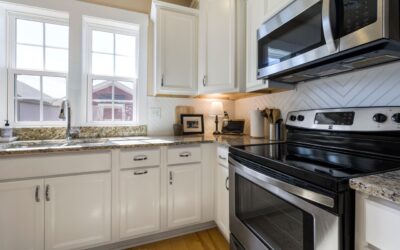
Walk through any showroom in 2026 and you will see the same combination repeating across every price tier: wood cabinets with white countertops. The pairing has outlasted at least four design cycles because it solves two problems at once — warmth from the wood and brightness from the stone. The trick is matching the right wood undertone to the right shade of white, otherwise the kitchen reads either muddy or sterile. After spec’ing close to 200 kitchens, here is what actually works and where homeowners get tripped up.
Part of our Countertops guide — explore the full guide →
- Why This Combination Keeps Winning
- Picking the Right Wood Species
- Choosing the Right White Countertop Material
- Hardware and Backsplash Choices That Pull It Together
- Lighting Considerations Most Homeowners Miss
- Budget and Realistic Cost Ranges
- Caring for the Combination Long Term
- Wall Color and Backsplash Coordination
- Common Pairing Mistakes to Avoid
Why This Combination Keeps Winning
Wood cabinets bring grain, depth, and a bit of imperfection that fights the cold edge of a slab countertop. White stone reflects natural light and visually expands a small footprint. Together they hit a sweet spot — modern enough for a 2026 build, traditional enough for a 1920s bungalow remodel.
Resale data backs it up. Realtors in mid-Atlantic and Midwest markets consistently note that buyers respond to natural wood lowers paired with light tops. The combo photographs well in listings, which translates directly into more showings.
Picking the Right Wood Species
Not every wood plays nicely with white. The undertone of the wood drives the entire look.
- White oak — slight golden-gray cast. Pairs cleanly with bright whites like quartz in the Calacatta family. Expect $180 to $300 per linear foot for semi-custom doors.
- Walnut — deep brown with purple undertones. Demands a creamy white to avoid a stark contrast. Looks expensive for the budget, around $250 to $400 per linear foot.
- Cherry — reddens significantly in the first 18 months from UV exposure. Plan around the future color, not the install-day color.
- Hickory — wild grain variation. Works with simpler white tops; busy veining fights the cabinet.
- Knotty alder — rustic, warm, slightly orange. Cream or warm white tops only — true cool whites clash.
Choosing the Right White Countertop Material
The word “white” hides huge variation. Here is how the major materials behave in real kitchens.
Quartz
Engineered quartz like Cambria Brittanicca or Caesarstone Pure White is the workhorse. Non-porous, no sealing, $60 to $110 per square foot installed. Best choice for families with kids and red-wine drinkers. Pure whites can read clinical — go with veined options if your cabinets are simple Shaker.
Marble
Carrara and Calacatta marble bring movement nothing else matches. Budget $80 to $200 per square foot installed. Etches from lemon juice, vinegar, and tomato within minutes. Worth it if you want patina, painful if you want pristine.
Quartzite
Often confused with quartz but it is natural stone. Mont Blanc and White Macaubas are gorgeous. Harder than granite, tolerates heat better than quartz. Plan on $90 to $180 per square foot installed plus annual sealing.
Solid Surface
Corian Designer White and similar acrylic surfaces run $50 to $90 per square foot. Seamless, repairable with sandpaper, but visible scratches under bright kitchen lighting.
Hardware and Backsplash Choices That Pull It Together
Hardware is what tips wood cabinets with white countertops from generic to intentional. Match the hardware finish to the kitchen’s metal accents — the faucet, pendant lights, and appliance pulls. Brushed brass on white oak feels current. Matte black on walnut grounds the wood. Polished nickel suits cherry and traditional layouts.
Backsplash should bridge wood and stone, not compete. Cream subway tile, zellige in soft white, or a continuation of the countertop slab up the wall all read as professionally designed. Skip the busy mosaic strip behind the range — it dates the kitchen within a decade.
Lighting Considerations Most Homeowners Miss
Color temperature changes everything. A 2700K bulb makes wood look warm and white tops look cream. A 4000K bulb makes wood look gray and tops look cool blue-white. Pick one temperature throughout the kitchen and stick with it. Most kitchen designers settle on 3000K under-cabinet LEDs from brands like WAC or Kichler at roughly $25 per linear foot installed.
Add dimmers on every switch. White stone reflects whatever light you give it, and a fully bright kitchen at dinner can feel like a hospital cafeteria. A simple Lutron Caseta dimmer at $55 fixes that.
Budget and Realistic Cost Ranges
For a 200-square-foot kitchen with roughly 25 linear feet of cabinets and 50 square feet of counter, expect:
- Stock white oak Shaker cabinets plus quartz: $9,000 to $14,000
- Semi-custom walnut plus quartzite: $18,000 to $28,000
- Custom cherry plus marble: $32,000 to $55,000
That excludes plumbing, electrical, flooring, and appliances. Get three quotes minimum, and ask each fabricator to show you the actual slab before they cut. Photos misrepresent veining badly.
Caring for the Combination Long Term
Wipe wood cabinet faces with a damp microfiber cloth weekly. Avoid orange-oil products on factory-finished cabinets — they leave a film that attracts dust. For white tops, use a stone-safe cleaner like Method Daily Granite or a 50/50 water-and-isopropyl-alcohol mix in a spray bottle.
Reseal natural stone counters annually using a product like StoneTech BulletProof. Quartz needs nothing beyond regular wiping. Done right, wood cabinets with white countertops will look just as good in 2036 as they do the day the contractor pulls out.
Wall Color and Backsplash Coordination
Wall paint affects how the wood reads almost as much as the cabinets themselves. Sherwin-Williams Alabaster, Benjamin Moore White Dove, and Farrow & Ball Pointing all sit comfortably alongside warm wood tones without competing. Cool grays drag the warmth out of cherry and walnut, leaving the wood looking dull. Avoid pure stark whites on walls — they make the wood look orange in photos and in real life.
For backsplash placement, run the tile or slab to the underside of the upper cabinets. Stopping short looks unfinished. If you choose a slab backsplash matching the countertop, a 1/4-inch reveal between the slab and any flanking cabinets reads intentional. Caulk or grout in a color that disappears against the slab — never bright white grout against ivory stone.
Common Pairing Mistakes to Avoid
The kitchens that miss the mark usually fail in predictable ways. Mixing five different wood tones throughout the kitchen — flooring, cabinets, island top, dining table, ceiling beam — creates visual chaos. Pick one or two wood tones max and let the rest be neutral. Choosing a busy white quartz pattern with heavy gray veining alongside cathedral-grain cherry creates two competing focal points; one of them needs to recede. And finishing wood cabinets in a high-gloss lacquer makes them photograph well but show every fingerprint daily.