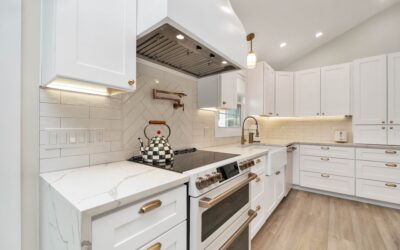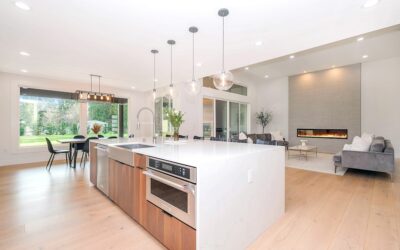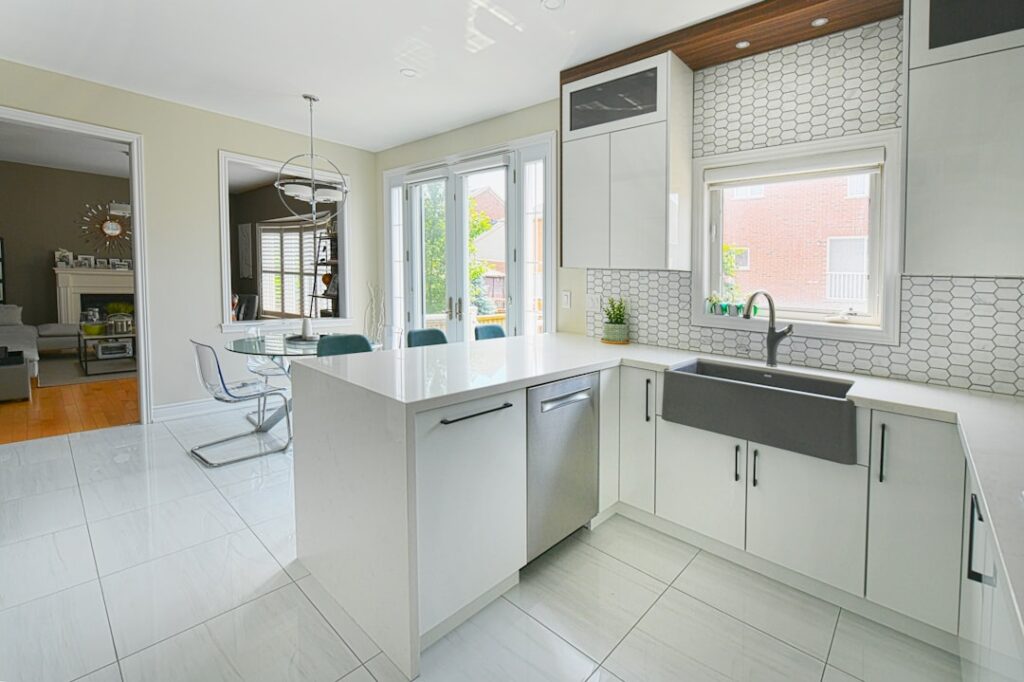
Nothing brightens a kitchen quite like a bright, seamless expanse of engineered stone, and a white quartz backsplash has become the finish of choice for homeowners chasing a clean, modern, and refreshingly low-maintenance look. Unlike tile with its grid of grout lines, a full-height quartz slab reads as one continuous surface that visually expands the room and wipes clean in seconds. As open-concept kitchens push the backsplash into full view of living spaces, that uninterrupted elegance has moved from luxury upgrade to mainstream request.
Part of our Countertops guide — explore the full guide →
Before you commit, it helps to understand how quartz behaves as a wall material, how it compares with tile, and what the finished project will actually cost.
Why Quartz Works So Well on the Wall
Engineered quartz is roughly 90 to 94 percent ground natural quartz bound with resins and pigments, which makes it nonporous, stain-resistant, and consistent in color from slab to slab. On a countertop those traits fight spills and knives; on a backsplash they fight grease splatter and steam. The nonporous surface never needs sealing, and because there are no grout joints, there is nowhere for grime, mold, or discoloration to hide.
The white palette specifically bounces light around the room, an advantage in kitchens with limited windows or dark cabinetry. Pairing a white quartz backsplash with a matching quartz counter creates a waterfall of continuous material that looks custom and deliberately high-end.
Slab Backsplash Versus Quartz Tile
There are two main ways to bring quartz to the wall, and they produce very different results:
- Full-height slab: A single piece of quartz, or a few large sections, run from counter to upper cabinets or all the way to the ceiling. This delivers the seamless signature look but costs more and demands professional fabrication.
- Quartz tile: Pre-cut quartz pieces installed like conventional tile with thin grout lines. Cheaper and more DIY-friendly, though it sacrifices the seamless appearance that draws most people to quartz in the first place.
Most homeowners specifically seeking the quartz aesthetic choose the full-height slab, accepting the higher price for the dramatic, joint-free finish that no tile can match.
Popular White Quartz Looks
White is not a single color, and the variation among white quartz options is where personality enters. Pure, uniform whites feel crisp and contemporary, ideal for minimalist and Scandinavian-inspired kitchens. Whites with soft gray veining mimic Carrara marble and bring subtle movement without stone’s maintenance headaches. Bolder options carry dramatic gray or gold veining that echoes Calacatta marble and become a genuine focal point.
Because the backsplash and counter are often the same slab, choosing the vein intensity is really choosing the personality of the whole kitchen. Sample large pieces under your actual kitchen lighting, since veining that looks elegant in a showroom can read very differently at home.
Finish and Edge Options
Quartz backsplashes usually take a polished finish for maximum light reflection and easy cleaning, but honed and matte finishes are available for a softer, more understated look. Matte finishes hide fingerprints and water spots better, a real consideration on a busy prep wall.
Where the backsplash meets the counter, a fabricator can run the slab seamlessly or install a slim shadow gap. Around windows and outlets, clean quartz edges give a tailored appearance that tile trim struggles to match. Discuss edge treatment and outlet placement with your fabricator during templating, because changes after cutting are expensive.
Cost Expectations
Quartz is a premium material, and the wall application reflects that. Expect installed slab backsplash pricing in the range of $80 to $150 per square foot, factoring in the slab, fabrication, and professional installation. A modest full-height backsplash of 30 square feet could therefore land between $2,400 and $4,500 depending on the brand and vein complexity.
Quartz tile is friendlier to the budget, often $20 to $50 per square foot installed, but again gives up the seamless look. When comparing quotes, remember that the labor to fabricate and hang a large vertical slab is genuinely skilled work, and cut-rate installers can leave you with cracked or poorly supported panels.
Installation Realities
A full-height quartz backsplash is not a DIY weekend project. Fabricators template the wall precisely, cut the slab on a CNC or bridge saw, drill cleanly for outlets, and then transport and mount a heavy, brittle panel without cracking it. The sequence generally runs:
- Template the wall after the counters are set so measurements are exact.
- Fabricate and polish the slab off-site to the templated dimensions.
- Prepare the wall with a flat, sound substrate.
- Set the slab in adhesive with mechanical support where needed, then seal perimeter joints with color-matched silicone.
Because the panels are heavy, proper support and adhesive coverage are critical; an under-supported slab can pull away from the wall over time.
Care, Durability, and Value
Day-to-day maintenance is genuinely effortless. Wipe the surface with a soft cloth and mild dish soap; skip abrasive powders and harsh alkaline cleaners that can dull the resin binder over time. Quartz resists staining from wine, coffee, and tomato better than natural stone, and it never requires the annual sealing that marble or granite demand.
The one caution is heat: keep the backsplash a safe distance from open flame and avoid resting extremely hot pans directly against it, since prolonged high heat can discolor the resin. Treated sensibly, a white quartz backsplash stays pristine for decades and consistently ranks among the features buyers notice first, making it both a practical everyday surface and a sound investment in the resale appeal of your kitchen.
Design Styles That Suit White Quartz
The seamless white slab is a chameleon that flatters a surprising range of kitchen styles. In a modern or minimalist kitchen, a pure uniform white with flat-panel cabinets and integrated appliances creates the gallery-clean look that defines contemporary design. Transitional kitchens balance the crispness with shaker cabinets and warm metal fixtures, letting subtle gray veining add just enough softness.
Even farmhouse and classic kitchens embrace quartz when the slab carries marble-like veining, delivering the timeless Carrara look without the fragility of real stone. Because the material photographs and shows so well, it is a favorite in kitchens designed with resale in mind, where a neutral, luxurious backsplash appeals to the widest pool of future buyers.
Common Questions Before You Buy
Homeowners weighing this upgrade tend to raise the same practical points, and clear answers prevent regret:
- Can it go all the way to the ceiling? Yes, and full-height installations behind a range are among the most striking uses, though they raise material cost.
- Will the seam show if two pieces are needed? A skilled fabricator can place and color-match seams so they nearly disappear, ideally aligning them at a corner or behind a range hood.
- Is it cheaper than marble? Comparable or slightly less, with far lower maintenance since quartz never needs sealing.
- Can I install it over existing tile? Generally the wall should be prepared flat and sound first; layering a heavy slab over uneven tile invites problems.
Walk through these with your fabricator during the estimate. A short, honest conversation about seams, budget, and wall prep up front turns a big-ticket decision into a confident one and ensures the finished wall delivers exactly the seamless look you pictured.