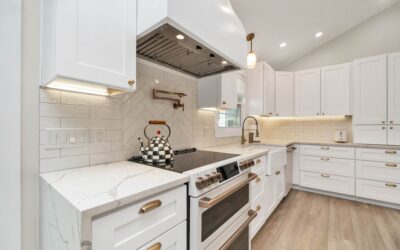
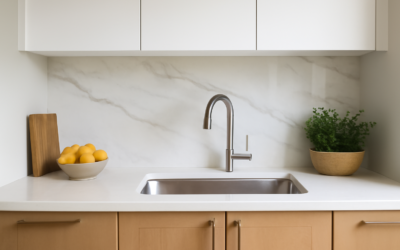
Tile backsplashes have ruled kitchens for decades, but a growing number of homeowners are skipping the grout lines entirely in favor of a single, seamless slab. Quartz backsplashes extend the same engineered stone as your countertop up the wall, creating a continuous, easy-to-clean surface with no joints for grease and grime to hide in. If you love a clean, modern look and hate scrubbing grout, this option deserves serious consideration. Here is what to know about cost, styles, and the trade-offs.
Part of our Countertops guide — explore the full guide →
What a Quartz Backsplash Is
A quartz backsplash is a slab of engineered stone mounted on the wall behind your counter, most often as a continuation of the countertop material. Engineered quartz is made from roughly 90 percent ground natural quartz bound with resin and pigment, which makes it nonporous, consistent in pattern, and extremely durable. Because it comes as a large slab, the backsplash has few or no seams, unlike tile with its dozens of grout lines.
You will see it done two ways: a short standard backsplash of about four inches that caps the counter, or a full-height slab that runs all the way from the countertop to the underside of the upper cabinets. The full-height version is where quartz really makes a statement, wrapping the work zone in one uninterrupted surface.
The Big Advantages
The appeal of a quartz backsplash comes down to looks and maintenance, and both are compelling.
- Seamless and easy to clean: no grout lines means no scrubbing and nowhere for grease, mold, or bacteria to lodge. A wipe with a damp cloth is all it takes.
- Coordinated design: matching the backsplash to the countertop creates a cohesive, high-end look, especially with a waterfall or full-height treatment.
- Durable and nonporous: quartz resists stains, moisture, and everyday kitchen abuse without sealing.
- Modern and timeless: the clean slab look suits contemporary kitchens and ages well.
For a busy cook, the no-grout cleanup alone can justify the choice; splatter behind the range simply wipes off instead of soaking into porous grout.
What Quartz Backsplashes Cost
Quartz is a premium material, and a slab backsplash costs more than most tile. Expect roughly $50 to $120 per square foot installed, in line with quartz countertop pricing, since it is the same material and fabrication. A short four-inch backsplash adds a few hundred dollars to a countertop project, while a full-height slab behind the counters can add $1,000 to $3,000 or more depending on the kitchen size and the quartz you choose.
By comparison, a tile backsplash might run $15 to $40 per square foot installed. So quartz costs more up front, but you save the ongoing labor of maintaining grout, and the seamless look reads as a higher-end finish. If you are already installing quartz counters, matching the backsplash from the same slab batch is the most cohesive and often most cost-efficient time to do it.
The Drawbacks to Weigh
Quartz is not the right answer for every kitchen, and the downsides are worth knowing. Cost is the obvious one; a full-height slab is a significant investment compared with tile or peel-and-stick. The look, while sleek, is also less customizable, since you are working with one continuous stone rather than mixing colors, shapes, and decorative accents the way tile allows.
There is one performance caveat too. Quartz contains resin that can be sensitive to sustained high heat and direct sunlight over years. Directly behind a gas cooktop, intense heat can potentially discolor the resin over time, so some homeowners install a heat-tolerant material like stainless or a stone slab in that specific zone. Fabrication also requires professional cutting for outlets and precise wall fit, which limits DIY.
Design Options and Styles
Even within a single slab, you have real design flexibility. The most popular approach is a full-height backsplash that matches the countertop for a monolithic, luxury look. Alternatively, a contrasting quartz, a bold veined white against a solid counter, for example, turns the backsplash into a focal wall.
Book-matched slabs, where two mirror-image pieces meet to create a symmetrical vein pattern, deliver a dramatic, high-design effect behind a range. For a subtler take, a short standard backsplash keeps the seamless-cleanup benefit while leaving the wall above open for paint or open shelving. Finishes range from polished and glossy to honed matte, letting you tune how much the surface reflects light.
Installation Basics
Installing a quartz backsplash is a job for a professional fabricator, not a weekend DIY. The installer templates the wall precisely, cuts the slab and any outlet openings in the shop, and then sets the piece with adhesive, sealing the edges with color-matched caulk where it meets the counter and cabinets. Walls must be reasonably flat, and outlets may need to be extended to sit flush with the added thickness of the slab.
Because the material is heavy and unforgiving of measurement errors, the precision of fabrication is what separates a clean result from a gapped one. This is also why matching your backsplash to your counter at the same time is smart: the same crew templates and installs both from coordinated material.
Keeping It Looking New
Maintenance is the easiest part. Because quartz is nonporous, it never needs sealing, and daily care is just warm water with mild soap or a quartz-safe cleaner. Avoid harsh abrasives and strong chemicals that can dull the surface, and protect the area behind a cooktop from prolonged direct heat. With almost no effort, a quartz backsplash stays spotless for the life of the kitchen.
Quartz vs. Tile Backsplash
The decision usually comes down to a quartz slab versus a traditional tile backsplash, and the two suit different priorities. Tile is far more affordable, endlessly customizable in color, shape, and pattern, and it handles heat behind a cooktop without concern, but it comes with grout lines that need scrubbing and periodic sealing, and those joints are where kitchen grease and mildew inevitably collect. A quartz slab flips that equation: it costs more and offers a single, fixed look, yet it wipes perfectly clean with no grout to maintain and delivers a seamless, high-end appearance that tile cannot match. If you love the craft and character of a tiled wall and want design flexibility on a budget, tile wins. If your priorities are effortless cleanup, a cohesive look that matches your counters, and a modern, uninterrupted surface, quartz is worth the premium. Many kitchens split the difference, running quartz where cleanup matters most and reserving decorative tile for a feature area.
Are Quartz Backsplashes Worth It?
If you want a seamless, easy-clean, high-end backsplash and you are already investing in quartz counters, a matching quartz backsplash is a beautiful and practical upgrade. You trade higher up-front cost and less decorative flexibility for a grout-free surface that wipes clean in seconds and looks cohesive and modern. Mind the heat behind a cooktop, budget for professional fabrication, and you will have a backsplash that stays gorgeous and low-maintenance for decades.