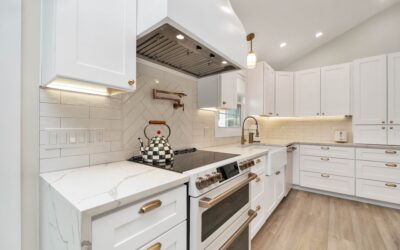
One of the most striking looks in modern kitchen design runs the same slab straight up the wall, and it starts with matching quartz countertop and backsplash surfaces. Instead of transitioning from stone counter to tile wall, the quartz continues seamlessly behind the range and up to the underside of the cabinets, creating a continuous, gallery-like expanse. It reads as luxurious and clean, and it solves the grout-line cleaning headache that tile backsplashes create. But the look is not right for every kitchen or every budget.
Part of our Countertops guide — explore the full guide →
This guide explains the ways to match quartz counters and backsplashes, the real costs, and the tradeoffs to weigh before you commit.
What “Matching” Can Mean
Matching does not always mean an identical full slab. There are several degrees of coordination, each with a different look and price.
- Full-height slab backsplash: The same quartz runs from countertop to upper cabinets, sometimes 18 to 20 inches tall. The most seamless and dramatic option.
- Standard 4-inch quartz backsplash: A short strip of the same quartz along the back of the counter, an affordable nod to matching.
- Coordinated but different: A quartz counter paired with a tile backsplash chosen to echo its colors and veining, rather than an exact match.
The full-height slab is what most people picture when they imagine matching quartz surfaces, and it is where the material’s seamless, waterproof character shines.
Why Homeowners Love the Seamless Look
The appeal goes beyond aesthetics. A full slab backsplash has no grout lines, which means nothing to scrub, no discoloration over time, and no porous joints to trap grease behind the stove. You simply wipe the wall down like the counter. For busy cooks, that maintenance advantage is huge.
Visually, carrying one material up the wall makes a kitchen feel calm and expansive because the eye is not interrupted by a change in texture or a busy tile pattern. It particularly flatters dramatic quartz with bold veining, letting a single striking pattern flow uninterrupted from the horizontal counter to the vertical wall.
Designing the Match
Getting a true match requires planning at the fabrication stage. If you want the veining to appear continuous, the fabricator can bookmatch or sequence the slabs so the pattern flows from counter to backsplash. This works best when both pieces are cut from the same slab or from consecutive slabs in a lot.
Tell your fabricator up front that you want a matching backsplash, because it affects how much material they order and how they lay out the cuts. For dramatic veined patterns, ask to see the actual slabs and mark which section goes where, so the most beautiful part lands in the most visible spot, usually behind the range.
What It Costs
Matching adds material, and quartz is priced by the square foot. Installed quartz typically runs $50 to $120 per square foot depending on the brand and pattern. A standard kitchen counter might use 40 to 55 square feet, and a full-height slab backsplash can add another 25 to 40 square feet.
- 4-inch backsplash: Adds roughly $150 to $500 to a countertop job.
- Full-height slab backsplash: Adds $1,500 to $4,000 or more depending on square footage and quartz grade.
By comparison, a tile backsplash costs $10 to $40 per square foot installed, making it far cheaper than a full slab. The seamless quartz look is a premium choice, so weigh how much the continuous appearance and easy cleaning matter to you against the added cost.
The Case Against Full Matching
Matching everything is not automatically the best design. A full quartz backsplash can feel monolithic, and some kitchens benefit from the contrast and warmth a different backsplash material provides. Designers often intentionally break up surfaces so the kitchen has visual layers rather than one uniform expanse.
There is also the cost and the resale angle. A very bold matching quartz can date a kitchen or overwhelm buyers with strong taste, whereas a neutral counter with a classic tile backsplash appeals more broadly. If your quartz has a busy, dramatic pattern, running it up the wall too can be visually heavy. In those cases, a coordinated tile that picks up the counter’s tones may look more balanced.
Popular Pairings That Work
If you love the coordinated look but want to keep costs reasonable, these approaches deliver a designer feel without a full slab.
- Pair a white or gray veined quartz counter with a subway tile backsplash in a matching white, letting the counter be the star.
- Choose a solid or lightly patterned quartz and add a short 4-inch quartz backsplash for a subtle, cohesive edge.
- Run a full slab backsplash behind the range only as a focal point, with tile on the remaining walls to control cost.
That range-focal approach is a smart compromise, concentrating the dramatic seamless quartz where it makes the biggest statement while keeping the overall budget in check.
Installation Considerations
A full slab backsplash requires precise templating because it must fit tightly against uneven walls, outlets, and cabinet edges. Fabricators cut openings for outlets and switches into the slab, so plan electrical placement carefully before templating. The slab is adhered to the wall and sealed at the seam with color-matched silicone rather than grout. Because these panels are heavy, professional installation is essential, and this is not a realistic DIY project the way a tile backsplash can be.
Cleaning and Maintaining the Combination
One of the quiet advantages of matching quartz surfaces is how easy they are to keep clean. Because quartz is non-porous, a full-height slab backsplash never needs sealing and wipes down with the same pH-neutral cleaner or dish-soap-and-water you use on the counter. There are no grout lines harboring grease behind the stove, no discolored joints to scrub, and no porous tile to reseal every year. For a busy cook, that maintenance simplicity is a genuine daily benefit.
Care for the vertical surface exactly as you would the horizontal one: wipe up cooking splatter promptly, avoid abrasive pads and harsh chemicals like bleach and oven cleaner, and skip waxy shine products that leave a haze. The silicone seam where the backsplash meets the counter should be inspected occasionally and re-caulked if it ever cracks or discolors, which is the only real upkeep the seamless look requires. Compared with the ongoing grout maintenance a tile backsplash demands, a slab backsplash is close to worry-free.
Making the Decision
Choosing whether to match your countertop and backsplash comes down to weighing three things: budget, style, and how much you value low maintenance. If a seamless, grout-free, easy-clean surface appeals and your budget can absorb the added stone, a full-height slab backsplash is a stunning, high-end choice that will still look current years from now. If you love the coordinated feel but need to control cost, a short 4-inch quartz backsplash or a carefully chosen tile that echoes the counter’s tones delivers a related look for far less.
Think too about the personality of your quartz. A calm, lightly patterned slab flows beautifully up the wall, while a bold, heavily veined quartz can feel overwhelming as a full backsplash and may look better reserved for a single focal wall behind the range. Whatever you decide, plan the matching at the fabrication stage, view your actual slabs, and let one great pattern carry the room rather than competing with a dozen other finishes. Done thoughtfully, a matched quartz kitchen reads as intentional, cohesive, and genuinely custom.
Final Thoughts
Matching quartz countertop and backsplash surfaces deliver a seamless, low-maintenance, high-end kitchen that many homeowners fall in love with. The full-slab version is a premium splurge that erases grout lines and lets a beautiful pattern flow uninterrupted, while a 4-inch quartz backsplash or a coordinated tile achieves a related look for far less. Decide how much the seamless appearance and easy cleaning are worth to you, plan the matching at the fabrication stage, and consider a range-only slab if you want maximum impact without the full price. Match with intention and the kitchen will look custom and cohesive for years.