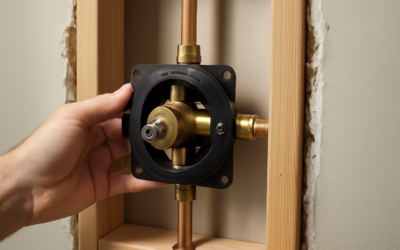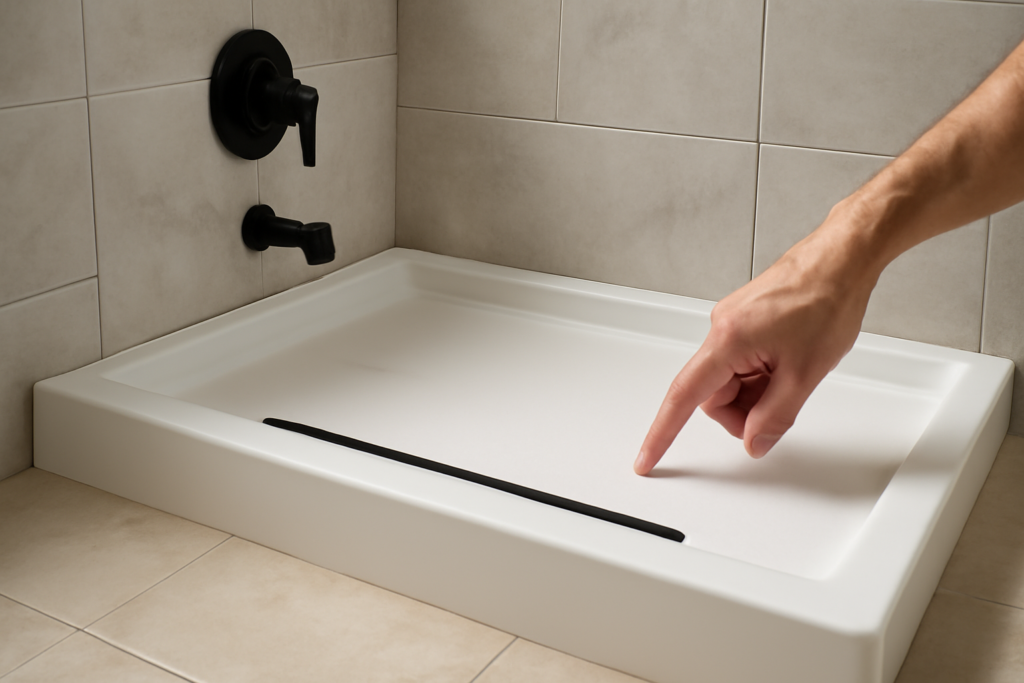
Shower pans used to be an afterthought SKU, but the delta everedge shower base line changed how the big-box aisle sells them — a coordinated family of sizes, drain positions, and matching wall kits engineered to install as a system. Delta brought its faucet-brand distribution muscle to bases, and the result is one of the easiest pans to actually get your hands on in a standard size. I have set a number of these on tub-to-shower conversions, and this guide covers what the delta everedge shower base is made of, the sizes and thresholds offered, how the install system works, and where it fits against competing pans.
Part of our Bathroom Remodeling & Flooring guide — explore the full guide →
What the EverEdge Line Is
EverEdge is Delta’s integrated shower base family, sold primarily through Home Depot alongside Delta’s Classic 400 and UPstile wall systems. The concept is a modular conversion platform: pick a base sized to a standard tub or shower footprint, pick the drain side to match your rough-in, and pair it with Delta wall panels and a Delta door that are dimensioned to that exact base. The name refers to the base’s defining feature — a clean, squared threshold edge designed to mate with Delta’s wall and door hardware without the sloppy overlaps you get mixing brands.
That system logic is the honest selling point. Any 60 x 32 pan can technically sit under any 60-inch wall kit, but matched systems eliminate the fit-up guesswork at the corners and curb that eats install time and causes leaks.
Sizes and Drain Positions
The line concentrates on the conversion and alcove footprints that cover most American bathrooms:
- 60 x 32 inches — the tub-replacement standard, in left-, right-, and center-drain versions
- 60 x 30 inches — for older, shallower tub alcoves
- 48 x 34 and 48 x 36 inches — mid-size alcove showers
- 36 x 36 and 32 x 32 inches — compact and corner class, center drain
Matching drain position to your existing rough-in is the money decision. A 60-inch tub drain sits at one end, so a left- or right-drain EverEdge drops onto the existing trap location with minimal re-piping — often the difference between a $0 and an $800 plumbing line item. Measure from the drain center to each wall before ordering, and remember the convention: left and right are named facing the alcove from the room.
Material and Construction Specs
EverEdge bases are high-gloss acrylic over a structural reinforcement layer, ringed with an integral tile flange on the wall sides and a molded curb at the front. Real-world numbers you care about:
- Curb height: roughly 4 inches, with about a 3-to-3.5-inch step-over
- Interior threshold-to-floor depth: shallow slope, quarter-inch-per-foot pitch to the drain
- Weight: about 40 to 60 pounds depending on size — one strong installer or an easy two-person carry
- Drain: standard 2-inch opening accepting common compression or solvent-weld shower drain assemblies (drain sold separately, $15 to $40)
- Floor texture: molded slip-resistant pad across the standing area
- Color: high-gloss white; matching Delta wall kits in white and painted finishes
Acrylic-over-reinforcement is the right recipe at this price. It is warm underfoot, easy to clean, and stiff enough that — properly bedded — it does not oil-can. It is not a cast-stone pan, and it will not pretend to be: heavy users and stone-look bathrooms belong a tier up.
The Install System: Why Contractors Like It
Delta engineered the EverEdge around fast tub-to-shower conversions, and the details show. The tile flange is pre-formed on three sides, so wall panels or backer lap over it without site-built shimming. The base footprint is dimensioned to land on the same footprint as a standard tub, meaning existing framing generally works untouched. And Delta publishes the framing, ledger, and support specs clearly — including the requirement that matters most: a full mortar or structural-foam bed under the floor area. Do not skip that step because the pan feels rigid in the store rack; every unsupported acrylic pan eventually creaks, then crazes, then cracks.
- Demo to studs; verify the subfloor is level within 1/4 inch over the footprint
- Dry-fit the base, mark the drain, and confirm trap alignment below
- Set the drain body to the pan, spread a wet mortar bed, and press the base level in both directions
- Fasten the flange to studs per Delta’s schedule — through pre-drilled points, not random screws that can crack acrylic
- Let the bed cure overnight, then water-test the drain connection before walls go on
A practiced two-person crew has the old tub out and the base set by mid-afternoon; the walls and door land the next day. That schedule is the entire commercial logic of the product.
Common Install Mistakes on This Base
Three errors account for nearly every EverEdge problem I get called to look at. First, dry-setting: installers trust the reinforced shell and skip the mortar bed, and six months later the homeowner reports creaking at the drain end — by then the fix means pulling walls. Second, overdriving flange fasteners: acrylic flanges crack when a screw gun runs a fastener home at full torque; drive to snug by hand at the pre-drilled points and stop. Third, ignoring subfloor level: the pan follows whatever it sits on, and a base pitched 3/8 inch toward the front sends water over the curb line at the door gap. Shim and level the subfloor first, not the pan.
One more habit worth adopting from commercial crews: after the mortar cures, plug the drain and pour two inches of water into the pan for an hour, then check below. Finding a weeping drain gasket before the wall panels go on turns a warranty disaster into a ten-minute re-seat.
- Always bed in mortar or approved structural foam
- Hand-snug flange screws only, at pre-drilled points
- Level the subfloor before setting, within 1/4 inch
- Water-test the drain before closing walls
Pricing and Warranty
Street prices run about $250 to $330 for the 32 x 32 and 36 x 36 sizes, $300 to $420 for the 48-inch class, and $350 to $500 for the 60 x 30 and 60 x 32 conversion sizes. The coordinated Delta wall kits add $500 to $1,000 and doors $300 to $700, putting a complete matched Delta alcove in the $1,200 to $2,200 range in parts. Delta covers the base with a limited lifetime warranty for residential use — consistent with its faucet warranty culture, and backed by a parts-and-support operation that actually answers, which matters more with bases than people expect (flange cracks and finish defects do surface occasionally in shipping).
EverEdge vs. the Competition
Against DreamLine’s SlimLine bases ($300 to $500), the EverEdge trades SlimLine’s lower-profile look for a more conventional curb and a tighter wall-system match if you are going all-Delta. Against Swanstone and other solid-surface pans ($450 to $800), the EverEdge gives up material mass and the stone feel but saves $200-plus and 100 pounds of carry weight. Against bargain fiberglass pans under $200, it is simply a stiffer, better-finished product with a real warranty. The honest verdict: within the acrylic tier, availability, drain-position options, and system matching are the EverEdge’s edge — the pan itself is very good, and the ecosystem around it is the reason to pick it.
Who Should Buy One
Choose an EverEdge when you are converting a 60-inch tub alcove to a shower and want the fastest low-risk path; when your drain rough-in matches one of its left/right/center options; or when you plan to run Delta walls and a Delta door anyway and want everything dimensioned by one engineering team. Look elsewhere if you want a genuinely low 1.5-inch accessible threshold (other lines serve that better), a custom or oversized footprint, or the cold solidity of cast stone under bare feet. And whichever pan you land on, the rules stay the same: match the drain, bed it in mortar, level it twice, and water-test before a single wall panel goes up.