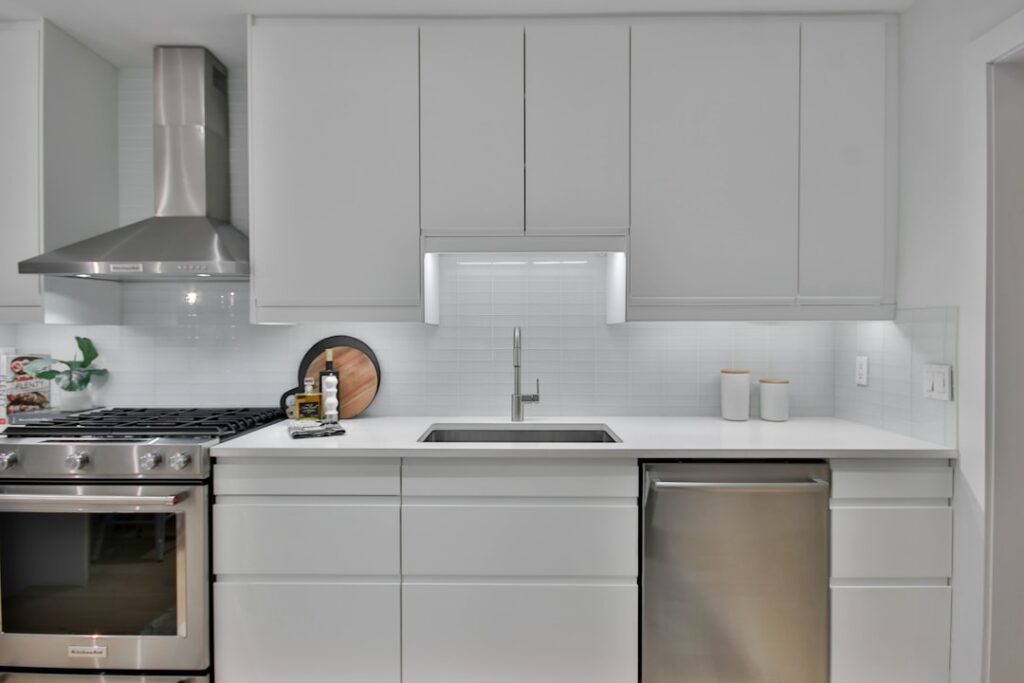
A faucet is the piece of your kitchen you touch dozens of times a day, so it deserves more thought than most homeowners give it. A designer kitchen faucet is where engineering meets sculpture: a ceramic-disc valve that never drips, a spray head that switches modes with a thumb, and a silhouette that anchors the whole sink zone. Spend a little time understanding what actually separates a designer faucet from a builder-grade one, and you will buy a fixture that looks right and works flawlessly for 15 years.
Part of our Kitchen Remodeling guide — explore the full guide →
- What Defines a Designer Kitchen Faucet
- Faucet Styles and Silhouettes
- Finishes That Hold Up
- Features Worth Paying For
- What a Designer Kitchen Faucet Costs
- Installation and Compatibility Checks
- Spray Patterns, Flow Rate, and Ergonomics
- Matching the Faucet to Your Sink and Decor
- Choosing the Right One for Your Kitchen
What Defines a Designer Kitchen Faucet
A designer kitchen faucet is not just an expensive faucet. The distinction lives in three areas: the quality of the internal valve, the durability of the finish, and the thoughtfulness of the features. Where a $60 builder faucet uses a rubber-seal cartridge that wears out, a designer model uses a ceramic-disc valve rated for hundreds of thousands of cycles.
The body is usually solid brass rather than zinc or plastic, which gives it heft and corrosion resistance. Add a PVD-coated finish that resists scratching and tarnish, an aerator that hits the right flow, and a magnetic dock that snaps the spray head home, and you have a fixture engineered to feel deliberate every time you use it.
Faucet Styles and Silhouettes
Form drives the first impression, so match the shape to your kitchen’s design language:
- Gooseneck (high-arc): A tall, curved spout with generous clearance for filling stockpots. The default for modern and transitional kitchens.
- Pull-down: The spray head pulls straight down into the sink; the most popular and ergonomic style.
- Pull-out: The head pulls out toward you horizontally, better for shallow sinks and tight windows above.
- Industrial spring-coil: An exposed coiled spring around the hose, echoing a commercial kitchen. A strong statement piece.
- Bridge faucet: Separate hot and cold handles joined by a visible bridge, perfect for farmhouse and traditional looks.
Spout height and reach matter as much as style. Measure the clearance to your window or upper cabinet, and confirm the spout reaches near the center of the sink basin so water does not splash the rim.
Finishes That Hold Up
Finish is where a kitchen’s personality shows, and designer faucets offer far more than chrome. Each finish carries practical trade-offs:
- Brushed or satin nickel: Warm, hides water spots and fingerprints well. A safe, popular choice.
- Matte black: Bold and modern, but shows hard-water mineral spots and needs frequent wiping.
- Brushed gold or champagne bronze: Trending warm metallic that pairs with white and green cabinetry.
- Polished chrome: Bright, timeless, easy to clean, though it shows every fingerprint.
- Oil-rubbed bronze: Deep, traditional, and forgiving of spots.
Whatever you choose, look for a PVD (physical vapor deposition) finish. PVD bonds the color at a molecular level and resists the scratching and peeling that plague cheaper electroplated coatings.
Living finishes are a category worth understanding before you buy. Unlike sealed PVD coatings, living finishes such as unlacquered brass and certain hand-applied bronzes are designed to age, developing a patina over months of use. Some homeowners love that evolving, lived-in character; others are dismayed when their bright faucet darkens unevenly around the handle. Decide which camp you are in before you commit, because a living finish cannot be scrubbed back to its original look. If you want the metal to stay exactly as it arrived, choose a sealed PVD version instead.
Features Worth Paying For
Designer faucets pack conveniences that genuinely change daily use. Touchless activation, where a wave near a sensor starts the water, keeps handles clean when your hands are covered in raw chicken or bread dough. Touch-activation, a tap anywhere on the spout or handle, is a simpler version that many people prefer for reliability.
A dual-function spray head that toggles between an aerated stream and a powerful spray is close to essential in a modern faucet. Look for a magnetic docking system, which holds the spray head firmly in place instead of letting it sag over time, a common failure point on lesser hoses. Some premium models add a voice-assistant link or a precise measured-fill feature, though those cross into novelty for most homeowners.
What a Designer Kitchen Faucet Costs
Price tracks closely with valve quality, finish durability, and features. Realistic ranges:
- Entry designer (solid brass, ceramic valve, pull-down): $150 to $300
- Mid-range with premium PVD finish and magnetic dock: $300 to $600
- High-end touchless or statement industrial models: $600 to $1,500
Professional installation, if you do not DIY, runs $150 to $350. The value case is real: a $250 faucet with a ceramic-disc valve routinely outlasts three $60 faucets, so the upfront premium often costs less over a decade. Buy from a brand with a lifetime valve warranty, which the reputable makers all offer.
Installation and Compatibility Checks
Before you buy, confirm your sink’s mounting holes. A single-handle pull-down needs one hole; add a soap dispenser or side sprayer and you may need two or three. Many designer faucets include a deck plate (escutcheon) to cover extra holes from an old three-hole setup, so you are not locked in.
Check the water-supply connections and the space under your sink. Touchless models need a power source, either an AA battery pack or an AC adapter with an outlet nearby. Most single-handle faucets install in under an hour with a basin wrench, plumber’s tape, and the included supply lines. If your shutoff valves are old and stiff, replace them while you are under there; it is cheap insurance against a future leak.
Spray Patterns, Flow Rate, and Ergonomics
Daily comfort lives in the details of how water actually comes out. A good designer faucet offers at least two spray modes, a soft aerated stream for filling glasses and a concentrated spray for blasting stuck-on food, and switches between them with a simple button on the spray head. Some add a pause button that stops flow at the head so you can reposition without splashing.
Flow rate is regulated to 1.8 gallons per minute in most states, and a well-engineered aerator makes that feel powerful rather than weak. Pay attention to ergonomics too: a spray head that is too heavy sags in the dock over time, while a magnetic dock keeps it snug. The handle should move smoothly through its full range without hitting a backsplash or wall, so check the clearance behind the faucet before you commit to a tall single-lever design.
Matching the Faucet to Your Sink and Decor
A designer faucet should feel like part of a coordinated whole, not an afterthought. Scale it to the sink: a massive industrial spring faucet overwhelms a small bar sink, while a petite spout looks lost over a deep farmhouse basin. As a rule, the spout height should clear your tallest pots but not tower awkwardly over a low window.
Coordinate metals loosely with your cabinet hardware, lighting, and appliance pulls, they should relate, not match with robotic precision. A brushed-nickel faucet pairs comfortably with stainless appliances; matte black grounds a white or green kitchen; brushed gold warms up cool-toned cabinetry. If your sink already has three mounting holes from an older setup, either fill the extras with a soap dispenser and side sprayer or use a single-hole faucet with a deck plate to cover them cleanly.
Choosing the Right One for Your Kitchen
Start with function, then style. Decide whether you want touchless or manual, how tall a spout your window allows, and how many mounting holes your sink has. Then pick the finish that ties into your cabinet hardware and lighting, keeping metals loosely coordinated rather than perfectly matched. Finally, insist on a solid-brass body, a ceramic-disc valve, a PVD finish, and a lifetime warranty.
Care keeps that luxury looking new. Wipe the faucet dry after heavy use to prevent hard-water spotting, especially on matte black and polished chrome, and clean it with mild soap and a soft cloth rather than abrasive pads or acidic cleaners that etch the finish. Every few months, unscrew and rinse the aerator to clear mineral buildup that weakens the stream. If your water is hard, an inexpensive whole-house or under-sink filter reduces the scale that shortens any faucet’s life.
Nail those fundamentals and a designer kitchen faucet becomes the small luxury you notice every single day, a fixture that pours cleanly, resists spots and wear, and pulls the whole kitchen together without ever giving you a reason to think about it again.