There’s a reason the vast majority of new kitchen faucets sold today use one handle instead of two: convenience wins. A single lever kitchen faucet lets you adjust both water temperature and flow with one hand, which is exactly what you need when the other hand is holding a dripping pan or a fistful of vegetables. But not all single-lever models are created equal, and the differences in valve quality, spray function, and mounting can make or break your daily experience at the sink.
Part of our Kitchen Remodeling guide — explore the full guide →
- Why Single-Lever Beats Two-Handle for Most Kitchens
- Spray Styles: Pull-Down, Pull-Out, and Standard
- The Cartridge Is the Heart of the Faucet
- Check Your Sink and Deck Setup
- Installing a Single-Lever Kitchen Faucet
- Flow Rate, Finishes, and Extras
- Materials and Construction to Look For
- Making the Right Choice
Why Single-Lever Beats Two-Handle for Most Kitchens
A two-handle faucet forces you to juggle separate hot and cold controls to dial in the right temperature. A single lever does it in one fluid motion, moving up for more flow and side to side for temperature. When your hands are full or messy, that one-handed control is a genuine daily upgrade.
Single-lever faucets also have fewer external parts to leak, since only one handle penetrates the body. That translates to less maintenance over the life of the fixture.
Spray Styles: Pull-Down, Pull-Out, and Standard
The spout style shapes how you actually use the faucet:
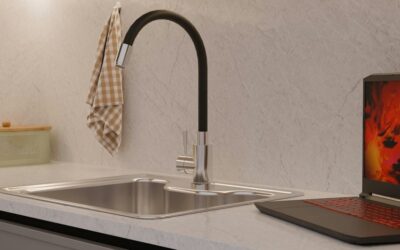
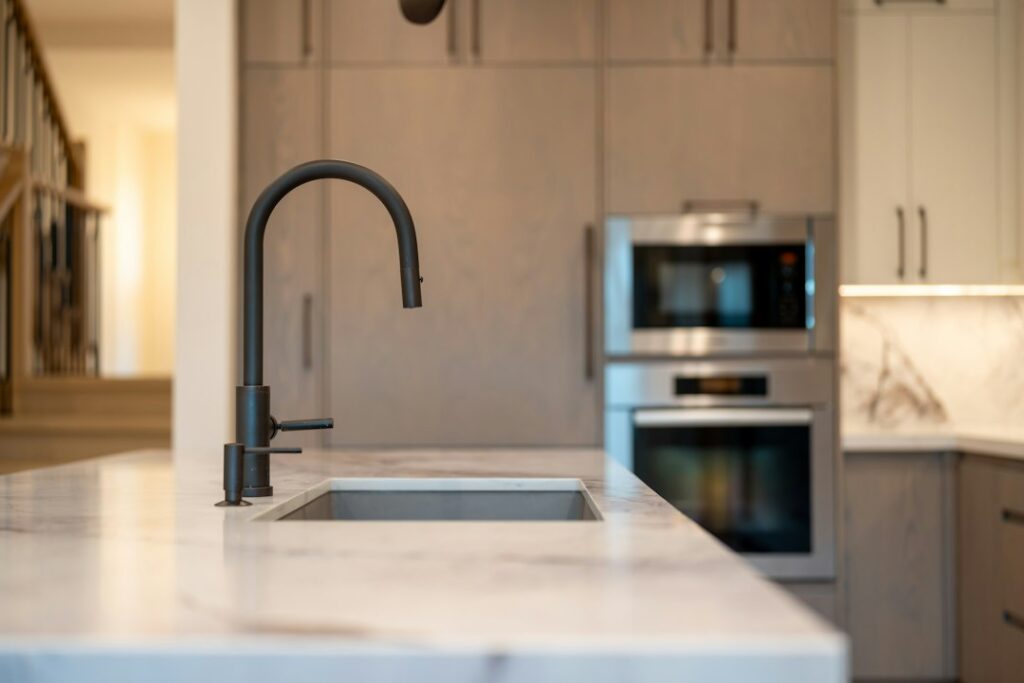
- Pull-down — a tall gooseneck spout with a spray head that pulls straight down into the sink. Ideal for filling and rinsing large pots and the most popular style today.
- Pull-out — a lower spout with a spray wand that pulls out toward you. Better for small sinks or kitchens with a window ledge behind the faucet.
- Standard fixed spout — no spray wand, just a solid spout, often paired with a separate side sprayer. Simplest and cheapest.
Most homeowners are happiest with a pull-down for its reach and flexibility. Look for a spray head with an easy-to-toggle switch between aerated stream and forceful spray, plus a magnetic dock that snaps the wand back into place cleanly.
The Cartridge Is the Heart of the Faucet
Inside every single-lever faucet is a cartridge that controls water flow and temperature. Ceramic-disc cartridges are the standard to look for because they resist wear, handle grit in the water, and rarely drip. Cheaper ball-valve and compression designs wear out faster and are more prone to leaks.
Brands like Moen, Delta, and Kohler build their reputations on durable cartridges backed by strong warranties. Paying $150 instead of $60 often buys you a ceramic cartridge and a lifetime warranty, which pays off in years of drip-free use.
Check Your Sink and Deck Setup
Single-lever faucets usually mount in one hole, but many kitchen sinks are pre-drilled with three or four holes for older two-handle setups. A deck plate, or escutcheon, bridges the extra holes so a single-hole faucet installs cleanly.
Measure the distance from the wall to the faucet hole and confirm you have clearance for the handle to swing back fully. A tall gooseneck faucet under a low window can be blocked from opening all the way, so check the height against any obstruction behind the sink.
Installing a Single-Lever Kitchen Faucet
Replacing a faucet is a solid weekend DIY task that saves $150 to $250 in plumber fees. The process:
- Turn off the hot and cold shutoff valves under the sink and open the old faucet to release pressure.
- Disconnect the supply lines and the sprayer hose, then loosen the mounting nuts with a basin wrench.
- Lift out the old faucet and clean the sink deck thoroughly.
- Feed the new faucet’s lines through the mounting hole, adding the deck plate if needed, and secure it from below.
- Connect the supply lines to the shutoff valves and, for pull-down models, attach the weight to the spray hose.
- Turn the water on slowly, remove the aerator, and run the faucet to flush debris before checking for leaks.
A basin wrench is essential for reaching the mounting nuts in the tight space behind the bowl. Take your time with the supply connections, as over-tightening can crack a fitting.
Flow Rate, Finishes, and Extras
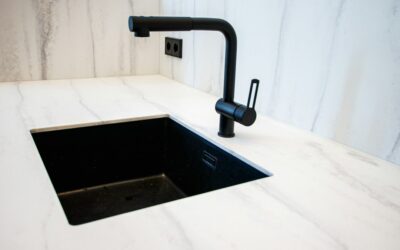
Kitchen faucets are capped at 1.8 GPM in many states, and that’s plenty for filling pots quickly. Finishes range from spot-resistant stainless and brushed nickel, which hide fingerprints, to matte black and polished chrome for a bolder look.
Some models add touchless or touch-activation, letting you start the water with a wave or a tap when your hands are dirty. It’s a worthwhile splurge in a busy kitchen, though it requires batteries or a nearby outlet for the power supply.
Materials and Construction to Look For
What a faucet is made of affects both its lifespan and how safe your water is. The best single-lever faucets use a solid brass body, which resists corrosion and handles decades of daily use. Cheaper models rely on zinc alloy or plastic internals that crack and corrode far sooner, so check the spec sheet for brass construction.
Also confirm the faucet is certified lead-free to NSF/ANSI 372 standards, which is required for drinking-water fixtures. The spray hose matters too; a braided nylon or reinforced hose outlasts a thin vinyl one and resists kinking as the wand retracts. On pull-down models, a metal spray head feels more substantial and holds up better than an all-plastic one. Spending a little more for genuine brass and quality hoses is the difference between a faucet you replace in five years and one that still works flawlessly in fifteen.
Making the Right Choice
For nearly every kitchen, a pull-down single lever kitchen faucet with a ceramic-disc cartridge in a spot-resistant finish is the sweet spot. Budget $120 to $250 for a model that will last 15 years or more, confirm your sink’s hole count and clearance before buying, and don’t skimp on the cartridge quality. Get those basics right and you’ll enjoy effortless, one-handed control every single day, which is the whole point of going single-lever in the first place.