
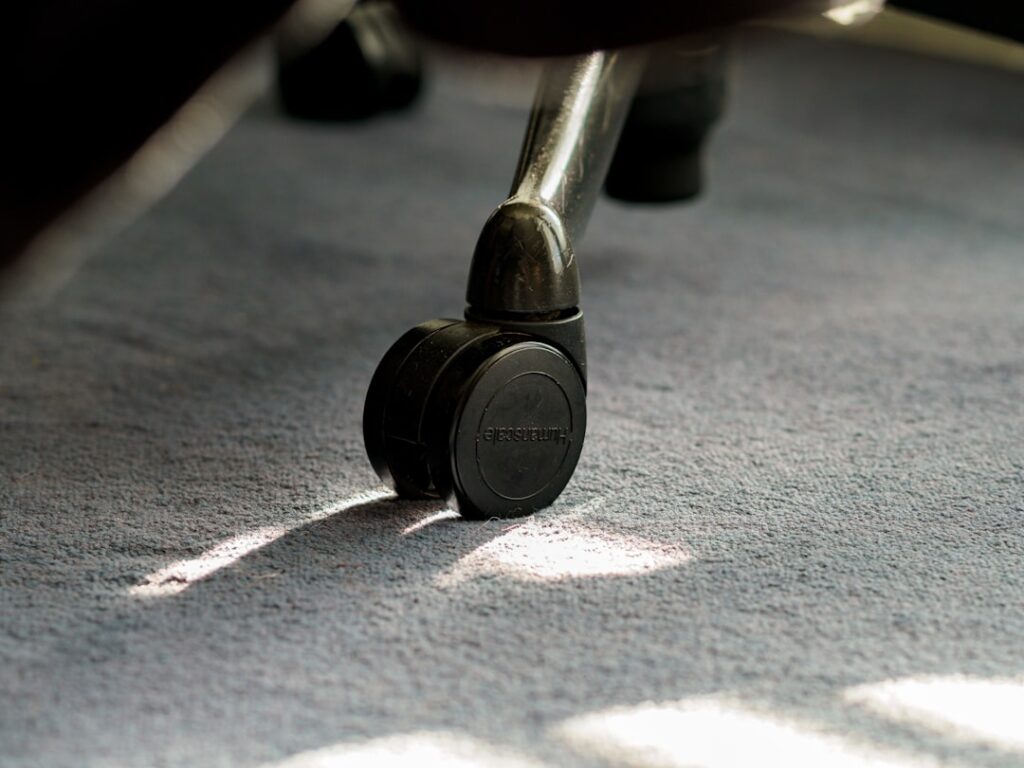
If you’ve ever tried to roll an office chair across carpet, you already know the problem. The wheels dig in, the chair fights you, and over months the constant rolling crushes and frays the fibers in one worn patch. A desk floor mat for carpet solves both issues at once, giving your chair a smooth, glassy surface to glide across while shielding the carpet underneath from wear. Choosing the right one isn’t as simple as grabbing the cheapest mat, though; pile height, thickness, and material all matter. Here’s what actually works.
- Why You Need a Chair Mat on Carpet
- The Most Important Factor: Carpet Pile Height
- Material Choices: PVC vs. Polycarbonate vs. Glass
- Choosing the Right Size and Shape
- Thickness and the Cleats Underneath
- Installation and Break-In Tips
- Cleaning and Longevity
- Alternatives Worth Considering
- The Bottom Line
Why You Need a Chair Mat on Carpet
Carpet and rolling chairs are a bad match. Every push and pivot grinds grit into the fibers and flattens the pile in your work zone, and the resistance forces your legs to do extra work all day. A chair mat fixes the mechanics of the problem.
A good mat lets the chair roll with almost no effort, which reduces strain on your knees, hips, and lower back over a long workday. It also protects the carpet from crushing, staining, and premature wear, which matters a lot if you’re renting or want to preserve the flooring value in a home office.
The Most Important Factor: Carpet Pile Height
Get this wrong and the mat won’t work, so measure before you buy. Chair mats are rated for specific pile heights, and matching them is the single most important decision.
- Low pile (under 1/4 inch): most commercial and berber-style carpet. Use a mat labeled for low-pile carpet, which has short, subtle gripper cleats underneath.
- Medium pile (1/4 to 1/2 inch): typical residential cut-pile carpet. Requires a medium-pile mat with slightly longer cleats.
- High and plush pile (over 1/2 inch): thick, luxurious carpet. Needs a thick, rigid mat with long cleats designed to bite through the deep pile and anchor firmly.
To measure, press a ruler straight down into the carpet until it hits the backing and read the height of the fibers. A mat rated for a lower pile than you have will slide, ripple, and never sit flat.
Material Choices: PVC vs. Polycarbonate vs. Glass
Chair mats come in three main materials, and the right one depends on your budget and how hard you’ll use it.
- PVC (vinyl): the most common and affordable option, running $25 to $60. Fine for light to moderate use, though cheaper PVC can crack, curl, or dent under a heavy chair over time.
- Polycarbonate: a step up at $60 to $150. Stronger, clearer, and far more resistant to cracking and denting than PVC. Worth it for daily, heavy use.
- Tempered glass: the premium choice at $100 to $250. Virtually indestructible, never dents or cracks, rolls like ice, and looks sleek, though it’s heavy and pricey.
For a home office used a few hours a day, quality PVC or polycarbonate is plenty. If you’re at your desk full time or have a heavy gaming or executive chair, spend up for polycarbonate or glass and you’ll never replace it.
Choosing the Right Size and Shape
Size the mat to your whole work zone, not just the chair. A common mistake is buying a mat that’s too small, so the chair rolls off the edge onto the carpet, defeating the purpose and creating a lip that catches the wheels. Standard mats run about 36 by 48 inches for a compact setup and 45 by 53 inches or larger for a full desk with room to roll.
Many mats include a “lip” or tongue that extends under the desk into the knee well, keeping the chair on the mat even when you scoot forward. Measure your desk footprint plus the full range your chair travels, and add a margin so the wheels stay on the surface at all times.
Thickness and the Cleats Underneath
Thickness ties directly to pile height and durability. A thicker mat is more rigid, resists denting, and stays flatter on deep carpet, but it also creates a slightly higher step up from the floor. For low pile, a thinner mat is fine and less of a trip hazard. For plush carpet, you need a thick, stiff mat so it doesn’t sag into the pile.
The cleats, or gripper spikes, on the underside are what anchor the mat to carpet. Longer cleats grip deeper piles; short cleats suit low pile. If a mat designed for low pile is used on thick carpet, the short cleats can’t reach the backing and the mat shifts. Always match the cleats to your pile, and never put a carpet-cleat mat on a hard floor, where the spikes will scratch the surface.
Installation and Break-In Tips
Setting up a chair mat takes minutes, but a couple of tricks help it lie flat and grip well. Most mats ship rolled up, so unroll yours and let it sit flat for 24 to 48 hours, ideally in a warm room, so it relaxes and the curl disappears. Place a few books at the corners to speed the process. Once it’s flat, position it and press down firmly across the whole surface so the cleats bite into the carpet and anchor it in place.
Cleaning and Longevity
Chair mats are low-maintenance. Wipe the surface periodically with a damp cloth and mild cleaner to remove dust and scuffs that would otherwise make the chair slip. Avoid harsh solvents on PVC, which can cloud the surface. Every few weeks, lift the mat and vacuum the carpet underneath to remove trapped grit. With reasonable care, a polycarbonate or glass mat lasts many years, while a budget PVC mat typically needs replacing every couple of years as it dents and cracks.
Alternatives Worth Considering
A standard chair mat isn’t the only way to solve the rolling-on-carpet problem, and a couple of alternatives suit specific situations better. Bamboo and hardwood roll-up mats offer a warmer, more attractive surface than clear plastic and hold up well, though they cost more and can be heavy to move. They’re a nice choice for a visible home office where a utilitarian PVC mat would look out of place.
Some people opt for hard casters or rollerblade-style polyurethane wheels on their chair instead of a mat. Swapping the standard nylon casters for soft wheels designed to grip helps a little on low pile, but it doesn’t protect the carpet from wear the way a mat does, and it won’t cure the resistance on medium or plush pile. Consider it a supplement, not a replacement.
A large, flat, low-pile area rug over the carpet is another workaround, but chairs still don’t roll well on it and it can bunch up. For genuine glide and real carpet protection, a properly sized mat rated for your pile height remains the most effective solution. The alternatives make sense mainly for aesthetics or very low-pile situations where the rolling problem is mild to begin with.
The Bottom Line
A desk floor mat for carpet is one of those small purchases that quietly improves your workday and protects your flooring for years. The whole decision hinges on matching the mat to your carpet’s pile height, sizing it to cover your full work zone, and choosing a material that fits how hard you’ll use it. Measure your pile first, buy a mat rated for that height, let it flatten before use, and your chair will glide effortlessly while the carpet beneath stays protected.


