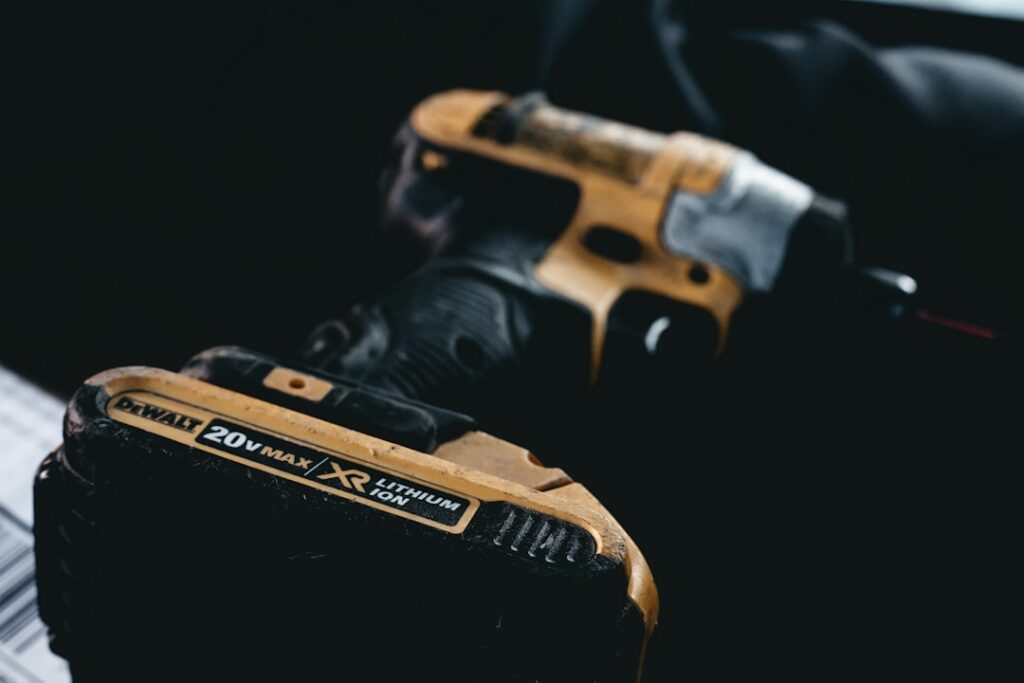
For homeowners already invested in DeWalt’s 20V MAX battery platform, adding a cordless blower is an easy way to skip gas and extension cords. A dewalt leaf blower 20v handles driveways, patios, and small-to-medium yards with the same batteries that run your drills and saws. This guide explains the models, what the airflow numbers mean, and how to get the most run time out of a charge.
- Understanding CFM and MPH
- The Main 20V Models
- Brushless Motors and Efficiency
- Run Time and Battery Sizing
- Variable Speed and Speed Lock
- Weight and Ergonomics
- What a 20V Blower Can and Cannot Do
- Noise and Neighbor Considerations
- 20V vs. 60V FlexVolt Blowers
- Technique for Efficient Leaf Clearing
- Beyond Leaves: Other Uses
- Cost and Value
- Air Speed, Nozzles, and Control
- Maintenance and Care
Understanding CFM and MPH
Two numbers define blower performance, and both matter:
- CFM (cubic feet per minute): The volume of air moved. Higher CFM pushes larger piles and wide swaths of leaves.
- MPH (miles per hour): The air speed. Higher MPH dislodges wet, stuck, or matted debris.
A blower with high MPH but low CFM makes a lot of noise without moving much material. For leaves you want a healthy CFM figure; for cleaning stubborn debris off hardscape you want MPH. The best all-around blowers balance both.
The Main 20V Models
DeWalt offers several 20V blowers at different power and price points:
- DCBL722 (brushless): A compact handheld rated around 450 CFM and 125 MPH with a variable-speed trigger and a speed lock. The strong all-around homeowner pick.
- DCBL720 (brushless): An earlier version, similar output, still widely available.
- DCE100 (compact): A small, lower-output blower better suited to garages, workshops, and light patio dust than heavy leaf work.
The DCBL722 is the model most people mean when they shop for a DeWalt 20V blower.
Brushless Motors and Efficiency
The main leaf-clearing models use brushless motors, which convert more battery energy into airflow, run cooler, and last longer than brushed motors. That efficiency directly translates into longer run time and more consistent power as the battery drains. The compact DCE100 uses a brushed motor and lower output, which is why it is aimed at cleanup rather than yard work.
Run Time and Battery Sizing
Run time depends heavily on the battery and how hard you run the trigger. Realistic figures for the DCBL722:
- 2.0Ah battery: roughly 10 to 15 minutes at high speed.
- 5.0Ah battery: roughly 25 to 40 minutes at mixed speed.
- Variable speed at half throttle can nearly double these numbers for light work.
Because a blower draws heavy current at full speed, larger batteries make a big difference. A 5.0Ah or 6.0Ah pack is the practical minimum for real yard cleanup; a 2.0Ah pack is fine only for quick patio blow-offs.
Variable Speed and Speed Lock
The variable-speed trigger lets you dial power up for a leaf pile and down for delicate mulch beds or narrow flower borders. The speed lock holds a set output so your finger does not fatigue during long sessions. Running at the lowest speed that gets the job done is the single best way to stretch battery life.
Weight and Ergonomics
The DCBL722 weighs about 5 to 7 pounds with a battery, light enough to use one-handed for extended periods. The balance point sits near the grip, reducing wrist strain. Compared to a gas handheld that vibrates and weighs more, the cordless unit is far more comfortable, though a backpack gas blower still wins on raw endurance for very large properties.
What a 20V Blower Can and Cannot Do
A 20V DeWalt blower excels at:
- Clearing driveways, sidewalks, decks, and patios.
- Blowing dry leaves off lawns up to a quarter or third of an acre.
- Cleaning grass clippings after mowing.
- Drying off a car or clearing gutters from a ladder.
It struggles with very large leaf-covered lots, thick wet matted leaves, and moving debris long distances. For those jobs a 60V FlexVolt blower or a backpack unit is the better tool.
Noise and Neighbor Considerations
Cordless blowers are noticeably quieter than gas, typically in the 60s to low 70s dB range versus 90-plus for gas. That means you can use them earlier in the day without disturbing neighbors, and many communities that restrict gas blowers permit electric ones. The reduced noise also spares your own hearing during long sessions.
20V vs. 60V FlexVolt Blowers
DeWalt also sells 60V FlexVolt blowers, and understanding the difference helps you buy the right tool. The 20V blowers move around 400 to 450 CFM, ample for driveways, patios, and small-to-medium yards. The 60V FlexVolt units push considerably more air, in the 600-plus CFM range, with the endurance to clear larger lots and heavier, wetter leaves. If your property is a quarter acre or less of mostly hardscape and light leaf load, the 20V is lighter, cheaper, and sufficient. If you have big trees, a large lawn, or frequent wet leaves, the extra power of a 60V or a backpack blower saves real time.
Technique for Efficient Leaf Clearing
How you use the blower matters as much as the tool. Work with the wind rather than against it, and blow leaves into a single pile downwind rather than chasing scattered debris. Approach piles from the sides to consolidate them instead of blasting straight into the middle, which just scatters leaves. On lawns, angle the nozzle low and forward to skim leaves off the grass. Using the lowest effective speed not only stretches battery life but also gives you more control and keeps you from blowing leaves back onto areas you have cleared.
Beyond Leaves: Other Uses
A 20V blower earns its keep year-round beyond fall cleanup. Use it to clear grass clippings off driveways after mowing, dry a washed car without water spots, blow sawdust out of a workshop, clear light snow dusting off steps and cars, and even push standing water off a flat surface. Its light weight and cordless freedom make it handy for quick tasks that would not justify dragging out a corded or gas machine. Many owners find they reach for it far more often than they expected.
Cost and Value
Bare tools run $70 to $130, and kits with a battery and charger run $120 to $220. If you already own 20V batteries, buy the bare tool and save. If not, look for a kit that includes a 5.0Ah battery, since it doubles as power for other tools and provides the run time you actually need for yard work.
Air Speed, Nozzles, and Control
The nozzle shape changes how the blower performs. A narrow, tapered nozzle concentrates the air into a faster, more focused stream that dislodges stuck leaves and cleans crevices, while a wider nozzle spreads a gentler, broader flow better for moving big piles of dry leaves across a lawn. Many DeWalt blowers include a concentrator nozzle for this reason. Combined with the variable-speed trigger, you can fine-tune the airflow for the task: high speed and a narrow nozzle for wet, matted debris on concrete, and lower speed with a wider spread for delicate mulch beds and flower borders where too much force scatters material. Learning to match nozzle and speed to the job makes the tool far more effective. It also conserves battery, since running wide open when a lower setting would do wastes charge and shortens the run time you get from each pack. A few minutes of experimenting with the nozzle and trigger on your own driveway quickly teaches you the settings that clear fastest with the least effort.
Maintenance and Care
Cordless blowers need almost no maintenance, but a few habits help:
- Wipe the intake screen clear so debris does not restrict airflow.
- Store batteries indoors, out of freezing or baking temperatures.
- Charge lithium packs before long storage rather than leaving them fully depleted.
- Keep the nozzle free of packed leaves and mud.
A dewalt leaf blower 20v is a smart, quiet, low-maintenance choice for anyone already in the 20V MAX ecosystem with a small-to-medium yard. Pick the brushless DCBL722 for real leaf work, pair it with a 5.0Ah or larger battery for usable run time, and lean on the variable-speed trigger to stretch each charge. For larger properties or heavy wet leaves, step up to a 60V or backpack blower, but for typical suburban cleanup the 20V does the job cleanly.