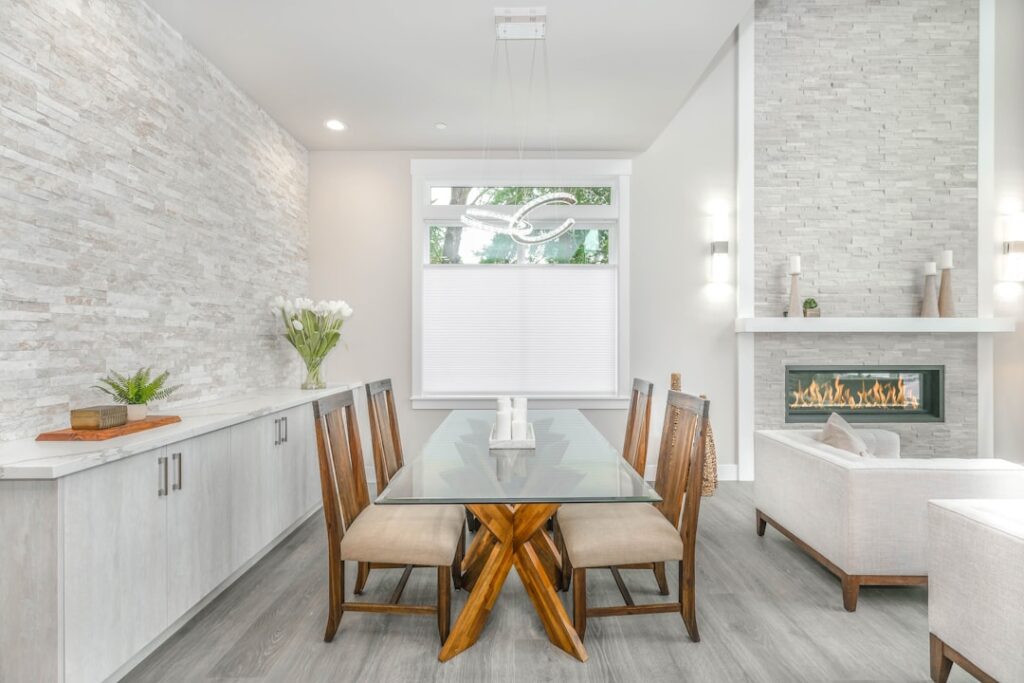
A dining room is one of the few spaces in a home where a little drama is welcome, and nothing delivers it faster than a single papered wall behind the table. A well-executed dining room wallpaper accent wall turns an ordinary eating area into a room people actually want to linger in, all for a fraction of the cost and effort of papering the entire space. The trick is choosing the right wall, the right pattern, and the right install method for your commitment level. This guide walks through each decision so your accent wall reads as intentional and designer-made, not like a leftover roll slapped up on a whim.
Part of our Paint & Walls guide — explore the full guide →
Why an Accent Wall Beats a Fully Papered Room
Wallpapering a whole dining room can overwhelm the space and drain your budget, especially with a bold pattern. A single accent wall gives you the visual punch of statement wallpaper while keeping the room feeling open and balanced. It costs far less — often one or two rolls instead of eight — and it is dramatically easier to install and, later, to remove or change when your taste evolves.
There is also a design logic to it. A dining room naturally has a focal point: the table, and the wall behind it. Concentrating your pattern there draws the eye exactly where you want it and frames the dining experience. The remaining walls in a calm, coordinating paint color let the accent breathe rather than compete.
Choosing the Right Wall
Not every wall makes a good accent. The best candidate is the one your eye lands on first when you enter the room, and the one that anchors the table. Pick your wall using these guidelines:
- The wall behind the main table is the classic and almost always correct choice — it frames the room’s centerpiece.
- A wall with a feature like a buffet, fireplace, or built-in hutch benefits from wallpaper that dresses up the backdrop.
- A solid, unbroken wall shows off a pattern best; avoid walls chopped up by windows and doors, which fragment the design.
- The wall visible from adjoining rooms gives your accent extra impact when it can be seen from a hallway or living area.
Avoid choosing a wall just because it is empty or convenient. The accent wall should have a reason to be the star, whether that is furniture in front of it or its position as the room’s natural focal point.
Pattern and Color Ideas That Work
Dining rooms invite a bit more boldness than bedrooms because you spend focused, seated time in them and the mood can be rich and enveloping. Consider the effect each style creates.
Moody and Dramatic
Deep navy, forest green, or near-black grounds with metallic or botanical patterns create an intimate, upscale dinner-party feel. These darker papers make a formal dining room feel cocooning and sophisticated, especially under warm lighting and with a few candles on the table.
Botanical and Nature-Inspired
Large-scale florals, palm leaves, and garden murals bring life and movement to the room. A mural-style paper behind the table can feel like a window into a landscape, adding depth to a small dining room and a sense of freshness to any space.
Textured and Grasscloth
For subtle luxury rather than pattern, grasscloth and other textured papers add warmth and dimension without a loud print. They suit a more understated, timeless dining room and pair beautifully with wood furniture and natural fibers.
Geometric and Classic
Damask, trellis, and geometric repeats bring structure and a tailored look. These patterns feel traditional or modern depending on scale and color, and they photograph well as a backdrop for gatherings.
Peel-and-Stick vs. Traditional Wallpaper
How you install matters as much as what you choose. The two main routes suit different situations and skill levels.
- Peel-and-stick: Removable, forgiving, and ideal for renters or anyone who likes to change decor. It repositions easily during install and peels off cleanly later. The trade-off is a slightly less seamless look and a shorter lifespan on textured walls.
- Traditional paste-the-wall or pre-pasted: A more durable, permanent finish with better pattern selection and a truly seamless result. It takes more skill and time to hang and more effort to remove down the road.
For a single accent wall, peel-and-stick is a genuinely good option that lets you commit to a bold pattern without the fear of a permanent decision. If you want the richest textures and the longest life, traditional paper is worth the extra effort.
Installation Tips for a Clean Result
A papered wall lives or dies on the prep and the first strip. Take your time and the rest follows.
- Prep the wall: Fill holes, sand bumps, and wipe the surface clean. Wallpaper telegraphs every imperfection underneath.
- Prime if needed: A coat of wallpaper primer helps adhesion and makes future removal easier.
- Find your plumb line: Draw a true vertical line with a level as your starting reference — walls and corners are rarely square.
- Match the pattern: Line up the repeat carefully at each seam; a mismatched pattern is the giveaway of a rushed job.
- Smooth as you go: Work out bubbles from the center toward the edges with a smoothing tool.
- Trim clean edges: Use a sharp blade and a wide putty knife as a guide at the ceiling, baseboard, and corners.
How Much Wallpaper to Buy
Ordering the right amount the first time saves you from a dye-lot mismatch later. Wallpaper is sold in rolls, but the usable coverage per roll is always less than the total because of pattern-repeat waste. To estimate what you need, measure your accent wall’s width and height, calculate the square footage, and then account for the pattern repeat.
- Multiply wall width by height to get the wall’s square footage.
- Check the roll’s usable coverage and the pattern repeat length on the label.
- Larger repeats waste more paper, so add 15 to 20 percent for pattern matching.
- Always buy all your rolls from the same batch or dye lot so the color matches exactly.
Order one extra roll beyond your estimate. Having spare paper from the same run means you can patch a damaged section years later without a visible color difference, which is impossible if you have to reorder a new batch.
Scale and Pattern for Your Room Size
The scale of the pattern should suit the size of the wall and the room. In a small dining room, an oversized mural or a very large repeat can either overwhelm the space or, used cleverly, add surprising depth and make the wall feel like a window to somewhere larger. A tiny, busy pattern in a big room can read as flat and lose its impact from across the table.
As a general guide, larger-scale patterns make a statement and work well on a single accent wall where they have room to breathe, while smaller, tighter patterns add texture without demanding attention. Vertical patterns draw the eye up and heighten a room with a low ceiling, and horizontal elements can make a narrow wall feel wider. Hold a sample against the wall and step back to the far side of the room before you commit.
Coordinating the Rest of the Room
An accent wall only works when the rest of the room supports it. Pull one color from the wallpaper and use it — softened — on the other three walls, so the room feels cohesive rather than disconnected. Keep window treatments and larger furniture pieces relatively simple so they do not fight the pattern.
Lighting is the finishing touch. A statement pendant or chandelier over the table draws the eye up and pairs naturally with a dramatic backdrop. Wall sconces flanking the accent wall or a piece of art centered on it can frame the wallpaper and reinforce it as the focal point. Metallic accents in the lighting or hardware pick up any shimmer in the paper and tie the scheme together.
Final Thoughts
A dining room wallpaper accent wall is one of the highest-impact, lowest-risk upgrades you can make to a home. Choose the wall your eye already lands on, pick a pattern that matches the mood you want at the table, and decide between removable peel-and-stick and durable traditional paper based on how permanent you want the look. Prep carefully, hang the first strip plumb, and coordinate the surrounding walls and lighting. The result is a dining room that feels designed, memorable, and ready to host.