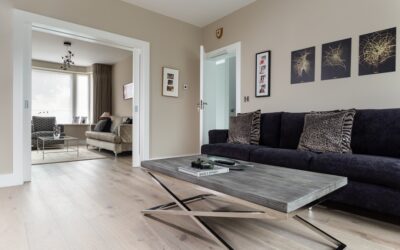
Karndean designs its LVT products for buyers who want vinyl performance at hardwood prices, and on the pro side the company delivers — the designs are beautiful, the wear layers are thick, and the warranty is industry-leading. That said, the disadvantages of karndean flooring are real enough that many installers recommend it only when a client has specifically asked for the brand. Price, fade susceptibility, scratching on darker colors, unforgiving subfloor requirements, and tricky DIY installation all weigh against it in practical use. This guide walks through each downside with specifics, so you can decide whether Karndean’s premium spec is worth the premium price in your situation.
- The Price Gap Is Wider Than Most Shoppers Expect
- UV Fade on Lighter Colors Is a Real Issue
- Scratches Show on Darker and Distressed Finishes
- Subfloor Prep Requirements Are Demanding
- DIY Installation Is Harder Than It Looks
- Resale Value Is Not as Strong as Hardwood
- Patching Discontinued Decors Is Painful
- Sound Transfer in Upper Floors
- Where Karndean Still Makes Sense
- Bottom Line
The Price Gap Is Wider Than Most Shoppers Expect
Karndean Designflooring Korlok and Van Gogh lines retail between $6 and $10 per square foot just for material. Professional installation with the manufacturer-required Karndean adhesive adds another $3 to $6 per square foot. All-in, a Karndean job runs $9 to $16 per square foot, which is within striking distance of mid-tier solid hardwood from domestic mills. Compared to other premium LVP like COREtec Pro Plus HD or Mannington Adura Max, Karndean costs roughly 25 to 40 percent more for similar visual quality.
That gap becomes meaningful on larger projects. A 1,200 square foot open-plan first floor in Karndean lands at $11,000 to $19,000; the same job in comparable rigid-core LVP is $7,000 to $11,000. The Karndean premium buys you a better warranty and wider design range, but not always a proportionally better floor.
UV Fade on Lighter Colors Is a Real Issue
Karndean’s photo-realistic print layer is protected by a urethane wear layer, but UV-induced color shift still occurs on light and mid-tone decors after 3 to 5 years of direct sun exposure. Installers report noticeable lightening on Karndean Art Select Summer Oak, Korlok Nordic Oak, and Da Vinci Lime Washed Oak in west-facing great rooms. Darker decors fade less dramatically but still lose depth.
Karndean’s warranty specifically excludes fade from direct sunlight, which means affected boards are a cosmetic loss rather than a warranty claim. UV window film, solar shades, and blinds help, but a room with large unshaded south or west exposure is not an ideal Karndean candidate.
Scratches Show on Darker and Distressed Finishes
The 0.5 mm to 0.7 mm urethane wear layer on Karndean LVT is tough, but not scratch-proof. Dogs with untrimmed claws, unlubricated office chair casters, and dragged furniture all leave visible marks. On dark decors like Karndean Van Gogh Wenge and Korlok Select Black Japanese Oak, those scratches telegraph clearly because the scratch exposes the lighter PVC underneath the printed layer.
The brand’s K-Guard+ surface treatment helps, but daily wear eventually dulls the finish in traffic lanes within 7 to 10 years. Karndean offers refinishing kits and professional recoating, but the process is more expensive than simply recoating a genuine hardwood floor.
Subfloor Prep Requirements Are Demanding
Karndean is glue-down LVT almost exclusively. Glue-down demands a subfloor that is flatter, cleaner, and drier than floating click-lock products require:
- Flatness: 1/8 inch variation over 10 feet maximum. Anything more requires self-leveling compound.
- Moisture: Concrete slabs must test below 4.5 lbs per 1,000 sq ft per 24 hours (calcium chloride) or 75 percent RH in-situ.
- Cleanliness: Subfloor must be vacuumed to dust-free. Any debris telegraphs through the thin LVT.
- pH: Concrete pH between 7 and 10; higher pH breaks down acrylic adhesives.
- Curing time: New slabs need 60 to 90 days of cure before Karndean install.
That prep work typically adds $2 to $4 per square foot to a Karndean job compared to a floating rigid-core LVP install.
DIY Installation Is Harder Than It Looks
Most LVT and LVP brands have shifted to floating click-lock to serve the DIY market. Karndean has stayed committed to glue-down because it delivers a flatter, quieter, more premium feel underfoot. That commitment comes at a cost: Karndean is one of the harder floors to DIY successfully.
The specific pain points are open-time management (Karndean K-95 adhesive has a 20 to 40 minute working window once rolled on), precise dry-fitting before any glue goes down, roller-pressure consistency (you need a 100 lb roller available), and seam alignment that cannot be corrected after the adhesive sets. Karndean’s warranty is also voided if you do not use their proprietary adhesive, which adds $40 to $60 per gallon to supply costs.
Resale Value Is Not as Strong as Hardwood
Appraisers and realtors treat all LVT and LVP — Karndean included — as a tier below genuine hardwood for resale purposes. A $16 per square foot Karndean floor does not appraise materially higher than a $9 per square foot competitor-brand LVP in most markets. In premium metros like Austin, Seattle, and Miami, buyers actively prefer engineered or solid hardwood over any LVT.
If you plan to sell within 7 years, investing in actual hardwood at a similar price point usually returns more at resale than Karndean.
Patching Discontinued Decors Is Painful
Karndean rotates its design library every 3 to 5 years. When a decor is discontinued, remnant inventory disappears within months. Homeowners needing to patch after water damage, pet accidents, or furniture gouges often discover their Karndean line is unavailable and the closest modern match is visibly different. Always order at least 10 percent overage and store the unopened boxes somewhere climate-controlled.
Sound Transfer in Upper Floors
Glue-down Karndean over an untreated wood subfloor telegraphs footfalls and voices to rooms below more than a rigid-core floating floor with cork underlayment would. For second-floor installations over living spaces, factor in an acoustic membrane like QuietWalk Plus or Proflex 90 underneath — adding $1 to $2 per square foot.
Where Karndean Still Makes Sense
Despite the disadvantages listed above, Karndean earns its price in a few specific scenarios: hospitality projects where design customization matters, historic renovations where authentic-looking parquet patterns are required, homes with chemically sensitive occupants who want the brand’s low-VOC credentials, and commercial spaces with 20+ year service expectations where the thick wear layer earns its keep.
Bottom Line
The disadvantages of Karndean flooring come down to cost, sun sensitivity, install difficulty, and patch availability over the long haul. None of those issues are dealbreakers on their own, but they stack up against the brand’s premium price tag. If you want a budget-friendly vinyl floor, Karndean is the wrong pick. If you specifically want glue-down LVT in a unique design that floating products cannot match, and you are prepared to prep the subfloor properly and manage UV exposure, Karndean still delivers one of the most refined vinyl surfaces on the market. Just go in with eyes open about what the premium buys and does not.
Prefer to explore on your own?
See how new flooring looks in your actual room in seconds — free, no signup.
Try the free Floor Studio →