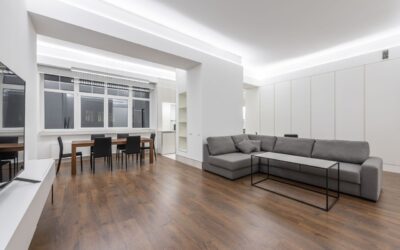
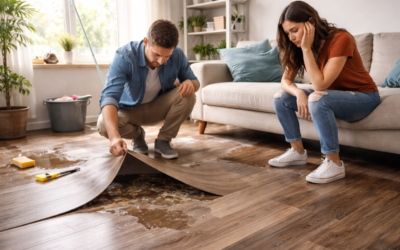
SPC has been marketed as the perfect floor for almost a decade — waterproof, scratch-proof, kid-proof, dog-proof. The marketing is mostly true, which is why it has captured roughly 40 percent of the residential vinyl market. But there are real SPC flooring disadvantages that show up after install, and ignoring them leads to buyer’s remorse months later. This guide is the honest list of where SPC underperforms, who should skip it, and what alternatives solve those weaknesses.
- What SPC Actually Is
- It Feels Hard and Cold Underfoot
- Repairs Are Difficult
- Sun Damage and Fading
- It Doesn’t Improve Resale Value
- Off-Gassing and Indoor Air Quality
- Subfloor Imperfections Telegraph Through
- Edge Damage on Click Systems
- When SPC Still Makes Sense
- Better Alternatives by Use Case
- Frequently Asked Questions
- Is SPC flooring really waterproof?
- How long does SPC flooring last?
- Can SPC be installed over existing tile?
- Does SPC need an underlayment?
- What’s the difference between SPC and WPC?
- Can you use a steam mop on SPC flooring?
- Does SPC flooring need an expansion gap?
- Can heavy furniture or kitchen cabinets sit on SPC flooring?
- Is SPC flooring good for a sunroom?
What SPC Actually Is
SPC stands for stone plastic composite (or stone polymer composite). The core is a dense mix of limestone powder and PVC, typically 4 to 5mm thick, topped with a printed vinyl wear layer of 8 to 30 mils and a UV-cured urethane finish. Most products include an attached underlayment of cork or IXPE foam.
That stone-filled core is what makes SPC dimensionally stable, waterproof, and dent-resistant — but it’s also the source of most of the disadvantages homeowners complain about.
It Feels Hard and Cold Underfoot
The biggest complaint after installation: SPC feels noticeably harder than laminate, hardwood, or WPC vinyl. The dense stone core has almost no give, which translates to fatigue if you stand on it for long periods (kitchens, workbenches, kids’ play areas).
It’s also cold. SPC has poor thermal insulation — your feet will feel the temperature of the subfloor below. In a basement or first-floor room over an unheated crawlspace, expect floors that read 5 to 8°F cooler than the air temperature. Comfort layers help but only marginally.
The fix: pair SPC with a quality underlayment (4 to 5mm cork instead of standard IXPE foam) and use area rugs in spots where you stand a lot. For radiant-heated floors, SPC actually performs well as long as surface temps stay below 85°F.
Repairs Are Difficult
When you damage a single plank in the middle of a room, replacing it is genuinely hard. Most SPC click-lock systems require disassembling rows of planks back to the wall, replacing the damaged piece, and reassembling — a 4-hour job for what should be a 20-minute fix on hardwood.
You also can’t sand or refinish SPC like hardwood or solid bamboo. The wear layer is the only protective surface; once it’s gouged through to the stone core, that section is permanently damaged.
Always order 10 to 15 percent extra material on initial purchase and keep boxes stored flat in a climate-controlled space. Years later when you need to repair, exact-match planks may not be available because manufacturers cycle product lines aggressively.
Sun Damage and Fading
Direct sunlight discolors SPC over time. The vinyl wear layer fades and the planks can develop a slight curl or shrinkage in sun-exposed areas — especially near sliding glass doors or south-facing windows. Most SPC warranties explicitly exclude UV damage.
Solutions: install UV-blocking window film ($2 to $5 per sq ft), use blinds during peak sun hours, or rotate area rugs to even out exposure. Some premium SPC products use UV-stabilized formulations that significantly reduce this issue, but they cost 20 to 30 percent more than standard.
It Doesn’t Improve Resale Value
Real estate appraisers and buyers tend to value real hardwood, tile, and stone above any vinyl product — including premium SPC. If you’re flooring with resale in mind, SPC is functionally neutral or slightly negative compared to hardwood at the same installed cost.
This matters most in mid- to high-end markets ($500K+ homes) where buyers expect “real” materials. In starter homes and rental properties, SPC’s durability and cost actually appeal to buyers who don’t want to deal with refinishing hardwood.
Off-Gassing and Indoor Air Quality
SPC is PVC-based, and lower-quality imports can off-gas volatile organic compounds (VOCs) for weeks after installation. Look for FloorScore or GreenGuard Gold certification on any product you buy. Reputable brands (Coretec, Mohawk, Shaw, Mannington, Karndean) certify their lines; bargain imports often do not.
Some homeowners with chemical sensitivities react to even certified products during the first 30 to 60 days. If anyone in the household has asthma or MCS, ventilate aggressively for at least the first month and consider a HEPA air purifier in the room.
Subfloor Imperfections Telegraph Through
Despite the rigid core, SPC does not hide subfloor flaws as well as hardwood or thicker laminate. High spots over 1/8 inch in 6 feet will show as visible bumps; deep low spots cause clicking and bouncing as you walk.
Subfloor prep before SPC installation typically requires:
- Grinding high spots in concrete slab
- Self-leveling compound for any depression deeper than 3/16 inch over 10 feet
- Patching nail holes and seams in plywood subfloors
- Verifying flatness with a 10-foot straightedge
Skipping this step is the most common installation mistake — and it shows up immediately as a creaky, uneven floor.
Edge Damage on Click Systems
The locking edges of click-lock SPC are made of the same brittle stone-filled material as the core. Drop a heavy tool or rock-hard object on a plank during installation and the lock can chip, making the whole plank useless. Box damage from shipping is common — inspect every plank before snapping it in.
Once installed, the edges hold up fine under foot traffic. The vulnerability is during install and during repair attempts.
When SPC Still Makes Sense
Despite the disadvantages, SPC is the right choice in many situations. Bathrooms with frequent water exposure. Mudrooms with snow boots. Basements with humidity issues. Rental properties where durability and simple maintenance trump aesthetics. Kitchens where dropped pans and dog claws would destroy hardwood.
For these rooms, the alternatives — tile, sealed concrete, or sheet vinyl — each have their own trade-offs. SPC at $3 to $6 per sq ft installed delivers a balance most homeowners are willing to live with.
Better Alternatives by Use Case
If hardness underfoot bothers you most, look at WPC (wood plastic composite) vinyl. It uses a foamed core that’s softer and warmer than SPC at similar waterproof performance. Cost runs $4 to $8 per sq ft.
If repairability matters most, engineered hardwood with a 4mm wear layer can be sanded and refinished multiple times over 30+ years.
If sustainability matters most, cork or natural linoleum (Marmoleum) offers the comfort and warmth SPC lacks with much lower environmental impact.
Frequently Asked Questions
Is SPC flooring really waterproof?
Yes, the core itself is 100 percent waterproof. But seams between planks can still allow water to reach the subfloor if standing water sits for hours. Wipe up spills promptly even on SPC.
How long does SPC flooring last?
Quality SPC with a 20-mil wear layer lasts 15 to 25 years in residential use. Cheaper 8-mil products show wear in 5 to 10 years.
Can SPC be installed over existing tile?
Yes, as long as the tile is flat and grout lines are filled. Larger grout lines (over 1/8 inch) telegraph through and need to be filled with leveling compound first.
Does SPC need an underlayment?
Most SPC comes with attached IXPE underlayment. Adding a separate underlayment can void some warranties — check before installing additional padding.
What’s the difference between SPC and WPC?
SPC uses a stone-and-PVC core that’s harder, denser, and more dimensionally stable. WPC uses a foamed wood-and-PVC core that’s softer and warmer underfoot. Both are waterproof.
Can you use a steam mop on SPC flooring?
No, steam is not recommended on SPC. The heat and pressurized moisture can push water into the click seams, weaken the attached underlayment, and dull or loosen the wear layer, and many warranties exclude steam damage. A damp microfiber mop with a pH-neutral vinyl cleaner is the safe routine for SPC.
Does SPC flooring need an expansion gap?
Yes. Although the stone core moves far less than laminate, SPC is still a floating floor and needs the perimeter gap the manufacturer specifies, typically around 1/4 inch, at walls, cabinets, and door frames. Pinning the floor with trim nails or no gap can cause buckling or peaking, especially in rooms with strong sun or temperature swings.
Can heavy furniture or kitchen cabinets sit on SPC flooring?
Heavy furniture is fine on SPC with felt or wide furniture pads, since the dense core resists dents. Fixed cabinets and kitchen islands are different: most makers say not to install them on top of a floating floor, because the weight pins the planks and stops them moving. Install cabinets first and run the SPC up to them.
Is SPC flooring good for a sunroom?
Only with caution. SPC handles temperature swings better than many floating floors, but strong direct sun fades the wear layer and can cause curling or shrinkage, and most warranties exclude UV damage. In a sunroom, use UV-blocking window film or shades, or consider porcelain tile, which is unaffected by sunlight.
Prefer to explore on your own?
See how new flooring looks in your actual room in seconds — free, no signup.
Try the free Floor Studio →