Hunting for discount LVT flooring can save you hundreds or even thousands of dollars on a project, but only if you know how to separate a genuine bargain from cheap product that fails in a year. Luxury vinyl tile has become one of the most popular flooring categories precisely because it delivers realistic looks and waterproof performance at a fraction of hardwood or tile prices. Buy it well at a discount and you get a fantastic deal; buy it badly and you pay twice. This guide shows you how to do the former.
We will cover where the real deals are, the specs that actually matter, and the corners you can cut versus the ones that will cost you. Let’s make your budget go further without buying junk.
Where to Find Real LVT Deals
Discount LVT comes from several reliable sources, each with its own trade-offs. Knowing where to look puts you ahead of most shoppers.
- Closeouts and discontinued lines: Retailers slash prices on patterns they are phasing out. The product is brand new, just no longer current. The catch is limited quantity, so buy enough at once.
- Overstock and clearance: Online flooring warehouses move excess inventory at deep discounts.
- Builder-grade volume: Big-box stores carry budget LVT lines aimed at rentals and flips.
- End-of-season sales: Major holidays and year-end often bring meaningful markdowns.
Wherever you buy, confirm the product is first-quality, not a “second” with cosmetic defects, unless the discount is steep and you can work around flaws. Always order 10 percent extra for waste and future repairs, because discontinued lots cannot be reordered.
The Specs That Actually Matter
Price means nothing without knowing what you are getting. Two LVT products at the same price can differ enormously in durability. Focus on these specs:
- Wear layer: The clear top coating that resists scratches and wear. For residential use, demand at least 12 mil; for pets or heavy traffic, 20 mil or more. This is the single most important number, never compromise here.
- Core type: Rigid SPC (stone plastic composite) cores resist dents and temperature swings better than flexible glue-down tiles. WPC is softer and warmer underfoot.
- Total thickness: Thicker planks feel more solid and bridge minor subfloor imperfections better, typically 4mm to 8mm.
- Warranty: A genuine residential warranty signals the maker stands behind the product.
Where You Can Save vs Where You Cannot
Smart discount shopping is about cutting the right corners. You can absolutely save on patterns from last season, discontinued colors, and overstock, since the product is identical to current stock. You can also save by installing it yourself, as click-lock LVT is genuinely DIY-friendly.
What you should never skimp on is the wear layer, the core quality in high-traffic or wet areas, and proper subfloor prep. A paper-thin wear layer scratches white within months, and a wavy subfloor telegraphs through any plank no matter how cheap or expensive. Spend where it counts and save where it does not.
Pros and Cons of Discount LVT
Buying at a discount has clear upsides and a few risks to manage.
- Pros: Major cost savings, the same waterproof and durable performance as full-price LVT when specs are good, huge variety of looks, and DIY-friendly installation.
- Cons: Limited or non-reorderable quantities on closeouts, the temptation to buy a thin wear layer that fails early, and occasional “second-quality” product with cosmetic flaws. Read the specs, not just the price tag.
Installation Tips to Protect Your Savings
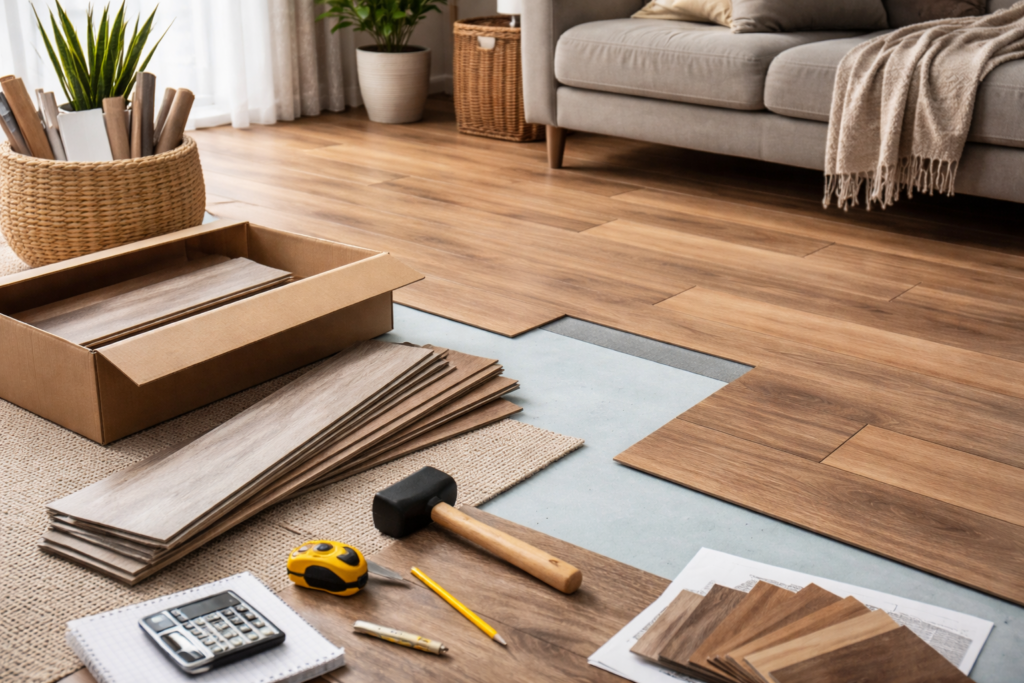
A great deal on LVT is wasted if the install goes wrong. Start with a clean, dry, level subfloor, since rigid LVT bridges only minor imperfections, anything beyond about 3/16 inch over 10 feet needs leveling compound. Let the planks acclimate in the room for 48 hours so they adjust to temperature and humidity before you lay them.
Leave the manufacturer-specified expansion gap around the perimeter, usually about 1/4 inch, so the floor can move without buckling. For click-lock floating floors, a quality underlayment improves sound and comfort. Follow these basics and your discount floor will perform like a premium one.
Glue-Down vs Click-Lock on a Budget
Discount LVT comes in two installation formats, and the right choice affects both cost and performance. Click-lock floating floors are the easiest for DIYers, snapping together over an underlayment with no adhesive, which saves on labor and lets you start using the room immediately. They are ideal for most residential rooms and are forgiving to install.
Glue-down LVT, often the cheaper tile format, bonds directly to the subfloor and excels in very high-traffic areas and large open spaces where a floating floor might shift. It demands a flatter subfloor and more careful prep, plus adhesive cost and cure time. For a budget bathroom or busy entry, glue-down can be the better long-term value; for a quick bedroom or living-room refresh, click-lock usually wins.
Inspecting a Discount Lot Before You Buy
Closeout and overstock product can be a fantastic deal, but inspect before you commit. Open a box or two and check that the planks are flat, the edges are crisp, and the print and texture are consistent from plank to plank. Warped or curled planks signal poor storage and will fight you during install.
Confirm every box carries the same batch or dye-lot number, since color can drift slightly between production runs and a mismatched lot shows up as subtle banding across the floor. Verify the quantity covers your square footage plus 10 percent waste in a single lot, because you usually cannot reorder a discontinued line. A few minutes of inspection protects the savings you came for.
Final Thoughts
Discount LVT flooring is one of the best values in home improvement, as long as you shop smart. Chase closeouts and overstock for the savings, but never sacrifice the wear layer, core quality, or subfloor prep that determine how long the floor lasts. Read the specs, buy enough for waste and repairs, and install it right, and you will get premium performance at a budget price for years to come.
Prefer to explore on your own?
See how new flooring looks in your actual room in seconds — free, no signup.
Try the free Floor Studio →