Standard hardwood in oak strip looks fine, but it does not get remembered. Choosing distinctive flooring means picking a material or pattern that adds genuine character — wide planks of reclaimed barnwood, hand-laid parquet, custom medallions, or oversized stone slabs. After installing premium floors for two decades, here are the options that consistently impress without crossing into trendy territory that ages badly.
- What Makes a Floor Distinctive
- Wide-Plank Hardwood
- Custom Medallions and Inlays
- Parquetry and Geometric Patterns
- Large-Format Stone and Porcelain Slabs
- Reclaimed Wood Flooring
- End-Grain and Mosaic Block Floors
- Mixed-Material Combinations
- What to Avoid in Distinctive Flooring
- Choosing Distinctive Without Going Trendy
What Makes a Floor Distinctive
Distinctive does not mean expensive. A penny floor in a powder room costs less than basic tile but reads as deliberate and unique. A 9-inch wide quarter-sawn white oak plank costs more than 3-inch strip but delivers a fundamentally different aesthetic. The category captures floors that are noticed and remembered — by visitors, by buyers, and by anyone who has lived in cookie-cutter housing for too long.
The common thread is intentionality. Distinctive floors look chosen rather than defaulted-to. They reflect the house’s architecture, the homeowner’s taste, or a specific design vision rather than whatever was on sale at the big-box store.
Wide-Plank Hardwood
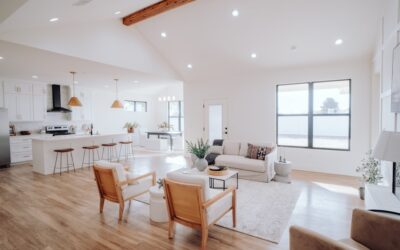
The fastest-growing distinctive flooring category is wide-plank solid and engineered hardwood. Planks at 7 to 12 inches wide deliver a fundamentally different look from standard 2 1/4 or 3 1/4 inch strips. The eye reads them as more contemporary, more luxurious, and frankly more honest — large trees produced wide boards in the 18th and 19th centuries before sawmills standardized down to budget widths.
Costs run higher: $7 to $14 per square foot for material on engineered wide-plank, $10 to $20 for solid wide-plank. Installation labor is similar to standard widths but acclimation matters more — wide planks move more with humidity and require careful subfloor moisture testing.
Custom Medallions and Inlays
Wood medallions, marble inlays, and brass borders elevate a foyer or dining room from utilitarian to architectural. Custom medallions run $200 to $3,000 each depending on size and complexity. Installed at the center of a room, in a foyer, or in a sunburst pattern at a doorway, they signal craftsmanship.
Sourcing options include:
- Czar Floors — custom medallions, parquet, and inlay specialists
- Pavex Parquet — historic and contemporary parquet patterns
- Architectural Salvage — vintage medallions from estate sales
- Custom CNC fabricators — local woodworkers who cut custom designs
Parquetry and Geometric Patterns
Versailles parquet, Chantilly, herringbone, basketweave, and chevron all deliver distinct visual character. The patterns have been used in European palaces since the 17th century and translate beautifully into contemporary American homes.
Modern manufacturers produce pre-made parquet panels in engineered hardwood that install much faster than traditional site-laid parquet. Lauzon, Carlisle Wide Plank Floors, and Bolefloor all offer geometric patterns ready to install. Expect to pay $8 to $20 per square foot material, plus labor at 30 to 50 percent higher than standard plank installation.
Large-Format Stone and Porcelain Slabs
Gauged porcelain slabs at 5×10 feet have changed what is possible in tile flooring. A single slab can cover an entire small bathroom floor with no grout lines. The visual impact is striking — the floor reads as one continuous slab of marble or stone rather than a grid of tiles.
Installation requires a perfectly flat substrate (within 1/8 inch over 10 feet), specialized large-format trowels, and at minimum two trained installers to handle the panels. Material costs $15 to $40 per square foot; install labor adds $10 to $20. Total project cost is significant but the result is gallery-worthy.
Reclaimed Wood Flooring
Old-growth lumber from barns, factories, mills, and bowling alleys delivers a depth of patina that no new product can replicate. Each board carries marks of its previous life — square-cut nail holes, mortise pockets, wear patterns from decades of foot traffic. Common sources include:
- Antique barnwood (oak, pine, hemlock) — $8 to $14 per square foot
- Reclaimed heart pine from southern lumber mills — $10 to $18
- Industrial maple bowling alley sections — $6 to $12
- Reclaimed Douglas fir from Pacific Northwest warehouses — $7 to $13
- Restored chestnut (rare, predates 1920s blight) — $18 to $30 plus
End-Grain and Mosaic Block Floors
End-grain flooring uses short blocks of wood stood vertically so the cross-section faces up. Originally a factory floor specification because the end-grain absorbs dropped tools without splintering, it has become a high-end residential option for kitchens, mudrooms, and home offices.
The look is unlike anything else — each block shows its annual growth rings. Cost runs $12 to $25 per square foot installed in oak, walnut, or cherry. The floors require careful sealing because end-grain absorbs moisture differently than face-grain. Done right, they outlast the rest of the house.
Mixed-Material Combinations
Distinctive floors often combine materials within a single space. Hardwood centerfields bordered by stone, brick borders in mudrooms, tile inlays in kitchen islands, terrazzo around hardwood thresholds. Each combination requires thoughtful Schluter transitions and precise leveling, but the visual payoff is significant.
A few combinations that consistently impress:
- White oak field with marble or limestone border in foyers
- Hexagon mosaic tile transition from tile bathroom to wood hallway
- Brick paver kitchen island inset framed by hardwood
- Walnut field with brass divider strips in dining rooms
- Reclaimed wood with stone fireplace hearth integration
What to Avoid in Distinctive Flooring
Not every unique floor ages well. Avoid these choices, which often look dated within 5 to 10 years:
- Extreme dark or black-stained wood in main living areas — shows every footprint
- Glitter epoxy or metallic floors outside of small accent spaces
- Trendy color tile (turquoise, hot pink, lime green) in kitchens and baths
- Photo-print “distressed” laminate that mimics worn wood — reads cheap close-up
- Hand-scraped floors with extreme texture — traps dirt, hard to clean
Choosing Distinctive Without Going Trendy
Distinctive flooring should match the house’s architecture and serve real life. Wide-plank engineered hardwood works almost anywhere. Versailles parquet looks right in formal rooms but overwhelming in casual kitchens. Custom medallions belong in foyers and dining rooms, not laundry rooms. Walk the space, consider how the floor will read in 15 years, and pick the option that fits the bones of the building. Distinctive done right is the difference between a house and a home people remember.
Prefer to explore on your own?
See how new flooring looks in your actual room in seconds — free, no signup.
Try the free Floor Studio →