European designers have spent 400 years perfecting the geometry of wood floors—and the German word “Parkett” still carries the prestige. Parkett flooring refers to the broader European parquet tradition: precision-milled hardwood blocks, planks, or panels assembled in patterns like herringbone, chevron, Versailles, and Hungarian point. Modern engineered parkett offers the classic look with the dimensional stability that solid blocks could never match. Here is how the system actually works.
- Parkett vs Standard Hardwood Flooring
- Traditional Solid Block Parkett
- Engineered Parkett: The Modern Standard
- Pattern Options Worth Knowing
- Plank Width and Block Dimensions
- Finish and Surface Treatment
- Installation Method
- Substrate Preparation
- Climate and Humidity Control
- Pricing the Whole Project
- Where Parkett Wins
- Where It Falls Short
- Final Verdict
- Custom Inlay Borders and Medallions
- Sourcing and Supply Chain Notes
- Frequently Asked Questions
Parkett vs Standard Hardwood Flooring
The distinction is mostly about pattern and construction. Standard hardwood is straight-laid in long planks. Parkett uses shorter, precisely-milled blocks or panels in geometric patterns—the visual is more architectural and craft-driven. Construction also runs higher-end on average, with tighter milling tolerances (0.1mm gap accuracy on premium German makers) and sawn-not-rotary-cut veneers on engineered versions.
Traditional Solid Block Parkett
Traditional European parkett used solid hardwood blocks—oak, beech, ash, or walnut—approximately 6×24×0.5 inches. These were laid in bitumen or hot-melt mastic over a concrete or wood substrate, then sanded and finished in place. Solid blocks still exist on the market (Junckers, Tarkett Solid) but require strict humidity control between 40-55% RH year-round and acclimate poorly to North American HVAC swings.
Engineered Parkett: The Modern Standard
Engineered parkett uses a 9-ply baltic birch core with a 3-4mm sawn oak, walnut, or hickory veneer—German makers like Bauwerk, Haro, and Boen lead this category. The cross-grain stability lets engineered parkett install over concrete slabs, radiant heat, and apartment settings that solid blocks could never handle. Premium German engineered parkett runs $14-$28 per sq ft material; mid-tier from Lauzon, Mirage, or Carlisle lands $10-$18.
Pattern Options Worth Knowing
- Herringbone: rectangular blocks at 90 degrees, classic Edwardian look
- Chevron: 45-degree mitered ends creating a clean V point
- Versailles: panels of multiple blocks pre-assembled in geometric inlay
- Hungarian Point: chevron variant with tighter angle for narrow rooms
- Basket Weave: alternating pairs of blocks at 90 degrees
- Brick (or Strip) Bond: long planks offset in half-bond pattern
Herringbone and chevron account for 80% of modern parkett installs. Versailles panels deliver the most luxurious look at the highest cost—often $30-$60 per sq ft material.
Plank Width and Block Dimensions
European parkett comes in tighter dimensions than American straight-lay. Herringbone blocks typically run 24-32 inches long by 4-6 inches wide. Chevron pieces measure similar lengths with mitered ends. Wide-plank parkett at 8-10 inches reads more contemporary; narrower blocks read traditional. The smaller the block, the more visual “tile” energy in the floor; the longer the block, the calmer the pattern.
Finish and Surface Treatment
Premium parkett ships with either UV-cured oil (Bauwerk Cleverpark, Haro Trend) or UV-cured polyurethane (Boen Live Pure, Mirage Sweet Memories). Oil finishes patina warmly with age but require annual maintenance oiling (Bona Craft Oil, Loba 2K Easy Care). Polyurethane finishes need no annual care but cannot be spot-repaired—damage means board replacement or full sand-and-refinish.
Installation Method
Engineered parkett installs via full glue-down with urethane adhesive (Sika SikaBond T55, Bostik BEST). The adhesive bed is critical—too thin and blocks click together loosely; too thick and squeeze-out fills the micro-bevels. A 1/4-inch x 1/8-inch notched trowel is the contractor standard. Allow 24-hour cure before walking on the floor and 7 days before placing furniture.
Substrate Preparation
Subfloor flatness to 3/16 inch over 10 feet is non-negotiable for parkett patterns. Concrete slabs must pass ASTM F2170 RH probe below 75% and ASTM F1869 calcium chloride below 3 lbs per 1,000 sq ft per 24 hours. Plywood substrates need 16-19mm thickness at moisture content within 4% of the parkett product. Schluter Ditra uncoupling membrane is overkill for residential parkett but appears in commercial installs over questionable substrates.
Climate and Humidity Control
NWFA recommends interior conditions between 30-50% RH year-round. Parkett herringbone with its abundance of cross-grain seams is especially sensitive to humidity swings—drop below 25% RH and expect open joints; climb above 60% and expect cupping. Whole-house humidification in winter is non-negotiable for parkett in northern US climates.
Pricing the Whole Project
For a 400 sq ft living and dining area:
- Mid-tier engineered parkett herringbone: $6,000-$10,000 material, $13,000-$20,000 installed
- Premium European engineered (Bauwerk, Haro): $9,000-$14,000 material, $18,000-$27,000 installed
- Versailles panels: $15,000-$28,000 material, $25,000-$45,000 installed
- Solid block parkett (traditional): $7,000-$12,000 material, $17,000-$25,000 installed including site-finishing
Add 25-35% material waste for herringbone and chevron patterns.
Where Parkett Wins
Architectural prestige is the headline benefit. A well-installed engineered parkett floor adds 8-12% to home valuation in upscale markets and acts as a centerpiece in the room. European engineering also tends to outlast American budget hardwood—Bauwerk and Haro publish 35-year wear warranties on their UV-cured oil finishes.
Where It Falls Short
Cost is significant—installed prices land 60-150% above straight-lay engineered hardwood. Install labor takes 35-50% longer and requires an installer with documented parkett experience. Pattern repair is expensive; replacing a single damaged block in an engineered parkett herringbone is a $200-$400 service call. The aesthetic is also strong and not for every home—farmhouse and ultra-modern interiors often clash with traditional herringbone or Versailles patterns.
Final Verdict
Parkett flooring delivers architectural craftsmanship that no straight-lay product can match. For investment-quality renovations and prestige homes, engineered parkett from Bauwerk, Haro, Boen, or Lauzon is the proven category leader. Match the pattern to the room scale, control humidity year-round, and hire an installer with verified parkett portfolio—the result will be the most architecturally significant surface in the house.
Custom Inlay Borders and Medallions
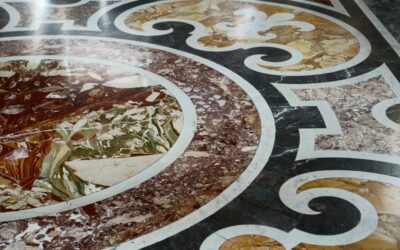
Premium parkett installs often incorporate custom inlay borders—brass strips, contrasting wood species, or marble fillets that frame the pattern at room perimeters. Walker Zanger, Carlisle, and Lauzon all offer custom inlay services starting at $40-$90 per linear foot for brass or contrasting wood borders. Marble fillets within engineered parkett require precision routing on-site and add $80-$200 per linear foot but create the heritage-luxury aesthetic of late 19th-century European interiors.
Floor medallions—decorative round or rectangular inlays at room centers—offer another premium upgrade. Pre-made medallions from suppliers like Floor Medallions Online and Pacific Custom Woodworking run $400-$1,500 for stock designs in 24-48 inch diameters. Custom designs cost $2,000-$8,000+. Position medallions under chandeliers or pendant fixtures so the lighting frames the floor feature dramatically.
Sourcing and Supply Chain Notes
Premium European parkett ships from Switzerland (Bauwerk), Germany (Haro), Norway (Boen), and France (Panaget) with 8-14 week lead times for custom widths and finishes. Plan project schedules accordingly—rushing parkett delivery often means accepting unmatched dye lots from multiple production runs. Larger US showrooms (Stark Carpet, Patterson Flynn, Edward Fields) maintain showroom inventory of common patterns and can deliver in 2-4 weeks. Always specify a single dye lot in the purchase order to avoid color variations between boxes.
Frequently Asked Questions
Is parkett the same as parquet flooring?
Yes. Parkett is the German word for parquet, so both names describe the same tradition of hardwood blocks, strips, or panels laid in geometric patterns such as herringbone, chevron, and Versailles. In North America the product is usually sold as parquet or patterned engineered hardwood, while European makers often keep the word parkett in their product names. The construction, patterns, and care needs are the same whichever name appears on the box.
Can parkett flooring go in a kitchen or bathroom?
Parkett works in kitchens but is a poor choice for full bathrooms. Engineered parkett with a durable factory finish handles kitchen traffic well as long as spills are wiped up quickly and a mat sits in front of the sink. Bathrooms with showers or tubs expose the many cross-grain seams of a pattern floor to standing water and humidity swings, which leads to cupping and open joints. Tile or waterproof vinyl is the safer choice there.
Can engineered parkett be sanded and refinished?
Yes, as long as the wear layer is thick enough. A sawn veneer of 3 to 4mm, the range common on premium engineered parkett, can usually be sanded and refinished at least once or twice over the life of the floor. Pattern floors need careful sanding because the grain runs in several directions, so hire a refinisher experienced with herringbone or chevron. Oiled floors can often be refreshed with a maintenance oil coat instead of a full sanding.
How do you clean parkett floors?
Dry dust mop or vacuum with a soft hard-floor head, then damp mop with a well wrung pad and a pH-neutral cleaner made for the floor’s finish type. Oiled parkett needs an oil soap or cleaner meant for oiled wood, while lacquered parkett takes a standard wood floor cleaner. Avoid steam mops, wet mopping, and vinegar or ammonia mixes, since moisture and harsh chemicals work into the many seams of a pattern floor and dull the finish.
Prefer to explore on your own?
See how new flooring looks in your actual room in seconds — free, no signup.
Try the free Floor Studio →