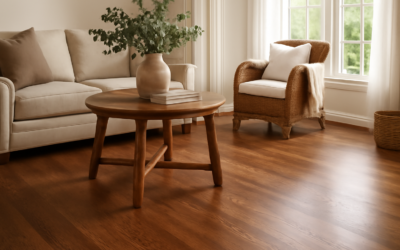
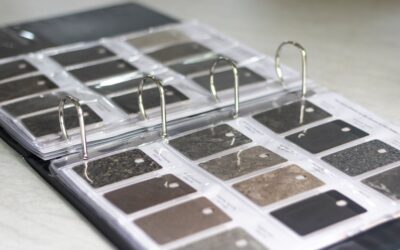
Walk onto any professional floor-refinishing job in America and look at the stain cans lined up by the door. Odds are they say Duraseal, not Minwax — even though both come out of the same parent company. I’ve stained hundreds of floors with Duraseal Quick Coat, and this duraseal stain chart breakdown is the one I wish someone had handed me when I started: which colors pros actually reach for, how the names map to the Minwax colors homeowners already know, and how each one behaves on red oak versus white oak.
What Makes Duraseal the Pro Line
Duraseal Quick Coat is a fast-dry, high-solids penetrating stain built for production work. It carries more pigment per gallon than consumer stain, wipes cleaner behind a buffer, and recoats in about 2 hours in good conditions — which means a crew can stain and get the first sealer coat down the same day. It’s sold through flooring distributors rather than big-box stores, which is the main reason homeowners don’t know the names. The color logic, though, is familiar: because Duraseal and Minwax share a corporate parent, most core colors exist in both lines under the same or near-identical names, with the Duraseal version typically running slightly richer because of the higher solids content.
The Core Browns on Every Pro’s Truck
Provincial
Same story as its Minwax sibling: the neutral mid-brown default. On red oak, Provincial suppresses the pink undertone better than almost anything else at its depth. It’s the color I spec when a client says “just make it look like nice hardwood.” Duraseal’s Provincial runs marginally deeper and less orange than the Minwax version on the same board — a difference you notice side by side and forget across a room.
Special Walnut
The single most-specified stain color in American floor refinishing right now, and it’s not close. Special Walnut on white oak is the warm, soft brown that photographs beautifully and matches every design trend from farmhouse to organic modern. On red oak it permits a little pink, so many of us cut it with Provincial or a touch of Classic Gray. If you only sample one color from this duraseal stain chart, sample this one.
Coffee Brown
Here’s a Duraseal exclusive worth knowing — there’s no direct Minwax equivalent. Coffee Brown sits between Special Walnut and Dark Walnut: a rich, medium-dark brown with neither red nor gray attitude. It’s my recommendation for clients who think Jacobean is too dark but Provincial is too light. On white oak it’s a dead ringer for expensive European-oak looks.
Early American and Chestnut
Early American is the golden, traditional brown — same personality as the Minwax color, slightly denser. Chestnut leans red and mostly earns its keep matching older reddish floors and millwork rather than starting fresh palettes.
The Darks: Jacobean, Dark Walnut, Antique Brown, Ebony
Jacobean is the pro-standard dark: cool, deep, almost espresso, and merciless about showing dust — I warn every client. Dark Walnut is its warmer twin, keeping more brown in the grain. Antique Brown is another Duraseal-side name you won’t find on the consumer shelf; it splits the difference between Jacobean and Dark Walnut and has quietly become a favorite of mine for clients torn between the two. Ebony is the near-black; on water-popped white oak, two applications get you a genuine ink-dark floor. Every one of these darks demands flawless sanding, because pigment piles into any swirl or drum mark and broadcasts it forever.
The Modern Neutrals: Grays, Greiges, and Whites
Classic Gray and Weathered Oak
Both behave like their Minwax namesakes: Classic Gray is a silvery wash that’s lovely on white oak and goes purple on red oak; Weathered Oak is a low-pigment gray-beige that mostly exists to be blended. The famous pro mix — 50/50 Classic Gray and Weathered Oak on white oak — produces a pale driftwood neutral that’s been on half the high-end job sheets I’ve seen this decade.
Silvered Gray, Smoke Gray, and Aged Barrel
These belong to Duraseal’s more design-driven colors. Silvered Gray is deeper and cooler than Classic Gray; Smoke Gray adds a brown-taupe body that survives on red oak better than the pure grays; Aged Barrel is a smoky brown-gray that gives white oak a fumed, European look. When a designer hands me a photo of a $15-per-foot engineered European oak floor and asks me to match it on site, Aged Barrel or a Smoke Gray blend is usually where I start.
Country White and Nutmeg
Country White is the pickling white — usable for Scandinavian washes, though a dedicated whitening sealer usually does that job better under waterborne finish. Nutmeg is a light warm tan that’s handy for subtle color on floors that should still read “natural.”
Duraseal-to-Minwax Translation Chart
| Duraseal Color | Closest Minwax Name | Tone | Best Species | Pro Notes |
|---|---|---|---|---|
| Provincial | Provincial 211 | Neutral mid-brown | Red oak | The safe default; slightly richer than Minwax |
| Special Walnut | Special Walnut 224 | Warm light-brown | White oak | Most-specified color in the trade |
| Coffee Brown | No direct match | Medium-dark brown | Both oaks | Between Special Walnut and Dark Walnut |
| Antique Brown | No direct match | Warm dark brown | Both oaks | Jacobean/Dark Walnut compromise |
| Jacobean | Jacobean 2750 | Cool dark brown | Red oak | Kills pink; shows dust |
| Dark Walnut | Dark Walnut 2716 | Warm dark brown | Both oaks | Warmer than Jacobean |
| Ebony | Ebony 2718 | Near-black | White oak | Water-pop for full depth |
| Classic Gray | Classic Gray 271 | Silver gray wash | White oak only | Purple on red oak |
| Weathered Oak | Weathered Oak 270 | Gray-beige wash | White oak | Primarily a blender |
| Aged Barrel | No direct match | Smoky brown-gray | White oak | Fumed European-oak look |
| Country White | Simply White 275 | Whitewash | White oak | Waterborne topcoat mandatory |
How Pros Actually Choose From This Chart
The process on a real job never starts with the chart — it starts with the house. I look at trim color, cabinet tone, the amount and direction of natural light, and the species and cut of the flooring. Then I pull three to five candidates and stain sample squares directly on the client’s sanded floor, because a duraseal stain chart printed on paper cannot show you how rift-sawn white oak drinks pigment differently from flat-sawn red oak in the same room. I water-pop half of each sample square, too, so the client sees both depths. Only after the samples have been viewed in morning and evening light do we commit. That single habit eliminates virtually all stain-color regret, and regret is expensive: fixing a stain color means a full resand.
Blends Worth Stealing
Duraseal colors intermix freely, and custom blends are standard practice. A few proven recipes from my own job book: Classic Gray + Weathered Oak (1:1) for pale Scandinavian white oak; Special Walnut + Classic Gray (2:1) for greige with body; Provincial + Special Walnut (1:1) as the red-oak crowd-pleaser; Jacobean + Ebony (2:1) for deep near-black that keeps a whisper of brown; Coffee Brown + Weathered Oak (2:1) to cool Coffee Brown for gray-leaning palettes. Mix by volume, label the lid, and box enough for the entire job in one container — pigment settles fast, so stir constantly as you work.
Buying and Working Notes
Expect to pay roughly $55-$75 per gallon at a flooring distributor, with a gallon covering about 400-500 square feet on oak. Quick Coat’s fast open time is a gift on production work and a hazard for first-timers: on a big floor, keep a wet edge, work in board-length sections, and have your wipe rags staged before you pour. Lay stained rags flat outside to dry before disposal — oil-soaked rags in a pile can self-ignite, and that’s not a theoretical warning. Give the stain overnight before waterborne finishes, longer in humid weather, and always follow with a sealer or finish system from the same general chemistry family you’ve tested.
If you’re a homeowner reading this before a refinish, here’s the practical takeaway: your contractor’s Duraseal chart is friendlier than it looks. Ask for samples of Special Walnut, Provincial, and Coffee Brown on your actual floor, add Antique Brown if you want depth or the Classic Gray/Weathered Oak blend if you want pale and modern, and judge them in your own light. The pros trust this lineup for a reason — it’s the same handful of colors, applied with care, making most of the beautiful floors you’ve been screenshotting.
Prefer to explore on your own?
See how new flooring looks in your actual room in seconds — free, no signup.
Try the free Floor Studio →