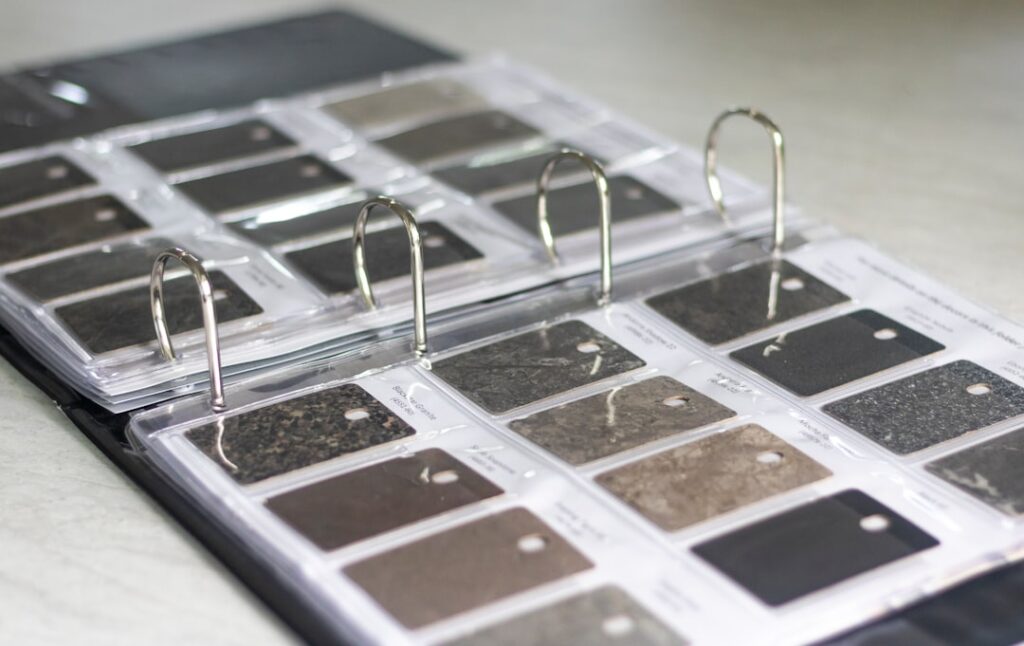
Every few jobs, a homeowner watches me carry Duraseal cans past the Minwax display they researched and asks the obvious question. The honest answer to duraseal vs minwax starts with a fact that surprises people: they’re made by the same parent company, Sherwin-Williams. This is not Coke versus Pepsi. It’s the same kitchen serving two dining rooms — one for professionals through flooring distributors, one for consumers through big-box shelves. But “same parent” does not mean “same product in different cans,” and after staining hundreds of floors with both, I can tell you the differences are real and they matter on certain jobs more than others.
- The Short Answer
- Difference #1: Solids and Pigment Load
- Difference #2: Dry Time and Open Time
- Difference #3: Availability and Price
- Difference #4: The Color Decks Aren't Identical
- Side-by-Side Comparison Table
- Where Minwax Genuinely Wins
- Where Duraseal Is Worth Seeking Out
- Can You Mix the Two Brands?
- What About the Stains They Don't Share?
- The Verdict, and What Actually Matters More
The Short Answer
For floors, Duraseal Quick Coat is the better stain: higher pigment load, better wiping behavior, faster recoat, more consistent batch-to-batch. For furniture, trim, doors, and small weekend projects, Minwax Wood Finish is completely adequate and far easier to buy. The colors largely overlap by name and family, so you can sample with Minwax on scrap and have your contractor shoot the matching Duraseal color — pros do this translation constantly. If you’re hiring the work out, your refinisher will bring Duraseal anyway. If you’re DIY-ing a single room and the nearest flooring distributor is an hour away, Minwax will get you a good floor if your prep is good. Prep, not brand, is where most stain jobs die.
Difference #1: Solids and Pigment Load
The biggest practical gap in the duraseal vs minwax matchup is what’s actually in the can. Duraseal Quick Coat is formulated with a higher solids content — more pigment and binder per gallon, less carrier. On the floor, that means one Duraseal application delivers a depth of color that can take Minwax a heavier hand or a second pass to match. It also means better coverage consistency across a big open floor: less lap-mark risk, less blotching where your rag pressure varied. On a 200-square-foot bedroom you may never notice. On a 1,200-square-foot open-plan main level with sun pouring through sliders, you absolutely will.
Difference #2: Dry Time and Open Time
Quick Coat earns its name — it’s built to recoat in about 2 hours under decent conditions, which lets a pro crew stain in the morning and seal the same afternoon. Minwax Wood Finish wants 8 hours or more before topcoating (and I give it overnight before any waterborne finish). For a homeowner, waiting a day is no hardship. For a crew paying for every job-day, same-day sealing is the whole economic argument for the pro line. The flip side: faster dry means shorter open time while you work. Duraseal punishes hesitation — you keep a wet edge and move. Minwax’s slower pace is genuinely friendlier to a first-timer figuring out their rag technique in real time.
Difference #3: Availability and Price
Minwax is everywhere — Home Depot, Lowe’s, Ace, your grocery-adjacent hardware store — at roughly $12-$18 a quart and $35-$50 a gallon. Duraseal sells through flooring-supply distributors at roughly $55-$75 a gallon, usually with no quart option on every color, and the counter staff will assume you know what you’re doing. Coverage is comparable on paper (around 400-500 square feet per gallon on oak), but Duraseal’s higher pigment density means you’re getting more color per dollar than the sticker gap suggests. Still, for a single small room, buying a Minwax quart beats buying a Duraseal gallon you’ll use a fifth of.
Difference #4: The Color Decks Aren’t Identical
The shared-name colors — Provincial, Special Walnut, Jacobean, Dark Walnut, Early American, Classic Gray, Weathered Oak, Ebony — land very close between lines, with the Duraseal version typically reading a touch deeper and less orange thanks to the pigment load. But each line has exclusives. Duraseal carries pro-favorite colors with no consumer twin: Coffee Brown, Antique Brown, Aged Barrel, Smoke Gray. Minwax carries consumer-oriented shades and its newer washes that Duraseal doesn’t mirror. If your heart is set on Coffee Brown, no Minwax can will get you there straight — you’d be blending. This is the single most common surprise when homeowners try to translate a contractor’s proposal to a big-box shopping list.
Side-by-Side Comparison Table
| Factor | Duraseal Quick Coat | Minwax Wood Finish |
|---|---|---|
| Made by | Sherwin-Williams (pro channel) | Sherwin-Williams (consumer channel) |
| Solids/pigment load | Higher — deeper color per coat | Standard consumer load |
| Recoat time | ~2 hours in good conditions | 8+ hours; overnight is safer |
| Open/working time | Short — demands pace | Longer — beginner-friendly |
| Where to buy | Flooring distributors | Big-box and hardware stores |
| Typical price | $55-$75/gallon | $35-$50/gallon, quarts available |
| Exclusive colors | Coffee Brown, Antique Brown, Aged Barrel | Consumer washes and specialty tones |
| Best for | Whole-floor refinishing | Furniture, trim, small DIY rooms |
Where Minwax Genuinely Wins
I don’t want this to read as a pro snob dunking on the consumer brand, because Minwax wins several categories outright. Availability is the obvious one — when you need another quart at 7 p.m. on a Sunday, Duraseal cannot help you. Small-quantity purchasing is another: quarts and half-pints make sampling cheap. The slower dry time, as mentioned, is a real advantage for inexperienced hands. And on non-floor woodwork — stair treads done in place, handrails, built-ins, furniture — the differences in solids and production speed barely matter, while Minwax’s ubiquity and gentler learning curve matter a lot. My own shop uses Minwax for one-off furniture matches without a second thought.
Where Duraseal Is Worth Seeking Out
Whole-floor work, full stop. Big continuous fields of wood where lap marks and blotch would be visible from every angle; dark colors like Jacobean and Ebony where pigment density decides whether the floor looks like espresso or like weak tea; schedule-driven jobs where staining and sealing the same day saves an entire trip; and any job where you’re matching a designer spec written in Duraseal names — which, in 2026, is most designer specs. If you’re a serious DIYer refinishing your main level, the distributor trip is worth it. Call ahead, bring your color list, and don’t be intimidated: they sell to walk-ins every day.
Can You Mix the Two Brands?
A question I get from DIYers who sampled with Minwax and then bought Duraseal for the job: can you intermix them, or use one to touch up the other? Chemically, both are oil-based penetrating stains from the same corporate chemistry bench, and in practice I have blended small corrective amounts across brands without adhesion or drying problems. But I don’t recommend planning a job around a cross-brand blend, for one simple reason: the shared color names are close, not identical, and the solids difference means a 1:1 cross-brand mix doesn’t land where you’d predict. If you sampled in Minwax Provincial and the job will be shot in Duraseal, don’t assume — make a fresh sample square with the actual Duraseal can on the actual floor before the crew stains 1,200 feet. Ten minutes of re-sampling has saved me from at least three very expensive conversations. Same rule in reverse for touch-up work years later: bring a cutoff board or stain a closet corner first, because your floor has also aged and neither brand’s fresh color will match the ambered original exactly. Cross-brand touch-ups get feathered and blended by eye, not poured by recipe.
What About the Stains They Don’t Share?
One more wrinkle worth a paragraph: both brands now sell products beyond the classic oil lines — Minwax has water-based stains and one-step stain-and-poly products on the consumer shelf, and Duraseal’s catalog extends into sealers and finishes designed to system-match its stains. My guidance is blunt. Skip the one-step stain-and-poly combos on floors entirely; they’re built for speed on furniture and they blotch and lap-mark on large horizontal fields. Water-based stains are legitimate but they’re a different technique (faster flash, different grain-raise behavior), so don’t switch chemistry mid-project because a store was out of stock. And if your finisher specs Duraseal stain under a Bona or Loba waterborne finish system, that’s a normal, proven pairing — the stain brand and finish brand don’t need to match, they need to be compatible and fully dry, which any pro combination you’ll encounter already is.
The Verdict, and What Actually Matters More
Duraseal vs Minwax ends in a split decision with a clear lean: Duraseal for floors, Minwax for everything smaller — and neither can save a floor that was sanded badly. I’ve seen flawless Duraseal work over a poor sanding job look worse than careful Minwax over a perfect one. Whichever can you buy, spend your worry budget on prep: sand to a uniform final grit, vacuum obsessively, water-pop if you’re going dark, and test your exact color on your actual floor in your actual light. Do that, and both brands will make you a floor you’ll be proud of. Skip it, and no label on earth will bail you out.