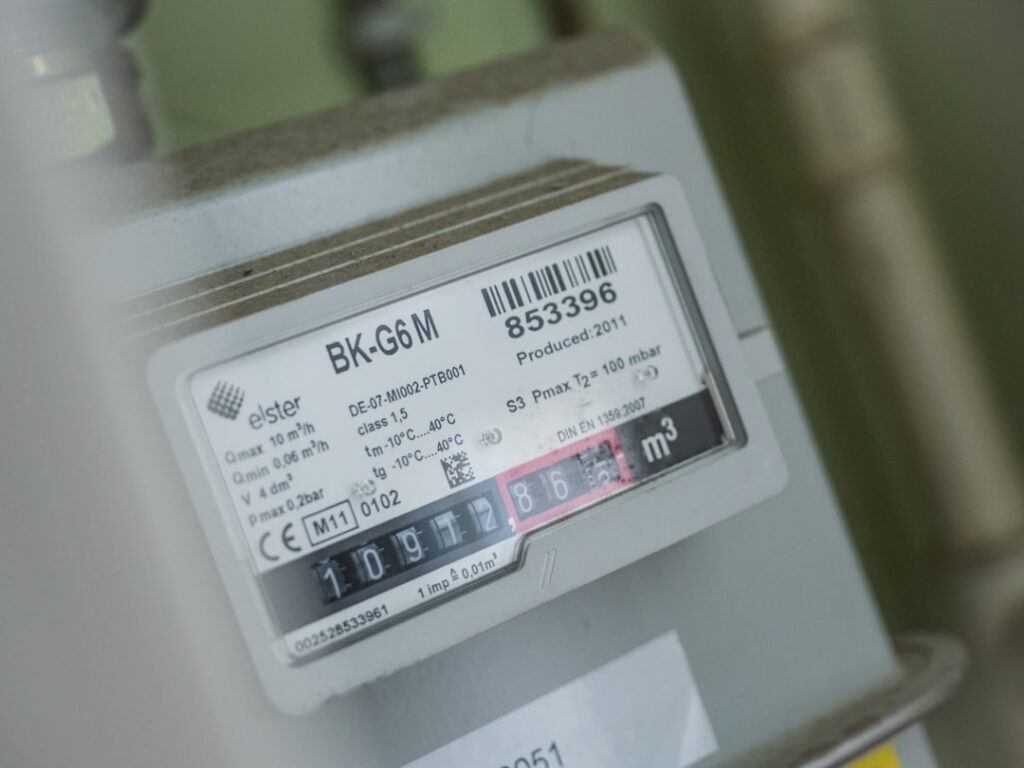
Add a backyard cottage, rent out a basement apartment or wire a detached workshop, and the same question shows up on the first utility bill: who used what? An electric submeter answers that by measuring the kilowatt-hours flowing to one part of a property that sits behind the main utility meter. The utility still bills you for the whole house, and the submeter tells you how much of that total belongs to the ADU, the tenant, the shop or the car charger.
Submeters are private devices. The utility does not read them, does not bill from them and usually does not care that they exist. That makes them far cheaper and faster to install than a second utility service, but it also means the accuracy, the billing arrangement and the legal side are on you. Most homeowners pay somewhere in the low hundreds of dollars for hardware and a few hundred more for a licensed electrician to install it, compared with several thousand for a separate service drop.
- What an Electric Submeter Does and Where It Fits
- Submeter vs a Separate Utility Meter
- Types of Electric Submeters
- Billing Rules Landlords Need to Know
- Electrical Safety and Who Should Install It
- How an Electric Submeter Installation Usually Goes
- Cost Ranges for Submetering
- Troubleshooting Common Submeter Problems
- When to Call a Licensed Professional
- Frequently Asked Questions
Read about how submeters work, the main types, when a separate utility meter makes more sense, the billing rules that trip up landlords and what a clean installation looks like.
What an Electric Submeter Does and Where It Fits
An electric submeter is a revenue-style or monitoring-grade meter installed downstream of your main meter, usually at a subpanel or on the feeder that serves a specific area. It counts energy (kWh) just like the utility meter on the side of your house. Many models also show demand, voltage readings on a display and time-of-use data, but the number that matters for cost sharing is cumulative kWh.
Common reasons homeowners install one:
- ADUs and in-law suites: splitting the bill fairly with a family member or renter without guessing.
- Long-term rentals: an electric sub meter for tenants lets you recover actual usage instead of baking a flat utility fee into rent.
- Detached garages and shops: welders, compressors, kilns and heaters can quietly add a lot to a bill, and a submeter shows exactly how much.
- EV charging circuits: some utilities offer EV rates or rebates based on charger usage, and employers or roommates may reimburse charging costs.
- Home businesses: documenting energy used by a shop or studio can support business expense records (ask your tax preparer what qualifies).
Submeter vs a Separate Utility Meter
Before buying hardware, decide whether you want a submeter for electricity at all or a true second utility service. They solve the same problem in very different ways.
| Factor | Private submeter | Separate utility meter |
|---|---|---|
| Who bills | You (owner) | The utility, directly to the occupant |
| Typical cost | Hundreds of dollars | Often several thousand dollars or more |
| Timeline | Days | Weeks to months |
| Monthly fees | None from the utility | Second base customer charge |
| Tenant disputes | Owner handles them | Utility handles them |
A separate meter usually requires a new service drop or a meter stack, a new main disconnect, utility engineering approval and sometimes trenching. It makes sense for a legally separate dwelling unit you plan to rent long term, especially where local rules restrict owners from reselling electricity. A submeter is the practical choice for family arrangements, shops, EV chargers and most single-property rentals where billing by usage is allowed.
Types of Electric Submeters
CT clamp (current transformer) meters
These use split-core or solid-core current transformers that clamp around the feeder conductors. The meter body mounts in or next to the panel and reads the current through the CTs along with voltage reference leads landed on a breaker. CT meters are the most common choice for retrofits because the feeder does not have to be cut. Accuracy depends on matching CT size to the circuit (a 100-amp CT on a 100-amp feeder, for example) and on installing the CTs facing the correct direction.
Socket-based meters
A socket submeter looks like a utility meter and plugs into a standard meter base installed in line with the feeder. It is a tidy, recognizable setup that tenants trust, and the meter can be swapped without rewiring. The tradeoff is that a meter base must be added, which takes more labor and wall space.
DIN-rail and panel-mount meters
Compact DIN-rail meters fit inside an enclosure or a subpanel with rail space. Small direct-connect versions carry the load current through the meter itself and suit circuits up to roughly 60 to 100 amps. They are popular for EV chargers and shop circuits.
Monitoring vs revenue-grade
Whole-home energy monitors with clamp sensors are handy for curiosity and energy saving, but many are not certified for billing accuracy. If you are charging a tenant, look for a meter that states compliance with a recognized revenue-metering accuracy standard (often listed as ANSI C12 class accuracy) and keep its documentation. Some states require billing meters to meet a specific accuracy class or be certified by a weights-and-measures office.
Smart and remote-read meters
Many current submeters report readings over Wi-Fi, cellular, Ethernet or a wired protocol, which saves monthly trips to the panel and creates a timestamped record. Pulse outputs let you feed readings to a logger or building system. For a single ADU, a simple display you photograph each month works fine; for several units, remote reading pays off quickly.
Billing Rules Landlords Need to Know
The legal side is where most submetering plans succeed or fail. Rules vary by state and sometimes by city, so treat this as a checklist of questions rather than legal advice.
- Resale restrictions: many states prohibit owners from marking up electricity. You can typically recover actual cost, but not profit from it.
- Rate basis: the usual approach is to bill the tenant’s kWh at your actual average cost per kWh from the utility bill, including or excluding fixed charges as local rules allow.
- Disclosure in the lease: spell out how readings are taken, the billing date, the rate formula and how disputes are handled.
- Shut-off limits: owners generally cannot cut power to a tenant for nonpayment the way a utility might. Handle unpaid utilities like unpaid rent, through the lease and local procedures.
- Meter testing: some jurisdictions give tenants the right to request an accuracy test.
- Record keeping: keep the utility bills, meter readings and calculations for each billing period.
A short call to your state utility commission or local housing office before installing can save a lot of trouble. For family-member ADUs and shops, none of this usually applies, and a simple monthly split works.
Electrical Safety and Who Should Install It
Submeter installation means working inside a panel on feeder conductors, and the service conductors feeding a main panel stay energized even with the main breaker off. Treat this as licensed electrician work. If you open a subpanel cover for any reason, turn off the breaker feeding it and confirm power is off with a non-contact voltage tester before your hands go near conductors. Never work on powered wires, and never try to check readings at live terminals yourself.
A few points to understand when talking with your electrician:
- Line voltage vs low voltage: the meter’s voltage reference leads and any direct-connect meter carry full 120/240-volt line voltage. Communication wiring and some CT secondary leads are low voltage, but CT leads must stay connected to the meter or shorted per the maker’s instructions, because an open CT on a loaded conductor can develop a dangerous voltage.
- Listings: use meters, CTs and enclosures listed for the application and panel.
- New circuits: if the project includes a new subpanel, feeder or EV circuit, that work typically needs a permit and inspection, and outdoor or garage receptacles need GFCI protection.
- Panel fill: CTs and wiring must fit without crowding the panel. Sometimes an adjacent enclosure is cleaner.
How an Electric Submeter Installation Usually Goes
- Define the load. Ideally the ADU, tenant unit or shop is already fed from a dedicated subpanel. If the space shares circuits with the main house, it must be rewired so everything in that area runs through one feeder.
- Choose meter type and CT size. Match the meter to the service voltage (120/240-volt single-phase for most homes) and the CTs to the feeder breaker rating.
- Pull a permit where required.
- Mount the meter. The electrician mounts the meter or meter base near the subpanel or at the main panel where the feeder leaves.
- Install CTs and reference leads with the circuit de-energized, observing CT orientation and phase matching.
- Commission and verify. After power is restored, the electrician confirms the meter counts in the right direction and reads plausibly against a known load.
- Record a starting reading with date and a photo. Give the tenant a copy.
Cost Ranges for Submetering
Prices vary by region and panel condition, but general ranges look like this:
- Basic monitoring CT meter: roughly $50 to $200.
- Revenue-grade single-phase submeter: about $150 to $500, more with cellular reporting.
- Socket meter base plus meter: often $200 to $600 in hardware.
- Electrician labor: commonly $200 to $800 for a straightforward install, higher if a subpanel or feeder rework is needed.
- Separate utility service, for comparison: frequently several thousand dollars and sometimes much more with trenching.
For a shop or EV circuit, payback is mostly peace of mind and better data. For a rental, recovering even a modest monthly electric bill covers the cost within the first year in many cases.
Troubleshooting Common Submeter Problems
- Reading zero or going backward: usually a reversed CT or swapped phase. Have the electrician correct orientation.
- Readings seem half of expected: one CT may be missing, unplugged or on the wrong leg, so only one side of a 240-volt load is counted.
- Numbers drift high or low vs the utility: mismatched CT ratio settings in the meter’s configuration are a common cause. Confirm the programmed ratio matches the CTs installed.
- Remote reporting drops out: panels are metal boxes that block Wi-Fi. An external antenna, wired connection or cellular model fixes most of this.
- Tenant disputes a bill: share the photo log, the utility bill and your rate math. If doubts persist, have the meter accuracy checked.
When to Call a Licensed Professional
Call a licensed electrician for every submeter install, any new subpanel or feeder and any EV charger circuit. Electricians know local permit rules, can confirm whether your service has capacity for the added load and will handle CT and reference wiring safely. For a separate utility meter, the electrician coordinates with the utility’s engineering team. Talk with a local attorney or housing authority about billing rules before charging tenants.
Frequently Asked Questions
Can I legally bill a tenant using an electric submeter?
In many states, yes, as long as you bill at actual cost and disclose the method in the lease. Some places restrict or regulate submeter billing, so check with your state utility commission or local housing office first.
Is an electric sub meter as accurate as the utility meter?
A revenue-grade submeter installed correctly is accurate to within a percent or so, comparable to utility meters. Basic energy monitors are less precise and better suited to tracking trends than billing.
Can I install a submeter myself?
It is not a good DIY job. The work happens inside a panel on feeder conductors, often near conductors that stay energized with the main breaker off. Hire a licensed electrician and pull a permit where required.
Do I need a submeter for an EV charger?
Not always. Many chargers report their own energy use. A dedicated submeter helps when a utility rebate, roommate or employer needs verified kWh numbers.
What size CT do I need?
Match the current transformer rating to the breaker protecting the feeder you are metering, such as 100-amp CTs on a 100-amp subpanel feeder. Undersized CTs saturate and read low; oversized ones lose accuracy at light loads.