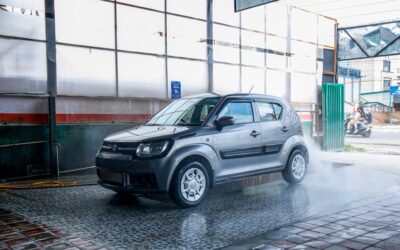
Walk into any home center and you face the same fork in the road: a quiet, plug-in unit or a rumbling engine-driven machine. The electric vs gas power washer decision really comes down to one question, which is how much cleaning power you actually need versus how much convenience you are willing to trade for it. Both blast away grime, but they do it at very different pressures, costs, and noise levels. Match the machine to your typical job and you will be far happier than if you simply buy the most powerful one on the shelf.
- The Core Difference: Power and Water Flow
- Electric Power Washers: Light to Medium Duty
- Gas Power Washers: Heavy Duty and Portable
- Maintenance: A Real Difference Over Time
- The Critical Safety Rule: Never Run Gas Indoors
- Noise, Comfort, and Neighbors
- How to Decide
- Cost and Long-Term Value
- Nozzles and Accessories Matter Too
- The Bottom Line
The Core Difference: Power and Water Flow
Cleaning power is a product of two numbers: PSI (pounds per square inch, the force of the stream) and GPM (gallons per minute, the volume of water). Multiply them and you get cleaning units, a rough measure of total muscle.
Electric models typically run 1,300 to 2,300 PSI with around 1.2 to 1.5 GPM. Gas models commonly deliver 2,500 to 4,200 PSI with 2.0 to 4.0 GPM. That gap is significant: a gas unit not only hits harder, it rinses faster because it moves far more water. For caked-on dirt over large areas, that combination finishes the job in a fraction of the time.
Electric Power Washers: Light to Medium Duty
An electric washer is the quieter, simpler choice. It plugs into a standard outlet, starts with a trigger pull, produces no exhaust, and weighs much less, so it is easy to carry and store on a shelf in the garage.
- Best for: cars, patio furniture, grills, bikes, fences, siding spot-cleaning, and small decks.
- Pros: lightweight, low noise, no fumes, minimal maintenance, lower upfront cost.
- Cons: tethered to a cord and a power outlet, lower PSI and GPM, slower on big or stubborn jobs.
The corded limitation is real. You are restricted to the reach of the power cord plus the hose, and using an undersized extension cord can damage the motor. For around-the-house work near an outlet, though, an electric unit is often all you need.
Gas Power Washers: Heavy Duty and Portable
A gas washer trades convenience for raw capability. With no cord, it goes anywhere, including the far corners of a property with no outlet in sight. The higher PSI and GPM strip paint, clean concrete, and tackle large surfaces fast.
- Best for: driveways, large concrete patios, two-story siding, decks needing paint prep, heavy mildew, and commercial-scale cleaning.
- Pros: highest pressure and flow, fully portable, fastest on large or tough jobs.
- Cons: loud, heavier, produces exhaust, needs regular engine maintenance, higher cost.
That power demands respect. A gas washer at 3,000-plus PSI can etch wood, gouge soft brick mortar, strip auto paint, and cause serious injury if the stream hits skin. Keep the nozzle moving, start with a wider spray tip, and test on an inconspicuous area.
Maintenance: A Real Difference Over Time
Electric units are nearly maintenance-free. Beyond rinsing the machine and storing it where it will not freeze, there is little to do. Gas units are small engines and need engine care: oil changes, fuel stabilizer or draining the tank before storage, spark plug and air filter service, and pump protection. Skipping that work shortens the machine’s life. If you dislike engine upkeep, factor that into the choice.
The Critical Safety Rule: Never Run Gas Indoors
This point is non-negotiable. A gas power washer’s engine produces carbon monoxide, an invisible, odorless gas that can be fatal. Never operate a gas washer inside a garage, basement, shed, carport, or any enclosed or partially enclosed space, even with the door open. Run it only outdoors in open air, well away from windows and vents. An electric washer produces no exhaust, which makes it the only safe option for any enclosed area such as a basement or interior space.
Noise, Comfort, and Neighbors
Electric motors hum quietly and only run when you squeeze the trigger. Gas engines roar continuously the whole time you work, loud enough that hearing protection is wise and early-morning use will not endear you to neighbors. For frequent, casual cleaning around an occupied home, the electric unit’s quiet operation is a genuine quality-of-life advantage.
How to Decide
Run through this quick checklist before you buy:
- Mostly cars, furniture, and small patios near an outlet? Choose electric.
- Large driveways, concrete, paint prep, or no outlet nearby? Choose gas.
- Hate engine maintenance and noise? Lean electric.
- Need maximum speed on big, stubborn jobs and full portability? Lean gas.
- Any chance you will clean in an enclosed space? Electric only, for safety.
Cost and Long-Term Value
Upfront price is only part of the story. Entry-level electric washers are the most affordable to buy, while gas models cost more out of the box and add ongoing expenses for fuel, oil, and the occasional pump or carburetor repair. Over several years, an electric unit used a handful of times a season is the cheaper machine to own. A gas unit earns its higher running cost only if you genuinely use its power often, on large jobs where the time saved is worth the fuel and upkeep. Buy more machine than you need and you pay twice: once at the register and again every time you maintain it.
Nozzles and Accessories Matter Too
Whichever type you choose, the spray tip you use changes the result as much as the machine’s rating. Most washers include color-coded nozzles, from a narrow 0-degree pencil jet that is rarely safe on home surfaces, to wider 25- and 40-degree fans for general cleaning, plus a low-pressure soap tip. Starting with a wider angle and moving closer only as needed protects soft wood, siding, and paint from damage. A surface cleaner attachment, which spins two jets under a shroud, makes flat concrete and deck cleaning dramatically faster and more even, and it works on both electric and gas units.
The Bottom Line
There is no single winner in the electric vs gas power washer debate, only the right tool for your workload. Electric covers the majority of residential cleaning quietly, cleanly, and affordably. Gas exists for the heavy, large-scale, off-grid jobs where its extra power and portability earn their keep, provided you accept the maintenance, noise, and the hard rule of never running it indoors. Buy for the jobs you do most often, not the rare worst case, and you will get the most value from your machine.