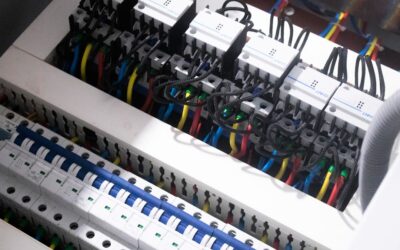
Touching the wrong wire in an electrical box can cause a lethal shock, a house fire, or a tripped breaker that takes hours to diagnose. The electrical wire color code exists specifically to prevent these outcomes, giving electricians and homeowners a visual system to identify each wire’s function before making contact. Even if you never plan to do your own electrical work, understanding wire colors helps you communicate with electricians and spot dangerous amateur wiring in older homes.
Standard Wire Colors in US Residential Wiring
The National Electrical Code (NEC) mandates specific colors for certain wires while allowing some flexibility for others. Here is the complete color guide for single-phase residential wiring, which covers virtually all US homes.
- Black: Hot (live) wire. Carries current from the breaker panel to outlets, switches, and fixtures. This wire is always energized when the circuit is on. Never touch a black wire without verifying power is off at the breaker.
- White: Neutral wire. Returns current from the device back to the breaker panel. While neutral wires carry current during normal operation, they should be at zero voltage relative to ground. However, a miswired neutral can still shock you.
- Green or bare copper: Ground wire. Safety wire that provides a path for fault current to trip the breaker. The ground wire does not carry current during normal operation. It only activates when something goes wrong.
- Red: Secondary hot wire. Used in 240-volt circuits (dryers, ranges, water heaters) and for interconnecting smoke detectors. Also used as a traveler wire in three-way switch circuits.
- Blue: Hot wire, typically used in conduit wiring for commercial buildings but occasionally found in residential three-way or four-way switch circuits.
- Yellow: Hot wire used for switch legs and certain 240-volt applications. Common in conduit installations.
- White with black or red tape: A white wire marked with tape or paint at both ends indicates it has been re-identified as a hot wire. This is legal and common in switch loops where a 2-wire cable is used and both conductors carry hot current.
Common Residential Cable Types
Most residential wiring uses Romex (NM-B) sheathed cable, which bundles multiple wires inside a plastic jacket. The jacket color indicates the wire gauge inside.
- White jacket (14/2 or 14/3): Contains 14-gauge wire, rated for 15-amp circuits. Standard for lighting and general outlets.
- Yellow jacket (12/2 or 12/3): Contains 12-gauge wire, rated for 20-amp circuits. Required for kitchens, bathrooms, laundry, and garage outlets.
- Orange jacket (10/2 or 10/3): Contains 10-gauge wire, rated for 30-amp circuits. Used for dryers, window AC units, and some water heaters.
- Black jacket (6/2 or 6/3): Contains 6-gauge wire, rated for 40 to 60-amp circuits. Used for electric ranges, large water heaters, and sub-panels.
The “/2” designation means two insulated conductors plus a bare ground. The “/3” means three insulated conductors (black, red, white) plus a bare ground. Three-conductor cable is required for three-way switches and 240-volt circuits that also need a neutral.
240-Volt Circuit Wiring
Large appliances like electric dryers, ranges, and central AC units run on 240 volts. These circuits use two hot wires (typically black and red) that each carry 120 volts relative to neutral, combining for 240 volts between them. The white wire serves as neutral, and the bare copper wire is ground.
Older homes built before 1996 may have 3-prong dryer and range outlets with no separate ground wire. The NEC now requires 4-prong outlets with a dedicated ground for new installations. If your home still has 3-prong 240-volt outlets, upgrading to 4-prong is a straightforward and recommended safety improvement costing $150 to $300 per outlet when done by an electrician.
Three-Way Switch Wiring
Three-way switches, which allow you to control one light from two locations, create the most confusion for homeowners. The wiring uses traveler wires, typically red and black in a 14/3 or 12/3 cable, to connect the two switches. The common terminal on each switch gets the hot feed (at one switch) and the light fixture wire (at the other switch).
If you open a switch box and find multiple cables with various colored wires, photograph everything before disconnecting anything. Three-way switch circuits are the most frequently miswired circuits in residential electrical work, and the color code alone does not always tell the full story without understanding the circuit layout.
When Wire Colors Lie
Wire colors are reliable in professional installations following the NEC, but older homes and amateur work can break the rules. Pre-1960s homes may use entirely different color conventions, or knob-and-tube wiring where both wires are the same color. DIY installations sometimes use whatever wire was available, ignoring color standards entirely.
Never rely solely on wire color to determine if a wire is safe to touch. Always use a non-contact voltage tester (about $15 to $25 at any hardware store) to verify that power is off before touching any wire. The Klein Tools NCVT-1 and Fluke 1AC-A1-II are two of the most reliable non-contact testers on the market. Test the tester on a known live circuit first to confirm it is working, then test the wires you plan to work on.
Safety Rules for Homeowners
Electrical work kills roughly 130 people per year in the US through electrocution and causes over 50,000 house fires annually. Follow these non-negotiable safety practices:
- Turn off the circuit breaker before working on any circuit. Lock the panel or tape the breaker with a warning note so nobody turns it back on while you are working.
- Test wires with a voltage tester after turning off the breaker. Mislabeled breakers are common, especially in older homes.
- Never work on electrical systems in wet conditions or while standing on damp surfaces.
- Use only one hand when testing wires. Keeping one hand in your pocket or behind your back prevents current from traveling across your chest through your heart.
- Wear rubber-soled shoes for additional insulation from ground faults.
When to Call a Licensed Electrician
Homeowners in most jurisdictions can legally replace outlets, switches, and light fixtures on existing circuits without a permit. Anything beyond that, including running new circuits, upgrading panels, or adding sub-panels, requires a permit and should be done by a licensed electrician. Typical rates run $75 to $150 per hour, and most basic jobs take 1 to 3 hours.
Call an electrician immediately if you notice burnt or melted wire insulation, a persistent burning smell from outlets or switches, breakers that trip repeatedly, or any flickering lights that cannot be explained by a loose bulb. These are signs of potentially dangerous wiring faults that go beyond what the electrical wire color code can help you diagnose visually.