
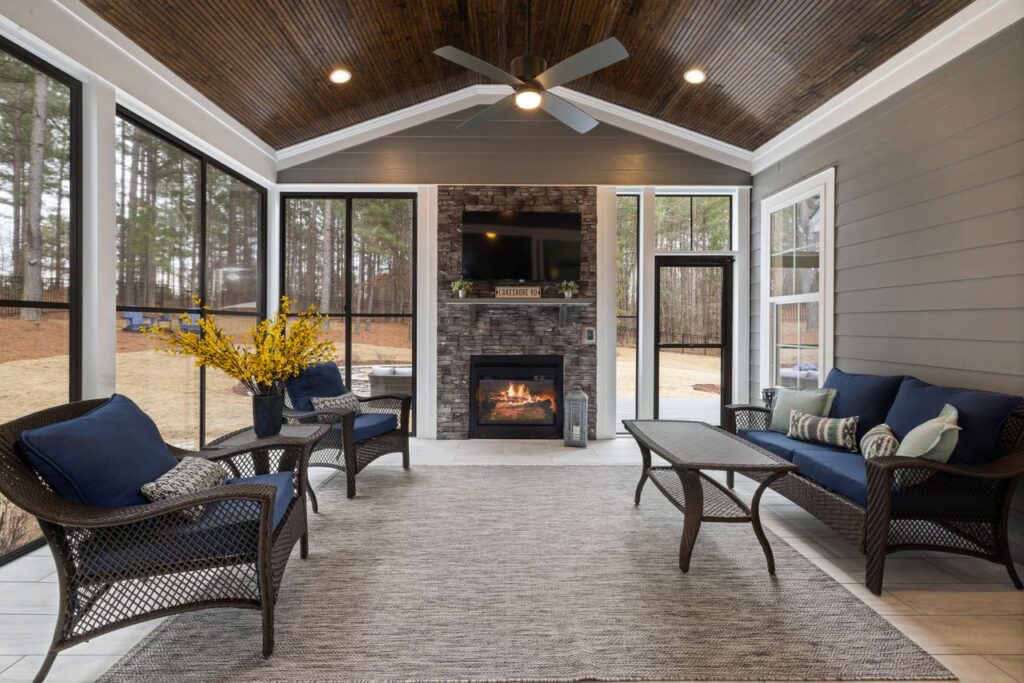
A full four-season sunroom addition costs $25,000 to $80,000 by the time the contractor finishes. The reason most homeowners give up on the project is the price, not the desire. Smart enclosed deck ideas on a budget can deliver 80% of the use for 15% of the cost, especially if the existing deck framing is sound and the structure already has a roof or pergola overhead. The difference between a $3,000 weekend project and a $35,000 addition is permits, foundations, and HVAC — three big variables you can dodge with the right approach.
Part of our Decks & Outdoor guide — explore the full guide →
- Start with What the Deck Already Has
- Option 1: Screen Kit Enclosure ($600–$1,400)
- Option 2: Vinyl Roll-Up Panels ($800–$1,800)
- Option 3: Old Windows on Marketplace ($300–$1,500)
- Option 4: Polycarbonate Wall Panels ($1,400–$2,800)
- Option 5: Pergola with Drop Curtains ($900–$2,000)
- The Mid-Budget Path: Three-Season Room ($3,000–$5,500)
- Heating and Cooling Without Breaking the Bank
- Permits and Code Reality
- What the Finished Space Should Feel Like
Start with What the Deck Already Has
Before pricing materials, audit the existing structure. Three conditions decide which budget path makes sense.
- Covered deck with a solid roof: The best starting point. You only need vertical enclosure — screens, windows, or panels.
- Pergola or open joists overhead: Add polycarbonate roofing first ($300–$700) before enclosing sides.
- Completely uncovered deck: You need a roof structure too. Budget jumps significantly — start at $4,000.
Also check the deck framing. Joists must be 12 to 16 inches on center and the ledger board must be properly flashed. Adding wall load to an undersized deck violates IRC R301 and can collapse the structure.
Option 1: Screen Kit Enclosure ($600–$1,400)
The cheapest real enclosure is a screen porch kit. Screen Tight (the Charleston, SC company) sells a complete system at Home Depot for $11 per linear foot of cap-and-base. For a typical 12×16 deck with three open sides, that runs about $480 in cap stock plus $90 in fiberglass screen and $40 in fasteners.
Add 2×4 vertical posts every 4 to 6 feet between the existing deck posts, sheath the openings with screen using the Screen Tight cap system, and a weekend of work turns an open deck into a bug-free three-season room. Add a pre-hung screen door ($80 from Lowe’s) and you have a sleeping porch.
Option 2: Vinyl Roll-Up Panels ($800–$1,800)
For wind protection without losing the open feel, clear vinyl roll-up panels are a Florida-room staple. Outdoor Curtains Pro and Royal Vinyl panels run $4 to $7 per square foot, custom-fit to your openings. They roll up like blinds when the weather is good and pull down for wind, rain, or cold-weather use.
Installation is a homeowner job: stainless eye bolts top and bottom, marine-grade rope, and a snap-together perimeter. Budget six hours for a typical 200-sq-ft enclosure. The panels last 5 to 8 years before the vinyl yellows and gets brittle.
Option 3: Old Windows on Marketplace ($300–$1,500)
The thrifty path: salvaged double-hung windows from Facebook Marketplace, ReStore, and demolition contractors. A typical 4-foot-tall double-hung sells for $15 to $40 used. Twelve of them frame out an entire enclosure for under $500.
The build is more work than a screen kit. Frame 2×4 walls between the existing deck posts, sheath the lower 30 inches with painted T1-11 plywood ($28 per sheet) as a kneewall, and set the windows above. Trim and caulk. Total time: two long weekends. Total cost on a 12×12 deck: $700 to $1,200 including paint and trim.
Option 4: Polycarbonate Wall Panels ($1,400–$2,800)
Twin-wall polycarbonate is the same material greenhouse builders use. Suntuf and Palruf sheets sell at Lowe’s for $35 to $55 per 26×96 panel. The corrugated profile snaps into purlins and lets light through while blocking wind and rain.
The downside: corrugated polycarbonate looks utilitarian. Plan to paint the framing a dark color so the panels read as the dominant material. The upside: 12-year UV warranty, R-2 thermal resistance, and tougher than glass.
Option 5: Pergola with Drop Curtains ($900–$2,000)
For homeowners who do not want full enclosure year-round, a pergola with retractable shade curtains delivers shade, privacy, and partial wind protection. Tangkula and PURPLE LEAF aluminum pergolas run $700 to $1,500 in 10×12 and 12×16 sizes. Add Sun Zero outdoor curtain panels ($45 per pair) on stainless rods and the space gets resort-grade ambiance for under $2,000.
Best for warm climates — Florida, Texas, Southern California, the Carolinas. North of zone 6, the cold months underuse the space.
The Mid-Budget Path: Three-Season Room ($3,000–$5,500)
For roughly $4,000, a DIY three-season room is realistic on a sound deck with an existing roof. The recipe:
- Frame 2×4 walls between deck posts, set on PT 2×4 bottom plates with flashing.
- Install vinyl single-hung windows ($85–$140 each) instead of salvaged.
- Sheath the kneewall in painted Hardie panel or beadboard.
- Hang a 30×80 vinyl prehung patio door, $260 at Lowe’s.
- Insulate the kneewall with R-13 fiberglass batts.
- Run a single 15-amp circuit for lighting and a couple of outlets ($400 if DIY, $850 with an electrician).
- Add a ceiling fan with LED light, $90 to $180.
Total: $3,200 to $5,500. The result is usable from late March to late November in most of the U.S. — eight months of room you did not have.
Heating and Cooling Without Breaking the Bank
A ductless mini-split adds true four-season use but pushes the budget past $3,500 installed. Cheaper alternatives buy 70% of the function. A 1,500-watt infrared ceiling-mount heater ($150) from Dr. Infrared covers a 12×12 space. A 12,000 BTU window AC ($230) handles cooling for the same area.
Skip portable propane heaters in enclosed spaces. Carbon monoxide builds up fast in an under-ventilated three-season room. Stick to electric heat or fully vented hard-piped gas.
Permits and Code Reality
Adding a permanent roof or replacing siding with windows generally triggers a building permit in most jurisdictions, even for “decks.” Screen enclosures usually do not. Vinyl roll-up panels never do. Check with your local building department before you frame walls — a $300 permit is cheaper than a tear-out order.
The other code point: if you enclose more than 25% of the deck perimeter, IRC R311.7 might trigger egress requirements. A door wide enough for a chair plus the screen porch door usually satisfies them. Talk to the inspector first.
What the Finished Space Should Feel Like
Finishes carry the cost-perception. A $3,000 enclosure that uses outdoor rugs from World Market ($80), Sunbrella throw pillows ($25 each), string lights ($30), and a few potted plants reads $8,000 in photos. Pick a small palette — three colors — and stay disciplined. The best enclosed deck ideas on a budget look like they cost twice what they did because the design choices feel intentional, not improvised. That intention is free; spend it.


