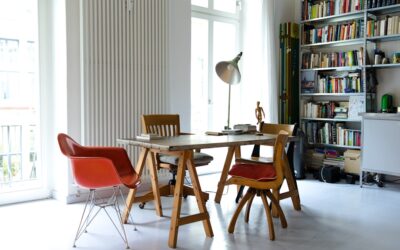
Engineered timber flooring Melbourne homeowners gravitate to for one practical reason: the city’s climate swings from dry summer heat to damp, cool winters, sometimes in the span of a single week, and that fluctuating humidity is exactly the condition that makes a multi-layer engineered board outperform solid hardwood. At D and G Flooring we explain to readers around the world how engineered construction tames timber’s natural movement, and the principles apply just as well whether your floor sits in a Melbourne terrace or a US bungalow. This guide covers how engineered timber is built, its pros and cons, and what to weigh before buying.
What Engineered Timber Flooring Is
Engineered timber is real wood, not a printed imitation. Each board has a top wear layer, called the lamella, of genuine hardwood, bonded over a core of cross-laminated plywood or high-density fiberboard. The grain of each core layer runs perpendicular to its neighbor, and that cross-ply structure is the secret to stability. Where a solid plank expands and shrinks dramatically across its width as humidity changes, the opposing grain layers in an engineered board hold one another in check, so the floor moves far less. The visible surface is still oak, spotted gum, blackbutt, or whatever species you choose, finished and ready to walk on.
Why Climate Makes Engineered a Smart Choice
Regions with variable humidity are hard on timber. In a humid stretch solid boards swell and can cup or buckle; in a dry spell they shrink and open gaps between planks. Melbourne’s notoriously changeable weather is a textbook example, but the same dynamic affects much of the United States, from humid summers to bone-dry winters with the heating on. Engineered construction reduces this seasonal drama, which means fewer gaps, less cupping, and a floor that stays flatter year-round. That stability also makes engineered timber compatible with concrete slabs and hydronic underfloor heating, where solid timber is often risky.
Pros of Engineered Timber Flooring
- Dimensional stability: The cross-laminated core resists the swelling and shrinking that plague solid wood in changing humidity.
- Genuine hardwood surface: You get the authentic look, feel, and grain of real timber, not a photographic layer.
- Versatile installation: It can be floated, glued, or secret-nailed, and it works over concrete slabs and compatible underfloor heating.
- Refinishable: A board with a thick wear layer of 3 to 6 millimeters can be sanded and recoated at least once or twice, extending its life for decades.
- Faster, cleaner install: Many systems use a click or glue method that is quicker than nailing down solid boards onto joists.
- Wide formats: Engineered boards come in wider and longer planks than solid timber can safely offer, suiting modern open interiors.
Cons and Trade-offs
- Limited resands: The wear layer is finite. A thin 2 millimeter lamella may allow only a light recoat, not a full sanding, so it cannot be refinished as many times as solid timber.
- Quality varies widely: Cheap engineered boards with thin veneers and low-grade cores can delaminate or wear through. Construction quality matters more than the brand name.
- Moisture is still the enemy: It is more stable, not waterproof. Standing water, leaks, or a wet subfloor will still damage it.
- Cost: Quality engineered timber is not cheap, often comparable to mid-range solid hardwood, though installation can offset some of that.
- Hollow underfoot if floated: A floating install over an uneven subfloor can sound and feel less solid than a glued or nailed floor.
Choosing a Species and Finish
The lamella species sets the look and hardness. European oak is the global default for its even grain and ability to take stains, from pale Scandinavian whites to deep smoked browns. In Australian homes, native species like spotted gum, blackbutt, and brushbox bring distinctive grain and high hardness that resists dents. For a US audience, domestic oak, hickory, and maple lamellas offer similar performance. Harder species and matte, brushed, or oiled finishes hide everyday scuffs better than high-gloss surfaces, which is worth considering in a busy household with kids or pets.
How to Judge Quality Before You Buy
- Wear layer thickness: Aim for at least 3 millimeters if you want the option to resand later. Ask for the exact figure, not just photos.
- Core material: Multi-ply hardwood plywood cores are generally more stable and screw-holding than cheap fiberboard cores.
- Finish durability: Factory finishes with multiple coats of UV-cured polyurethane or a quality hard-wax oil hold up best.
- Locking system or tongue and groove: A precise milling means tighter seams and easier installation.
- Formaldehyde rating: Look for low-emission certifications for healthier indoor air.
- Warranty clarity: Read what is actually covered for wear and structure rather than relying on a headline number.
Installation Considerations
Engineered timber can be installed three ways. A floating floor clicks together over an underlay and is fastest but can feel slightly hollow. A direct glue-down to a concrete slab gives the most solid, premium feel and is common over the ground-floor slabs typical of many Melbourne and US homes. Secret nailing works over a timber subfloor or battens. Whichever method you choose, the subfloor must be flat, clean, and dry. On concrete, a moisture test is essential, because slab moisture is one of the most common causes of floor failure. Acclimate the boxes in the room for the time the maker specifies, and leave expansion gaps at every wall.
Cost Expectations
Pricing depends heavily on species, wear-layer thickness, and board size. As a general guide for a US market, engineered hardwood materials commonly fall in the range of roughly $4 to $12 per square foot, with premium wide-plank European oak reaching higher. Installation adds labor on top, and glue-down over concrete tends to cost more than a floating install because of the adhesive and prep involved. Always budget around 10 percent extra material for cutting waste and future repairs.
Maintenance for a Long Life
Keep grit off the surface with regular sweeping or a soft vacuum, since fine sand acts like sandpaper underfoot. Wipe spills promptly rather than letting water sit. Use felt pads under furniture, and avoid wet mopping; a barely damp microfiber and a cleaner formulated for timber is plenty. Maintaining stable indoor humidity, ideally a moderate range year-round, minimizes even the small seasonal movement engineered timber does have. When the finish eventually dulls, a recoat refreshes the whole floor without a full sand if the wear layer allows.
The Bottom Line
For homeowners in changeable climates, engineered timber flooring delivers the warmth and authenticity of real wood with far better stability than solid planks, plus compatibility with concrete slabs and underfloor heating. The keys to a great result are a thick wear layer, a quality core, proper moisture testing, and a clean, flat subfloor. Get those right and you will enjoy a genuine hardwood floor that holds up to seasonal swings for decades. The team at D and G Flooring is happy to help you compare species, wear layers, and installation methods to suit your home.
Prefer to explore on your own?
See how new flooring looks in your actual room in seconds — free, no signup.
Try the free Floor Studio →