
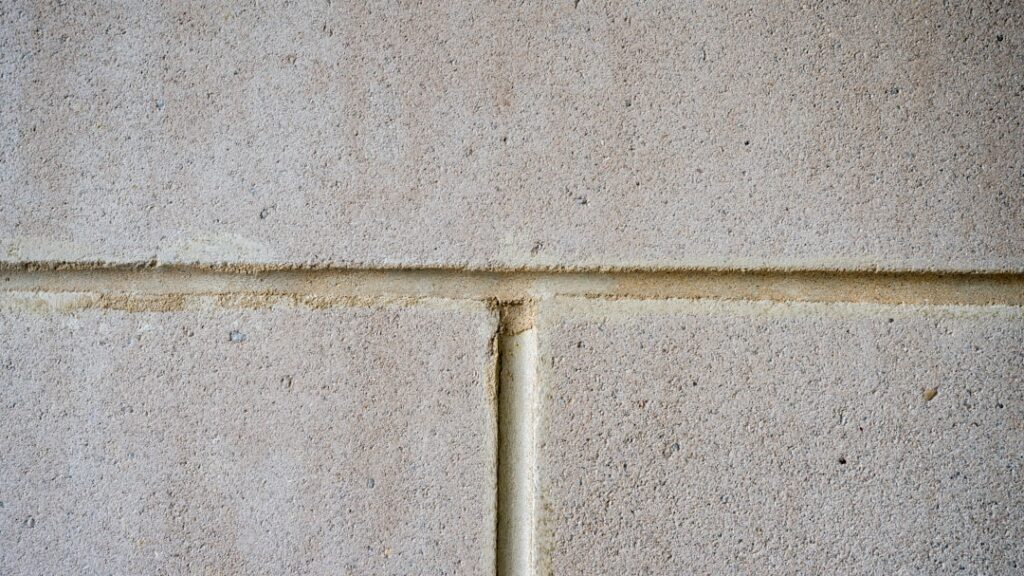
Short answer: no. Epoxy grout does not need sealing, and in most cases an epoxy grout sealer is a product searching for a problem. Epoxy grout is non-porous — a cured thermoset plastic filled with silica — so there’s nothing for a penetrating sealer to penetrate and nothing for stains to soak into. I’ve installed Spectralock and Kerapoxy in dozens of showers and commercial kitchens over the years, and I have never sealed a single joint. That said, the question isn’t dumb, because there are a few edge cases where a topical product earns its keep, and there’s a whole category of confusion around “epoxy sealers” that are actually coatings for cement grout. Let me untangle all of it.
Part of our Epoxy, Concrete & Garage Floors guide — explore the full guide →
Why Epoxy Grout Doesn’t Need a Sealer
To understand why, you need to know what sealers actually do. Cement grout is porous — under a microscope it’s a sponge of microscopic capillaries left behind as mixing water evaporates. Penetrating sealers work by soaking silane or fluoropolymer resins into those capillaries and lining them so water and oil bead instead of wicking in. No pores, no job for the sealer.
Epoxy grout cures by chemical reaction between resin and hardener, not by water evaporation. The cured joint is a dense plastic with water absorption below 0.5 percent — compare that to 5 to 15 percent for unsealed cement grout. Wine, coffee, grease, and shower water sit on top of it. This is exactly why epoxy costs $8 to $12 per pound against $1 or so for cement grout, and why it’s the standard spec for commercial kitchens, steam showers, and anywhere health codes get involved.
Apply a penetrating sealer to epoxy grout and the carrier just evaporates off the surface, occasionally leaving a hazy residue you’ll then get to scrub off. You’ve paid $30 a quart to create a cleaning problem.
The Confusion: Three Products That Sound the Same
Part of why people search for this is that the tile aisle uses “epoxy” in three different ways, and only one of them is grout.
| Product | What It Actually Is | Needs Sealing? |
|---|---|---|
| Epoxy grout (Spectralock, Kerapoxy, ProColor epoxy) | Two- or three-part resin grout used to fill joints | No |
| “Epoxy” grout colorant/coating (Grout Renew type) | Acrylic-urethane paint applied over old cement grout | No — it is itself a coating |
| Epoxy-fortified or “epoxy emulsion” cement grout | Cement grout with epoxy admixture — still cement-based | Usually yes, lightly |
That third row trips people up the most. Products marketed as epoxy-modified or epoxy-emulsion grouts are cement grouts with an epoxy booster. They’re better than plain cement grout, but they retain some porosity, and most manufacturers still recommend a penetrating sealer for stain-critical areas. Check your actual bag or kit: if it mixed with water, it’s cementitious and probably wants sealing. If it came as two or three parts you blended together with a distinct resin smell, it’s true epoxy and doesn’t.
The Edge Cases Where a Topical Product Makes Sense
I said “mostly no,” so here’s the honest remainder — the handful of situations where putting something over epoxy grout is defensible.
Chalked or Dulled Older Epoxy
First-generation epoxy grouts from the 1990s and 2000s can chalk or yellow at the surface after years of UV and harsh cleaners. You can’t “re-seal” that in any meaningful way, but a color-coating product (an acrylic-urethane grout colorant) will bond adequately to a scuffed, well-cleaned epoxy surface and refresh the look for a few years. It’s a cosmetic rescue, not maintenance.
The Surrounding Stone Still Needs Sealing
This is the big one in practice. If you’ve grouted marble, travertine, limestone, or slate with epoxy, the grout is bulletproof but the stone is not. You’ll be applying a penetrating stone sealer across the whole surface — stone and joints together — because taping off every grout line is absurd. That’s fine. Quality stone sealers (Miracle 511, StoneTech Bulletproof, Aqua Mix Sealer’s Choice — $30 to $60 per quart) won’t hurt epoxy joints; just buff residue off the grout promptly since it can’t absorb the excess the way stone does.
Textured or Sand-Finished Epoxy in Grimy Locations
Epoxy grout is stain-proof but not dirt-proof. Sanded epoxy has surface texture, and in a commercial entry or a garage that texture holds soil like any texture does. A sacrificial floor finish over the whole assembly can ease cleaning in commercial maintenance programs. Residentially, I’d just say: own a scrub brush.
What Epoxy Grout Actually Needs Instead: Cleaning
Since sealing is off the maintenance list, here’s what keeps epoxy joints looking new, because they do have two real vulnerabilities — surface film and harsh chemistry.
- Routine: neutral pH cleaner (dish soap in warm water works) and a microfiber mop or soft brush. Rinse. That’s 95 percent of it.
- Soap scum in showers: the haze people mistake for staining on epoxy is almost always mineral and soap film sitting on top. A soft scrub with a paste of baking soda, or a purpose-made soap-scum remover, takes it off. A squeegee after showers prevents it entirely.
- Avoid: sustained acid exposure (leaving vinegar or acidic descaler pooled on joints), abrasive powders that scratch the surface sheen, and solvent-heavy cleaners. Epoxy handles brief chemical contact fine — it’s rated for far worse than any bathroom — but chronic abuse dulls the finish over a decade.
- Discoloration warning: some early epoxy formulations yellow slightly with prolonged UV in sunny rooms. Nothing reverses that; nothing prevents it except newer-generation product (current Spectralock Pro Premium and Kerapoxy CQ are far better than their ancestors).
If You’re Choosing Grout Right Now: The Seal-Free Math
A lot of readers land on this question while deciding between grouts, so here’s the comparison that matters. Cement grout costs maybe $15 to $25 per bag but obligates you to seal on day 30 and re-seal every one to three years — $30 to $50 in sealer plus a tedious afternoon each cycle, forever. Epoxy costs roughly three to five times more up front (figure $150 to $250 in grout for a typical shower versus $40 to $60 cement) and then asks for nothing but soap for decades.
On a shower or a kitchen backsplash, I now steer most clients to epoxy or a premium single-component urethane precisely to delete the sealing chore, because in the real world nobody re-seals on schedule, and unsealed cement grout in a wet area is a mildew farm by year three. The labor is fussier — epoxy is sticky, sets on its own clock, and punishes slow washers — so installation quotes run higher too. But “never think about it again” is a genuine feature, and it’s the honest answer to the sealer question: the best epoxy grout sealer is the epoxy itself.
Quick Answers to the Related Questions I Always Get
Will sealer hurt my epoxy grout if I already applied it? No harm done. If there’s haze on the joints or tile, scrub it off with the sealer manufacturer’s recommended stripper or a white nylon pad and warm soapy water while it’s fresh. Cured haze may need a solvent wipe.
My installer says he always seals everything, including epoxy. He’s wasting your money on the epoxy joints, though if there’s natural stone in the job the whole-surface sealing is legitimate, as covered above. Ask which product and why.
Does epoxy grout ever stain? The surface can pick up film and, rarely, dye markers from things like hair dye or certain rubber-backed mats. Almost all of it scrubs off because nothing penetrated. Cement grout stains go deep; epoxy “stains” sit on top.
What about the grout in my ten-year-old shower — how do I know if it’s epoxy? Drip water on a joint. If it darkens as it absorbs, it’s cement-based and would benefit from sealing. If the water beads and the joint color never changes, it’s either epoxy or well-sealed cement, and either way it needs nothing today.
That water-drop test is worth remembering, because it turns this whole article into a ten-second diagnostic. Non-porous joints don’t drink, and joints that don’t drink don’t need sealer. Spend the money on a good squeegee instead.


