An Everbilt sump pump is the affordable, widely available choice for homeowners who want reliable basement flood protection without paying premium-brand prices. Sold at Home Depot as their house brand, Everbilt pumps cover the full range from small utility units to heavy 1 HP submersibles, and they punch above their price point. For most residential basements they deliver exactly the performance you need. This guide helps you size, select, and set one up correctly.
The key to picking the right Everbilt sump pump is matching horsepower and pump type to your water volume and pit depth, because an undersized pump runs constantly and an oversized one short-cycles and wears out early.
Submersible vs Pedestal Models
Everbilt makes both major sump pump styles, and the right one depends on your pit and your priorities:
- Submersible pumps sit down inside the sump pit, fully underwater. They run quieter, handle more debris, and last longer because water cools the motor. Best for finished basements and larger pits.
- Pedestal pumps keep the motor up on a shaft above the pit with only the intake submerged. They cost less and are easier to service, but they are louder and better suited to narrow pits.
For most homes, a submersible is the better choice. The quieter operation matters in a finished basement, and the longer lifespan justifies the modestly higher cost.
Sizing the Horsepower
Everbilt sump pumps come in common horsepower ratings, and choosing correctly prevents both flooding and premature failure:
- 1/4 HP: Light-duty for small pits and low water tables, moving around 2,000 to 3,000 gallons per hour
- 1/3 HP: The most popular residential size, handling the average basement with a moderate water table
- 1/2 HP: For higher water volume, deeper pits, or longer vertical lift to the discharge point
- 3/4 to 1 HP: Heavy-duty for high water tables, homes near a slope, or long horizontal discharge runs
The two factors that push you toward more horsepower are vertical lift, meaning how high the pump must push water to reach the discharge, and total run length. If your discharge climbs 10 feet or more, size up to a 1/2 HP or larger.
Understanding Flow Ratings
Pump capacity is measured in gallons per hour, but that number drops as the lift height increases. A pump rated at 3,000 GPH at zero lift might only move 2,000 GPH at 10 feet of lift. Everbilt lists a performance chart on the box, so read the flow at your actual lift height, not the headline number.
To estimate your needs, watch how fast water enters the pit during a heavy rain. If the pit fills an inch in a minute, you need a pump that clears it faster than it comes in, with margin to spare.
Switch Types Matter
The float switch is what tells the pump to turn on, and it is often the first thing to fail on any sump pump. Everbilt offers a few switch styles:
- Vertical float switch: Compact and reliable in narrow pits, moves straight up and down
- Tethered float switch: Swings out to a set water level, needs a wider pit to avoid snagging
- Electronic or diaphragm switch: No moving float, less prone to sticking, found on higher-end models
In a tight pit, a tethered float can catch on the pump or wall and fail to trigger, so choose a vertical switch when space is limited.
Battery Backup Is Not Optional
Here is the hard lesson every flooded homeowner learns: storms that cause the worst flooding are the same storms that knock out power, and a sump pump without a backup is useless during an outage. A battery backup system keeps the pump running when the grid goes down.
Everbilt sells backup sump pump systems and combination units that pair a primary AC pump with a DC battery backup pump in the same pit. Expect to pay $150 to $350 for a backup system plus the deep-cycle battery. For a basement you care about, this is money well spent, not a luxury.
Sizing the Sump Pit
The pit itself, sometimes called the sump basin, affects how well the pump performs, and it is easy to overlook. A pit that is too small forces the pump to switch on and off rapidly, called short-cycling, which wears out the motor and switch prematurely. A standard residential basin is about 18 inches wide and 22 to 24 inches deep, holding enough water to let the pump run for a reasonable stretch before shutting off.
If you are replacing a pump in an existing pit, check that the basin gives the float room to travel without snagging on the walls. In a tight or shallow pit, a vertical float switch is far more reliable than a tethered one that needs swing room. Matching the pump and switch to your actual pit dimensions prevents the short-cycling and float-hangup problems that cause most premature failures.
Installation Basics
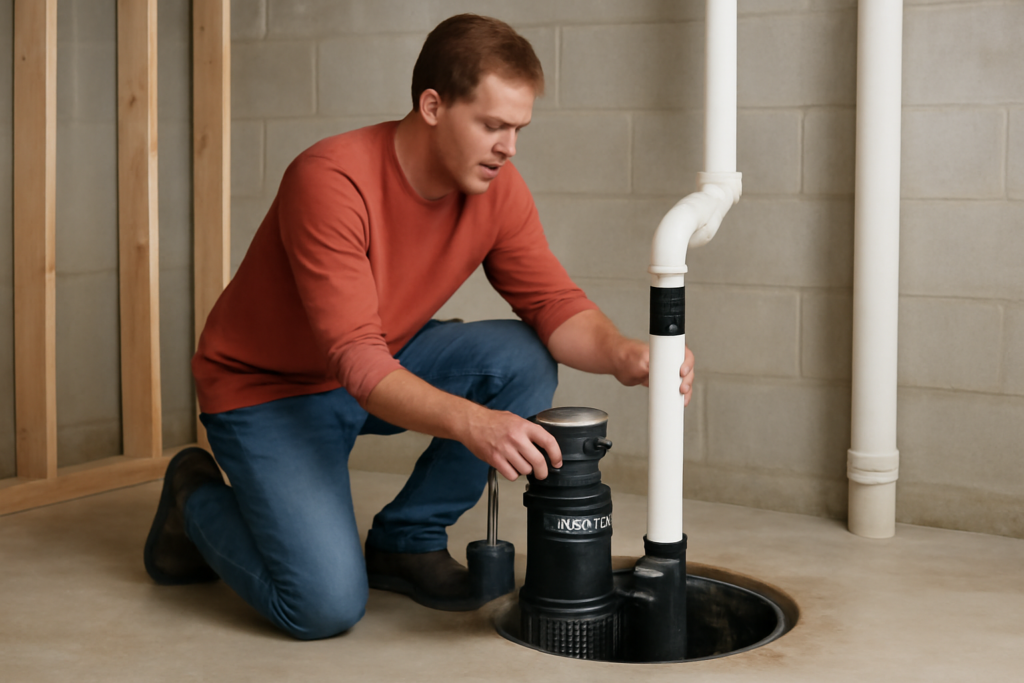
Swapping or installing an Everbilt sump pump is a manageable DIY job if you are comfortable with basic plumbing:
- Set the pump level in the bottom of the sump pit on a solid base, not on loose gravel that clogs the intake
- Attach the discharge pipe, usually 1-1/2 inch PVC, and install a check valve above the pump to stop water from flowing back into the pit
- Route the discharge outside, at least 10 feet from the foundation, sloping away from the house
- Plug the pump into a dedicated GFCI outlet, never an extension cord
- Pour water into the pit to test that the float triggers the pump and the check valve holds
The check valve is critical. Without it, water in the discharge pipe drains back down every cycle, making the pump work twice as hard and shortening its life.
Troubleshooting Common Problems
When a sump pump misbehaves, the cause is usually one of a few predictable issues you can diagnose yourself before calling a plumber:
- Pump runs but no water moves: A stuck check valve or an air-locked pump; some pumps need a small weep hole drilled in the discharge to release trapped air
- Pump will not turn on: A stuck float switch is the top cause; clear debris and confirm the float moves freely
- Pump cycles constantly: Often a failed check valve letting water flow back into the pit, or a float set too low
- Pump runs nonstop: An undersized pump, a very high water table, or a switch stuck in the on position
- Vibrating or noisy operation: The pump base is not sitting flat, or debris is caught in the impeller
The float switch is the single most common failure point on any sump pump, so start there. A quick test is to pour water into the pit and watch whether the float rises and trips the pump cleanly. If it hangs up on the pit wall or the pump body, reposition it or switch to a vertical float in a tight pit.
Choosing the Right Discharge Setup
Where and how you route the discharge water matters as much as the pump itself. The water needs to exit far enough from the foundation that it does not simply drain back into the pit, so run the pipe at least 10 feet from the house and slope the ground away. Dumping water right next to the foundation creates a loop that keeps the pump running and defeats the purpose.
Install a check valve on the vertical discharge just above the pump to stop water from draining back down each time the pump shuts off. In freezing climates, protect the outdoor discharge from icing up, since a frozen line backs water up into the basement. A freeze-relief adapter or a downward-angled exit helps the water keep flowing even if the end of the line ices over. Getting the discharge right is what turns a good pump into a reliable one.
Maintenance and Lifespan
A well-chosen sump pump lasts roughly 7 to 10 years, and simple upkeep gets you the full run. Every few months, pour a bucket of water into the pit to confirm the pump kicks on and clears it. Clean debris out of the pit and off the intake screen, check the discharge line for clogs or freezing in winter, and test the battery backup twice a year.
Keep a spare pump on the shelf if your basement is finished, because the day yours fails is rarely a convenient one. Match the horsepower to your water load, add a battery backup, and an Everbilt sump pump will quietly protect your basement through every storm for years.