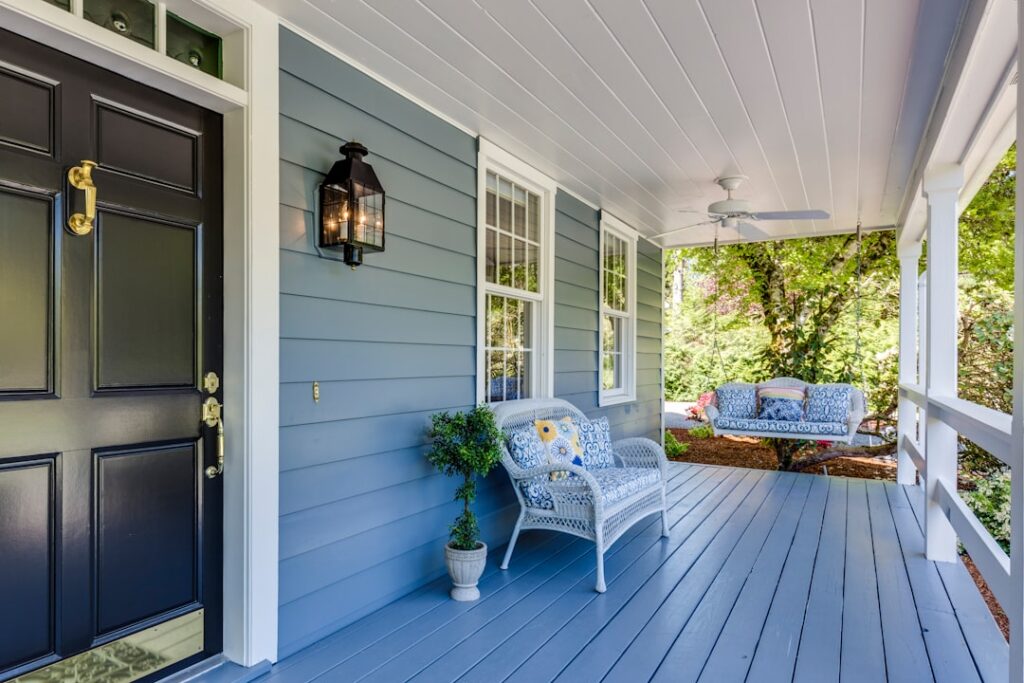
No home upgrade delivers more visual impact per dollar than a freshly painted front door, and real estate studies routinely tie the right door color to faster sales and higher offers. Choosing among the best exterior door paint colors is part design and part strategy, because the color has to flatter your siding, suit your home’s architecture, and hold up to years of sun and weather. Get it right and your entry becomes the focal point of your curb appeal; get it wrong and it fights everything around it.
Part of our Paint & Walls guide — explore the full guide →
This guide walks through the most effective door colors, how to match them to your home’s style and exterior, and the paint and finish choices that keep the color looking fresh.
- Why the Front Door Color Matters So Much
- Classic and Timeless Door Colors
- Bold and Trend-Forward Colors
- Matching Color to Your Home's Style
- Coordinating with Siding and Fixed Elements
- Choosing the Right Paint and Finish
- Color Psychology and What Your Door Says
- Painting a Door Without Removing It
- Prep and Application Tips
- Final Thoughts
Why the Front Door Color Matters So Much
The front door is the natural focal point of a home’s facade. It is where the eye lands, where guests are welcomed, and where buyers form a first impression. Because it is a relatively small surface, you can be bolder with it than you would with siding, using color to add personality, signal a well-kept home, and create contrast that makes the whole exterior feel intentional.
That impact is why a $40 quart of paint and an afternoon of work can transform curb appeal more than far larger projects. The key is choosing a color that complements, not clashes with, your fixed exterior elements.
Classic and Timeless Door Colors
Some colors never go out of style and appeal to the widest range of tastes, which matters if resale is on your mind. These are the safe, high-impact choices.
- Navy blue: Sophisticated, versatile, and welcoming, navy works on nearly every home style and pairs beautifully with white, gray, or brick. Benjamin Moore Hale Navy is a perennial favorite.
- Black: Crisp, elegant, and modern, a black door adds instant sophistication and contrast, especially against white or light siding. Tricorn Black and Onyx are popular picks.
- Classic red: A traditional welcoming color rooted in history, red pops against neutral siding and suits colonial and craftsman homes. Choose a true or slightly deep red over anything too bright.
- Deep green: Forest and hunter greens feel timeless and natural, complementing brick, stone, and wood tones.
These shades photograph well, appeal to buyers, and rarely look dated, making them smart defaults when you want impact without risk.
Bold and Trend-Forward Colors
If your home’s style invites more personality, a bolder door color can be a standout feature. Turquoise and teal bring a cheerful, coastal or eclectic energy. Sunny yellow radiates warmth and works especially well on cottages and bungalows. A rich mustard or ochre adds a modern, earthy touch. Deep plum or aubergine offers drama with sophistication.
Bold colors reward homes with otherwise neutral exteriors, giving the eye a joyful focal point. The trick is to pull the door color from an accent already present in your stone, roof, or landscaping so it feels connected rather than random.
Matching Color to Your Home’s Style
Architecture should guide your palette. Different styles carry different color traditions, and honoring them keeps the result cohesive.
- Colonial and traditional: Classic red, navy, black, or deep green suit the symmetry and formality.
- Craftsman and bungalow: Earthy tones like olive, mustard, deep red, and warm browns echo the style’s natural palette.
- Modern and contemporary: High-contrast black, charcoal, or a single saturated accent like orange or teal reinforce clean lines.
- Cottage and coastal: Soft blues, seafoam, cheerful yellow, and turquoise fit the relaxed character.
- Victorian: Rich, layered colors like deep plum, teal, or burgundy honor the ornate detailing.
Coordinating with Siding and Fixed Elements
Your door color does not exist in isolation; it must work with your siding, roof, trim, brick, and stone, which you cannot easily change. Start by identifying whether your home’s undertones are warm (beige, tan, brown, warm gray) or cool (blue-gray, cool white, true gray). Then choose a door color in the same temperature family or a deliberate complementary contrast.
A few reliable pairings: navy or black against white or light gray siding; red or deep green against red brick; teal or yellow against warm neutral siding; charcoal against cool gray. Also consider your roof color and any stone accents, pulling a tone from them into the door to tie the facade together. When in doubt, a door a few shades darker than the trim creates safe, pleasing contrast.
Choosing the Right Paint and Finish
Exterior doors face brutal conditions, sun, rain, temperature swings, and constant handling, so product choice is as important as color. Use a high-quality 100 percent acrylic exterior paint or a specialized door and trim enamel formulated for durability and UV resistance. These resist fading and stand up to the heat a door absorbs, especially in dark colors.
For sheen, satin or semi-gloss is standard. Semi-gloss is the most durable and easiest to clean, highlighting architectural detail with a subtle shine, while satin offers a slightly softer look. Avoid flat finishes, which soil quickly and are hard to wipe down. Expect to pay $35 to $60 for a quart of premium exterior enamel, which is plenty for a door with two coats.
Color Psychology and What Your Door Says
Front door colors carry meaning, and understanding the associations helps you send the message you want. Red has long signaled welcome and, in some traditions, a home that is paid for or a place of refuge; it reads as energetic and confident. Blue conveys calm, trust, and stability, which is why it appeals so broadly to buyers. Green suggests growth, health, and harmony with nature.
Black communicates sophistication, authority, and timeless elegance, signaling a well-maintained, upscale home. Yellow radiates optimism and friendliness, while purple hints at creativity and individuality. You do not have to overthink it, but choosing a color whose feel matches the impression you want to give, warm and welcoming, crisp and modern, or bold and creative, adds intention to the decision beyond mere aesthetics.
Painting a Door Without Removing It
While taking the door off its hinges gives the smoothest result, you can get an excellent finish with the door in place if removal is impractical. Work on a calm, dry day, wedge the door open so it cannot swing, and protect the hinges, hardware, and threshold with painter’s tape. Remove the knob and lock plates entirely if you can, since painting around them looks amateurish and taping is slower.
Paint in the correct sequence on a paneled door to avoid lap marks: start with the recessed panels and their moldings, then the horizontal rails, and finally the vertical stiles, always brushing in the direction of the wood. Keep a wet edge and do not overbrush drying paint. Let the first coat dry fully before the second, and leave the door open until the paint has cured enough not to stick to the weatherstripping, often several hours.
Prep and Application Tips
A lasting door finish starts with prep. Remove the door or hardware if possible, clean the surface thoroughly, lightly sand any glossy or peeling areas, and prime bare or stain-prone spots. Paint on a mild, dry day out of direct sun, since a sun-baked door dries paint too fast and causes lap marks. Apply two thin coats, following the panel-then-rail-then-stile order on paneled doors for a smooth, professional result, and let the paint cure fully before closing the door against weatherstripping.
Dark doors in strong sun absorb significant heat, which can affect some fiberglass and steel doors, so check the door manufacturer’s guidance on very dark colors if your entry faces intense afternoon sun.
Final Thoughts
The best exterior door paint colors combine personal style with smart coordination, turning a small surface into your home’s biggest curb-appeal win. Lean on timeless navy, black, red, or green for broad appeal, or go bold with a hue pulled from your existing exterior, always matching the color to your architecture and siding undertones. Finish with a durable acrylic enamel in satin or semi-gloss, prep and apply carefully, and your front door will greet visitors with fresh, weather-resistant color for years.