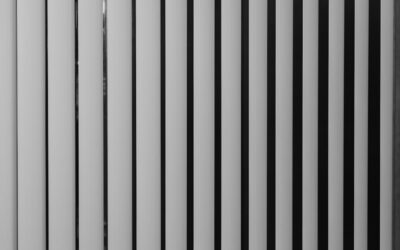
Vertical blinds earned a reputation for clacking, cracking plastic vanes that look like they belong in a rental office. Swap the vinyl for cloth and the picture changes. Fabric vertical blinds hang the same way and slide the same way, yet they drape more softly, filter light more gently, and stay much quieter when a breeze from an open slider catches them. They are one of the most practical coverings for wide patio doors, where a single roller shade would be too large and heavy to operate easily.
If you want a vertical system for a sliding door and care about looks, sound and light quality, fabric vanes are usually the better pick. If the door gets splashed by pool water, pets with muddy paws, or kitchen grease, rigid PVC vanes may still be the easier choice to keep clean.
- Fabric Vertical Blinds vs Vinyl and PVC Vanes
- Light Filtering and Fabric Options
- Noise, Movement and Weighted Chains
- Child Safety: Choose a Cordless Wand
- Sizing Fabric Vertical Blinds for Patio Doors
- Installation Steps
- Cleaning and Care
- Cost Ranges
- Troubleshooting
- When to Call a Pro
- Frequently Asked Questions
Fabric Vertical Blinds vs Vinyl and PVC Vanes
Both styles use a headrail with carriers that rotate and traverse the vanes. The difference is the vane material, and it affects nearly everything you notice day to day.
| Feature | Fabric vanes | PVC vanes |
|---|---|---|
| Look | Soft, textured, drapery-like | Smooth, crisp, more utilitarian |
| Light | Filtered glow or sheer options | Mostly opaque when closed |
| Noise | Quiet in a breeze | Clatter when vanes touch |
| Cleaning | Vacuum, spot clean | Wipe with a damp cloth |
| Durability | Can fray or stretch if mishandled | Can crack, curl or yellow in sun |
| Cost | Moderate | Usually lowest |
PVC vertical blinds still win in high-moisture or high-mess areas and on tight budgets. Fabric wins in living rooms, bedrooms and dining areas where the patio door is part of the decor rather than just a hole in the wall.
Light Filtering and Fabric Options
Fabric vanes come in a wider range of opacities than vinyl. Common choices include:
- Sheer fabric vertical blinds: lightweight, translucent vanes that soften glare and keep the view partly visible. Some designs pair sheer fabric with opaque vanes that rotate, letting you switch between a gauzy screen and privacy.
- Light-filtering fabrics: woven polyester or blends that glow when backlit and blur shapes. A good default for living rooms.
- Room-darkening fabrics: heavier weaves or backed fabrics for bedrooms and media rooms. Light still leaks at vane overlaps and edges, so they are not full blackout.
- Textured weaves: linen-look, jacquard and slubbed fabrics add pattern and hide minor dust.
Solar heat is worth considering on south and west doors. A light-colored backing on the window side reflects heat and protects the fabric from fading.
Noise, Movement and Weighted Chains
The quiet operation of fabric vanes is a big reason people choose them. Cloth absorbs sound, and the vanes are lighter, so they do not slap against one another. Most fabric systems also use bottom weights sewn or slipped into a pocket at the base of each vane, plus a bead chain or connector that links the vane bottoms together.
That bottom chain matters. It keeps vanes evenly spaced, stops them from twisting in a draft, and makes the stack swing as one unit when you rotate them. On a patio door you open often, the chain keeps vanes from fluttering into the doorway. If a vane comes loose from the chain, it tends to drift and catch on the door handle, so check the connections whenever you clean.
Child Safety: Choose a Cordless Wand
Traditional vertical blinds use a loop cord to traverse the vanes and a bead chain to tilt them. Looped cords and chains are a known strangulation hazard for young children and pets. For any home with kids, the safest choice is a cordless wand system: a single rigid wand that you twist to tilt the vanes and pull to slide them open or closed. There are no dangling loops at all.
If you already own corded verticals, install a cord tension device that anchors the loop to the wall or trim so it stays taut, keep cribs, beds and furniture away from the door, and plan to replace the blinds with a cordless version when you can.
Sizing Fabric Vertical Blinds for Patio Doors
Most patio doors are covered with an outside mount, meaning the headrail sits on the wall or trim over the opening. This keeps the stack clear of the glass and lets the blinds clear door handles.
- Measure the opening width including any trim, then add about 3 to 4 inches per side so the vanes overlap the frame and block side light.
- Plan the stack. When fully open, the vanes bunch at one or both ends. A rough rule is 1 inch of stack for every 6 to 8 inches of blind width with fabric vanes, which are usually 3.5 inches wide. Stack the vanes on the fixed-panel side of a slider so the operable door stays clear.
- Measure height from where the headrail will mount down to the floor. Subtract about 1/2 inch so vanes do not drag on the carpet or threshold.
- Check door handle clearance. The headrail projection plus vane width must clear the handle when vanes are tilted open. Extension brackets solve tight spots.
- Choose draw direction: left stack, right stack, split draw (half to each side) or center stack. Match it to how the door opens.
A typical 6 foot slider is around 72 inches wide; with overlaps, order a blind near 78 to 80 inches wide. An 8 foot door often calls for a blind of about 100 to 104 inches.
Installation Steps
- Mark the bracket positions on the wall over the door, level across the full width.
- Drill pilot holes into the header framing over the door. Use wall anchors only where framing is not available, and use enough brackets to support the full width (usually one every 24 to 30 inches).
- Screw the brackets in place and snap the headrail into them.
- Rotate the carriers so the vane clips face the same direction, then hook each fabric vane into its carrier.
- Attach the bottom chain or connectors through each vane weight.
- Install the valance to cover the headrail, then test rotation and traverse several times.
Cleaning and Care
Fabric needs a bit more attention than vinyl, but the routine is simple. Vacuum vanes monthly with a brush attachment, working top to bottom with the vanes closed. For small spots, blot with a cloth dampened in mild soapy water and let the vane dry fully while hanging. Avoid soaking vanes, which can shrink the fabric, loosen stiffeners, or rust the weights. Many fabric vanes can be unclipped and hand-washed, but check the care label first; some are dry-clean only or spot clean only.
Watch the bottom edges. Fraying usually starts where vanes rub the floor or catch in a door track. Trim loose threads with sharp scissors and, if needed, seal the edge with a small amount of fabric fray sealant.
Cost Ranges
Stock fabric verticals in standard patio-door sizes can be found at modest prices, often somewhat more than comparable vinyl sets. Custom fabric verticals with premium weaves, sheer combination vanes, cordless wands and decorative valances can run several hundred dollars or more per door. Professional measuring and installation is often available for a modest added fee, and many retailers include it with custom orders.
Troubleshooting
Vanes twist or hang crooked. Reattach any loose bottom chain, and check that each vane weight is seated in its pocket.
Some vanes will not rotate. A carrier gear may be stripped or out of sync. Rotate the wand fully both ways, then gently turn the stuck carrier by hand to re-sync it. Replace broken carriers.
The blind will not traverse smoothly. Clean the headrail track with a dry brush and check that brackets are level. A sagging headrail between brackets needs another bracket.
Edges fray. Shorten the vanes slightly if they touch the floor, and keep them out of the door track.
Fading on the window side. Choose a fabric with a reflective or white backing next time, or add a low-emissivity film to the glass.
When to Call a Pro
Hire an installer for very wide openings over about 10 feet, plaster or masonry walls that make anchoring tricky, doors with deep trim or angled heads, and any time you are unsure of measurements. A pro measure usually comes with a remake guarantee if the size is wrong, which protects a custom order.
Frequently Asked Questions
Are fabric vanes better than vinyl?
For living spaces, often yes. Fabric vanes look softer, filter light more gently and are quieter. Vinyl or PVC vanes are cheaper and easier to wipe clean, so they suit wet or high-mess areas.
Can you wash fabric vertical blind vanes?
Many can be unclipped and gently hand-washed, but check the care label. Some fabrics are spot clean only. Never machine wash or soak vanes with stiffeners or weights still inside.
Do fabric vertical blinds block light completely?
No. Even room-darkening fabrics let light through where vanes overlap and around the edges. For true darkness, layer blackout drapery over them.
What is the safest vertical blind for homes with children?
A cordless wand system is the safest choice because it has no looped cords or chains. If you keep corded blinds, use a cord tension device and keep furniture away from the door.
How wide should vertical blinds be for a patio door?
Measure the opening and add about 3 to 4 inches on each side for overlap. A 72 inch slider usually needs a blind of roughly 78 to 80 inches wide.