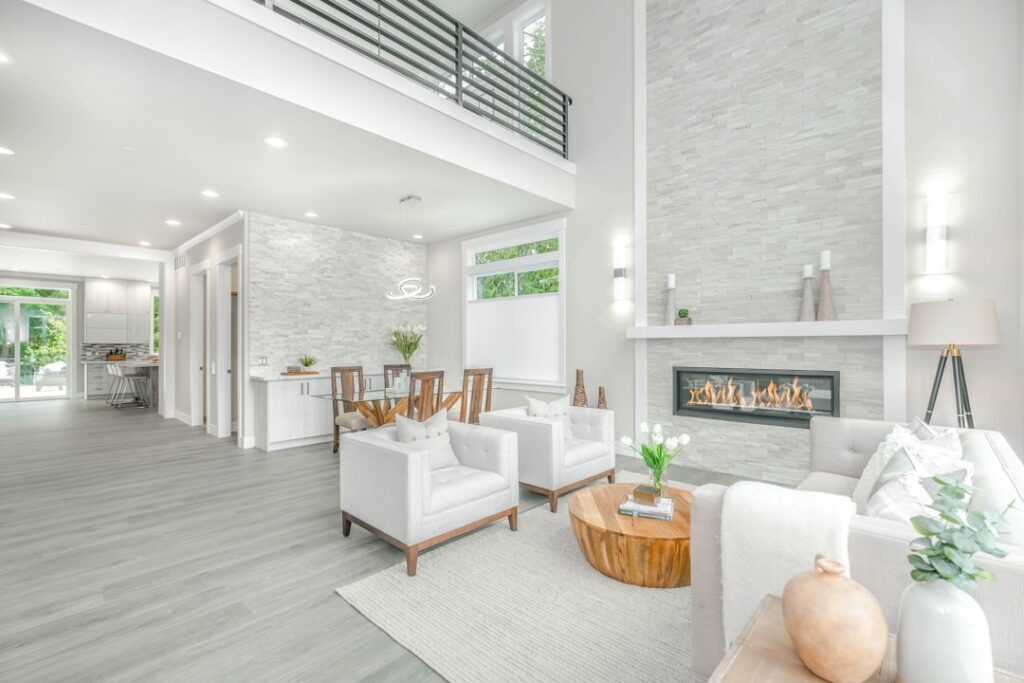
Walk through a Costco-lit office for an afternoon and you can almost feel your eyes throb by 5 p.m. The same harshness shows up in homes when builders install 5000K daylight bulbs in every room to make the space feel “bright.” Softer light bulbs fix that overlit, clinical feeling without making the room dim, because the change is about color temperature and the quality of the light, not raw lumens. Get the numbers right and a kitchen reads warm and welcoming after sunset while still being functional enough to chop onions.
What “Soft” Actually Means in Lighting
“Soft” is a marketing word, but it points to two real specifications you can find on the bulb package.
- Color temperature (Kelvin): The lower the number, the warmer and softer the tone. 2700K is the gold standard for residential soft light. 3000K is slightly cooler. 5000K looks like noon sunlight and feels harsh indoors.
- Color Rendering Index (CRI): Measured 0 to 100. A CRI of 90 or higher makes skin, food, and wood floors look natural. Cheap LEDs at CRI 80 wash out reds and greens.
For a genuinely soft feel in living areas, look for 2700K and CRI 90+. The difference between a $4 generic LED at CRI 80 and a $9 GE Reveal HD+ at CRI 93 is dramatic the moment you flip the switch.
Why Modern LEDs Often Feel Harsh
The first generation of LED bulbs in the 2010s set off a wave of complaints because manufacturers chased lumens-per-watt efficiency at the cost of color quality. Many early bulbs spiked in the blue 460-nanometer range, which suppresses melatonin and makes the brain interpret the room as “daytime.”
Today’s better bulbs filter that blue spike. Philips Warm Glow technology, for example, mimics an incandescent and shifts to 2200K when dimmed, the way a real filament would. That single feature transforms how a room feels after dark.
Best Color Temperature by Room
Use the chart below as a starting point. Adjust to taste, but do not mix temperatures within the same room unless you are intentionally layering.
- Bedrooms: 2200K to 2700K. Promotes melatonin production and helps sleep.
- Living rooms and dens: 2700K. Classic warm white, flatters skin and wood tones.
- Kitchens and bathrooms (main): 2700K to 3000K. Warm enough to be welcoming, bright enough for tasks.
- Under-cabinet kitchen task lighting: 3000K. A touch cooler so you can see knife work clearly.
- Home office: 3500K to 4000K. Cool white aids alertness during focused work.
- Garage and basement workshop: 4000K to 5000K. Daylight-style helps with detail work and color matching.
Top Softer Light Bulb Picks
These are bulbs you can buy at Home Depot, Lowe’s, or Amazon today and trust for warm, flicker-free output.
For General Living Areas
The GE Relax HD A19, around $4 per bulb, runs 2700K at CRI 90 with 800 lumens. It is the easiest upgrade from old incandescents.
The Philips Warm Glow A19, about $9, dims down to 2200K and is the closest thing to a real incandescent dim. Worth the upgrade for dining rooms and bedside lamps.
For Bathrooms and Vanities
The Cree TW Series at 2700K, CRI 93, around $8, renders skin tones accurately so you do not look orange or washed out at the mirror.
For Floor and Table Lamps
Vintage-style filament LEDs from Feit Electric ST19 at 2200K give a glowy, candle-like warmth at about $7 each. They look great in exposed-bulb fixtures.
For Recessed Cans
The Halo RL56 LED Downlight with selectable color temperature lets you pick 2700K, 3000K, 3500K, 4000K, or 5000K on the fixture itself. About $22, perfect if you want flexibility room by room.
Lumens, Not Watts
Wattage measures power consumption, not brightness. With LEDs, focus on lumens.
- 40W incandescent equivalent: 450 lumens
- 60W equivalent: 800 lumens
- 75W equivalent: 1100 lumens
- 100W equivalent: 1600 lumens
Most living-room table lamps work best with 800 lumens. Overhead fixtures in a 12 by 14 foot living room generally want 2400 to 3000 total lumens spread across multiple bulbs. Going higher in a soft 2700K still feels gentle because the warm tone keeps the perceived intensity low.
Dimmable Versus Non-Dimmable
If you want softness, you want dimmability. A dimmable LED on a compatible dimmer can drop output to 10 percent for evening relaxation, and the better bulbs shift warmer as they dim. Pair them with a Lutron Caseta or Leviton Decora dimmer rated for LED loads. Older incandescent dimmers from before 2010 will cause flicker, buzz, or premature bulb failure with LEDs.
Common Mistakes to Avoid
Mixing color temperatures in one room is the most common error. Even a 200K difference is visible side by side. Stock one type of bulb per room.
Buying based on the photo on the box is another trap. Box photos are color-corrected. Trust the Kelvin number on the spec panel instead.
Skipping the CRI spec entirely will save $2 per bulb but cost you a kitchen where food looks gray. Spend the extra and choose CRI 90 or higher for any room where color matters.
Switch one fixture first as a test. Live with it for two evenings. If the room feels right, replace the rest of the bulbs to match.
Health Impact of Light Choices
Lighting is not just a comfort issue. Studies from Harvard Medical School and the American Medical Association have linked blue-rich evening light to disrupted sleep cycles, suppressed melatonin, and elevated risk of cardiovascular issues with chronic exposure. The same studies show that switching to amber and warm-white bulbs in the two hours before bed restores natural melatonin levels and improves sleep onset by an average of 25 minutes.
For households with kids, the impact is even more pronounced. Children’s developing eyes respond more strongly to short-wavelength blue light. Replacing daylight bulbs in bedrooms and bathrooms with 2700K alternatives is one of the lowest-cost, highest-impact upgrades a parent can make.
Smart Bulbs With Adaptive Color
If you want maximum flexibility, smart bulbs from Philips Hue, Sengled, or LIFX let you change color temperature throughout the day. Set them to 5000K cool white in the morning to wake you up, then automatically shift to 2200K warm amber at sunset. A starter pack of three Hue White Ambiance bulbs and a bridge runs about $140, and the long-term flexibility justifies the price for many people.
Pair smart bulbs with motion or time-of-day automations through Apple HomeKit, Google Home, or Amazon Alexa to create truly adaptive lighting. The system mimics the natural daylight curve and your circadian system responds accordingly.
Skip cheap unbranded smart bulbs from marketplace sellers. Many have poor color accuracy at warmer temperatures and flicker noticeably when dimmed. Stick to known brands with verified CRI ratings.