Few five-dollar parts cause as many wasted hardware store trips as this one. A faucet hose adapter converts the threads on a sink faucet to accept a hose — a garden hose, a portable washing machine, a dishwasher, a water filter, or a camper connection — and the reason people buy the wrong one twice is that faucet threads and hose threads belong to entirely different sizing systems. Faucet aerators use fine machine threads measured in fractions of an inch, while garden hoses use coarse GHT threads, and nothing connects until an adapter bridges them. This guide sorts out the thread standards, the common adapter types, and the trick to identifying your faucet’s threads on the first try.
The Thread Standards You Are Dealing With
Three thread families cover nearly every faucet-to-hose situation in a US home. Knowing which two you are joining is 90 percent of the battle.
- Aerator threads: standard kitchen and bathroom faucets end in either 15/16″-27 male threads or 55/64″-27 female threads. These are the fine threads your aerator screws onto. “Regular” size is the 15/16 male; “junior” faucets (common on bathroom sinks) use 13/16″-27 male or 3/4″-27 female.
- Garden hose thread (GHT): 3/4″-11.5 coarse thread — the fitting on every garden hose, washer hose, and most portable appliances. Male GHT is on the spigot side, female GHT on the hose end.
- NPT pipe thread: tapered 1/2″ or 3/4″ threads used on plumbing pipes and some utility faucets. NPT seals by thread taper plus tape; GHT and aerator threads seal on a flat washer.
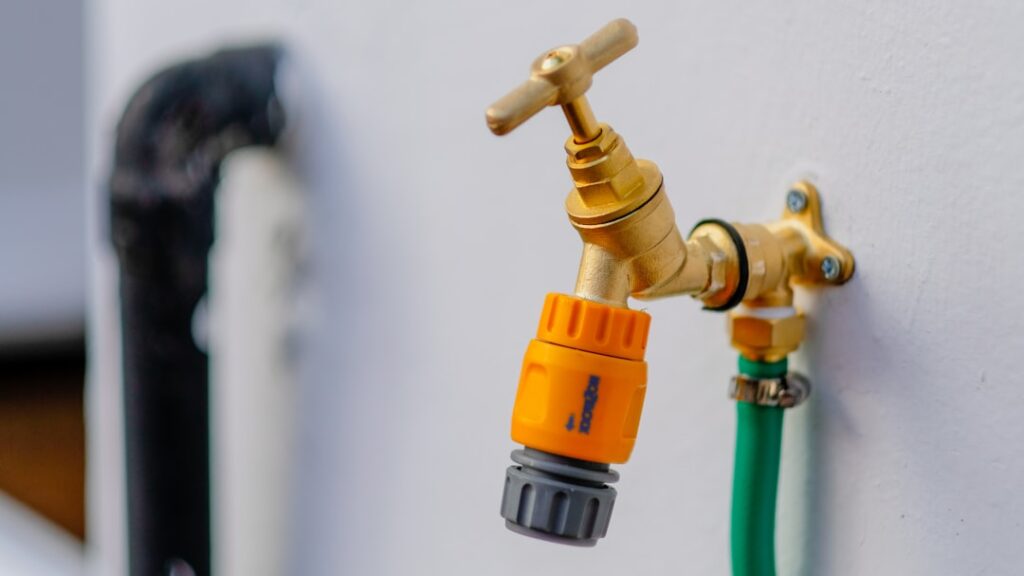
The classic adapter — the one most people mean when they search for this part — is an aerator-to-GHT converter: it screws onto the faucet in place of the aerator and presents male garden hose threads. Brass versions cost $5 to $10 at any hardware store; look for packaging marked “faucet to hose” or part numbers like the NEOPERL or BrassCraft SF0069X series.
Identifying Your Faucet Threads in 60 Seconds
Unscrew the aerator — grip it with a rag and turn clockwise when viewed from below, since you are looking at it upside down. Now check where the threads live. Threads on the outside of the faucet spout mean a male faucet, and you need a female-threaded adapter. Threads hidden up inside the spout tip mean a female faucet, and you need a male adapter. Some modern faucets have hidden “cache” or recessed aerators requiring a special key and a cache-thread adapter (M18.5, M21.5, or M24 metric threads — Moen and Delta both use these on newer models).
Then measure the diameter across the threads with a tape or calipers. Roughly 15/16 inch (close to a quarter’s diameter) is regular male; about 55/64 inch (close to a nickel) is regular female; 13/16 inch male or 3/4 inch female is junior size. If measuring feels uncertain, take the aerator to the store and test-fit it on the display adapters — every plumbing aisle expects this. Pull-down spray kitchen faucets are the exception to all of it: their spray heads attach with proprietary quick-connects, and most cannot take a standard adapter at the spout. For those, connect at the supply line under the sink instead.
Common Uses and the Right Adapter for Each
Portable Washing Machines and Countertop Dishwashers
These appliances ship with a quick-connect coupler that snaps onto a male GHT fitting, so you need the aerator-to-GHT adapter matched to your faucet size. Buy a solid brass one; the pot-metal versions crack under the repeated on-off pressure cycling a washer creates. Machines from Black+Decker, Comfee, and Farberware all include the snap coupler but frequently not the faucet adapter itself — a detail buried in one-star reviews. Expect $6 to $12 for the brass adapter, and leave it permanently on the faucet with the supplied dual-thread aerator so you keep normal sink function between laundry days.
Running a Garden Hose From a Sink
Apartment dwellers watering balcony plants or washing a patio can run a standard hose straight off a kitchen or laundry faucet with the same aerator-to-GHT adapter. Laundry sink faucets are the easy case — many utility faucets already end in male GHT threads, so the hose spins right on. One caution: sink faucets and their supply lines are not built for the water-hammer shock of a hose nozzle snapping shut. Open the faucet gently and use a lever nozzle rather than a pistol-grip that slams closed.
RV, Camper, and Temporary Water Supply
Filling an RV fresh tank from an outdoor spigot needs no adapter, but topping off from a friend’s kitchen does — same GHT conversion, ideally paired with a pressure regulator (RV plumbing wants 40 to 50 psi). Use a drinking-water-safe hose (the white or blue ones, NSF-61 certified) rather than a garden hose, which leaches plasticizers. A lead-free certified adapter matters here too; standard brass is fine for utility use but look for “lead-free” stamping for potable connections.
Water Filters and Countertop Distillers
Countertop filters like the classic Berkey competitors and diverter-valve units (Aquasana AQ-4000 style) include a diverter that mounts on aerator threads, with small rubber washer adapters for junior sizes. When the included adapters fail — and the thin ones do — NEOPERL’s adapter assortment packs ($8 to $14) cover the odd sizes.
Getting a Leak-Free Connection
Aerator and GHT threads seal on the flat rubber or fiber washer inside the female fitting, not on the threads themselves. No washer, no seal — thread tape will not save a hose thread joint missing its washer. Check that the washer is seated flat, snug the connection hand-tight, and give it at most a quarter turn with pliers. Overtightening distorts the washer and cracks cast fittings.
Drips at an adapter usually mean one of four things: a missing or flattened washer (replace it — a 10-pack costs $3), cross-threading from starting the fine aerator threads crooked (back off and restart square), mismatched sizes jammed together (junior forced into regular), or a cracked adapter body. Fine 27-pitch aerator threads cross-thread easily, so always start them with fingers only, turning backward first until you feel the click of the threads dropping into engagement, then forward.
Backflow, Pressure, and the Fine Print
Two details separate a tidy setup from a plumbing-code headache. First, backflow: any hose connection that could end up submerged — filling an aquarium, a utility tub, a mop bucket with chemicals — should have a vacuum breaker, the small $5 to $8 check-valve fitting that threads between adapter and hose and stops dirty water siphoning back into your supply if pressure drops. Outdoor spigots have them built in by code in most states; sink faucets never do. Second, pressure and temperature: household hot water at 120°F to 140°F will soften cheap vinyl hoses and loosen washers, so run warm rather than hot through a garden hose, and never leave a pressurized hose connected to a closed nozzle overnight on a sink faucet — supply lines and aerator threads are not rated for sustained static pressure the way hose bibs are. Depressurize by opening the nozzle after shutting the faucet.
Quick-Connect Upgrades Worth Having
If you attach and detach a hose regularly — portable washer owners, this is you — a quick-connect kit removes the daily threading ritual. Plastic click-style couplers (Gardena-compatible, $8 to $15) or brass quick-connects ($15 to $25) leave a small plug permanently on the faucet adapter; the hose end snaps on and off in one second with an automatic water stop on the better models. Machined aluminum versions from Gorilla Easy Connect hold up better than plastic for daily cycling.
A few final buying rules keep this simple. Buy brass over plastic for anything used weekly. Match the adapter to your faucet’s actual measured threads rather than guessing from photos. Keep the parts you remove — the original aerator goes back on whenever the appliance leaves. And if your faucet is a pull-down sprayer model, skip the spout entirely and tee off the cold supply line under the sink with a $12 washing machine valve — it is a cleaner permanent answer than any spout-mounted faucet hose adapter can offer.
How to Attach Hose to Sink When an Adapter Will Not Fit
A threaded adapter on the spout is the standard answer, but plenty of sinks refuse to cooperate. Some spouts have no threads at all, some are pull down sprayers, and sometimes the hose you need to connect is a drain hose rather than a supply. Here is how to attach hose to sink setups in those situations, with the steps that keep water where it belongs.
Push On Connectors for Unthreaded Spouts
Older or decorative faucets sometimes end in a smooth spout with nothing to screw onto. A slip on rubber connector, a flexible sleeve that stretches over the spout and narrows to a hose fitting, works for light jobs such as rinsing pets, filling buckets, or watering plants. Wet the inside of the sleeve slightly, push it firmly over the spout, and add a small hose clamp around it if your model allows. Open the faucet slowly and keep the pressure low, because these connectors can pop off at full flow. They are not suitable for appliances that run unattended.
Tap the Supply Line Under the Sink
For a permanent hookup, such as a portable washer that stays in place, connecting below the counter is cleaner than using the spout. Turn off the water at the shutoff valve under the sink and open the faucet to relieve pressure. Disconnect the cold supply line from the valve, install a tee fitting or a dual outlet stop valve, and reconnect the faucet line to one outlet. The second outlet gets a quarter turn valve with hose threads. Hand tighten compression nuts and add a snug quarter turn with a wrench, then restore water slowly and check every joint with a dry paper towel. If the shutoff valve is old, corroded, or will not close fully, call a plumber rather than forcing it.
Secure a Drain Hose Into the Sink
Portable washers and dehumidifiers often drain into a sink. A drain hose that jumps out mid cycle can flood a floor in minutes, so clip it in place with a hose guide that hooks over the sink edge, or zip tie it to the faucet base. Keep the hose end above the overflow line rather than submerged, which prevents dirty water from siphoning back into the appliance. Make sure the sink drains faster than the machine pumps, and clear a slow drain before the first load.
Laundry Tubs and Bathtub Spouts
Utility tubs are the easiest case because many laundry faucets already have hose threads at the tip. If yours does not, a threaded adapter usually fits since utility spouts use common sizes. Bathtub spouts generally do not accept adapters; a push on connector can work for filling a bucket or aquarium, but never leave it unattended. Whatever method you choose, how to attach hose to sink fixtures safely always ends the same way: shut the water off when finished, release pressure, and disconnect anything that is not designed for constant pressure.