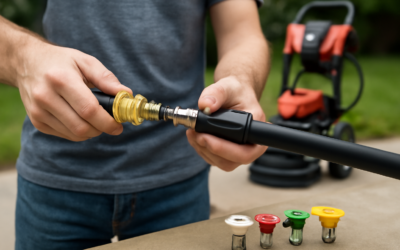
Understanding pressure washer fittings is the key to swapping hoses, adding accessories, and fixing frustrating leaks. With several thread standards and quick-connect sizes in circulation, matching parts correctly saves money and downtime. This guide breaks down every common connector, size, and adapter you will encounter.
- Why Fittings Matter
- Quick-Connect Fittings
- Threaded Fittings: M22 Explained
- Threaded Fittings: 3/8-Inch NPT
- Garden Hose Thread Inlet
- Understanding Thread Sizes and Bore
- Adapters and Conversion Fittings
- Foam Cannon and Accessory Connections
- Materials: Brass vs. Stainless vs. Plastic
- Preventing and Fixing Leaks
- Common Mistakes to Avoid
- Swivel Fittings and Hose Management
- Pressure and Flow Ratings on Fittings
- Identifying Fittings on a New Machine
- Upgrading From Stock Fittings
- Building a Spare Parts Kit
- Frequently Asked Questions
- Final Thoughts
Why Fittings Matter
Fittings link your pump, hose, wand, and nozzles into a leak-free high-pressure system. Choose the wrong size or thread and you get spraying leaks, blown connections, or parts that simply will not join. Because pressure washers operate at 1,500 to 4,000 PSI, secure and properly matched fittings are also a safety issue, not just a convenience.
Quick-Connect Fittings
Quick-connect (QC) couplers let you swap nozzles and hoses in seconds without tools. The most common is the 1/4-inch QC plug and socket found on nozzle tips and many wands. Larger 3/8-inch QC couplers appear on gas machines and high-flow systems. You pull back the spring collar, insert the plug, and release to lock. Always confirm the collar has snapped fully into place before triggering.
Threaded Fittings: M22 Explained
The M22 metric thread is the most common connection between hose, pump outlet, and gun on consumer machines. There are two variants that trip people up: M22-14mm and M22-15mm, referring to the inner bore diameter. The 15mm has a wider opening for higher flow. They look nearly identical, so measure the bore before buying an adapter, since a 14mm gun will not seal on a 15mm fitting properly.
Threaded Fittings: 3/8-Inch NPT
NPT (National Pipe Tapered) threads, especially 3/8-inch and 1/4-inch, are common on gas pressure washers, unloader valves, and industrial accessories. NPT threads taper and seal with thread tape, unlike the flat-gasket sealing of M22. Do not force NPT and metric threads together; they will cross-thread and ruin both parts. Identify NPT by its tapered profile and use PTFE tape on the male threads.
Garden Hose Thread Inlet
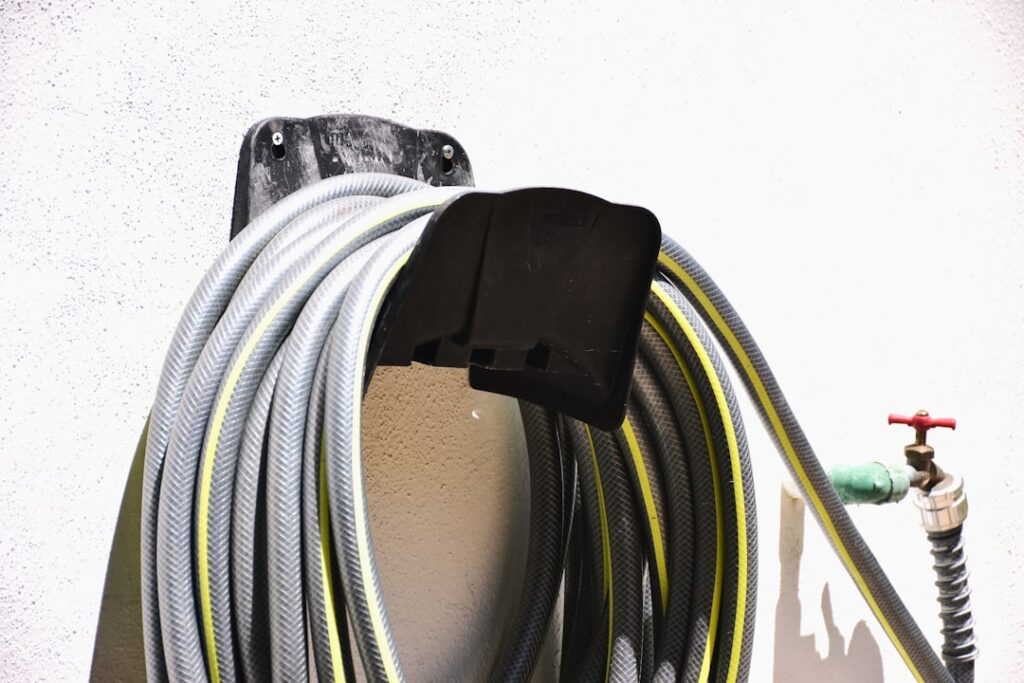
The water supply side uses GHT (garden hose thread), a 3/4-inch standard that connects your garden hose to the pump inlet. This low-pressure connection seals with a rubber washer inside the coupler. A clogged or missing inlet screen here is a common cause of poor performance, so keep that filter clean and the washer intact to prevent leaks.
Understanding Thread Sizes and Bore
Fittings are described by both thread diameter and bore. M22 covers the outer thread, while 14mm or 15mm describes the inner passage. Measuring with calipers removes guesswork: check thread outer diameter, count threads per inch for NPT, and measure the inner bore for M22 variants. Keeping a small caliper in your kit makes buying replacement fittings far easier and prevents costly mismatches.
Adapters and Conversion Fittings
Adapters bridge incompatible standards, letting you connect an M22 hose to a 3/8-inch QC wand, or a metric pump to an NPT accessory. Common adapters include M22 male to 3/8-inch QC plug, M22 female to 3/8-inch QC socket, and M22 to NPT. Buy brass or stainless adapters rated above your machine’s PSI, and keep a small assortment on hand for surface cleaners and foam cannons.
Foam Cannon and Accessory Connections
Foam cannons, surface cleaners, telescoping wands, and rotary nozzles all connect via QC plugs or threaded fittings. Most foam cannons use a 1/4-inch QC plug that snaps into your gun. Verify the accessory’s inlet matches your gun’s outlet, and use an adapter if needed. Check the accessory’s maximum PSI and GPM ratings so it performs correctly with your specific machine.
Materials: Brass vs. Stainless vs. Plastic
Fittings come in brass, stainless steel, and plastic. Brass is the everyday standard, offering good corrosion resistance and durability at a fair price. Stainless steel resists rust best and suits saltwater or heavy commercial use. Plastic QC fittings are lightweight and cheap but wear faster and can crack under high pressure, so reserve them for low-stress accessory connections.
Preventing and Fixing Leaks
Most leaks trace to worn O-rings, missing washers, or improperly seated connections. Keep a kit of replacement O-rings and rubber washers, since these cheap parts fail first. For NPT threads, wrap PTFE tape clockwise three or four times before assembly. For QC couplers, ensure the collar locks fully. Never over-tighten metric fittings, which compresses and damages the gasket.
Common Mistakes to Avoid
Do not force mismatched threads together, confuse M22-14mm with 15mm, or apply thread tape to metric gasket-sealed fittings where it does nothing. Avoid cheap plastic couplers on high-pressure lines, skipping the inlet screen, and reusing torn O-rings. Always relieve pressure by triggering the gun before disconnecting any fitting to prevent sudden, dangerous spray.
Swivel Fittings and Hose Management
A swivel fitting placed between the gun and the high-pressure hose lets the hose rotate freely, preventing the twists and kinks that cause fatigue and premature hose failure. Ball-bearing swivels are worth the small investment for anyone who cleans for more than a few minutes at a time, since a kinked hose restricts flow and can burst under pressure. Position swivels at the gun inlet and, on longer setups, at the reel connection for the smoothest handling.
Pressure and Flow Ratings on Fittings
Every fitting carries a maximum pressure rating, and you must never exceed your machine’s output. A 3,000 PSI machine demands fittings rated at or above 3,000 PSI, ideally with a safety margin. Brass and stainless fittings from reputable makers list their ratings; unmarked bargain parts are a gamble. A fitting that fails under pressure can whip violently or spray at skin-piercing force, so treat the pressure rating as a hard safety limit, not a suggestion.
Identifying Fittings on a New Machine
When buying accessories for an unfamiliar washer, first identify the outlet on the gun and the pump. Consumer electric units almost always use M22 threads and 1/4-inch quick-connects, while gas machines frequently use 3/8-inch quick-connects and M22 or NPT at the pump. Consult the manual, measure with calipers, and photograph the fittings before ordering. Spending five minutes on identification saves the frustration of returning a mismatched adapter that will not seal.
Upgrading From Stock Fittings
Many machines ship with plastic or lower-grade quick-connects that leak or wear quickly. Upgrading to stainless steel quick-connect couplers and adding swivels noticeably improves reliability and reduces leaks over time. If you use a foam cannon, surface cleaner, and multiple wands, standardizing everything on 3/8-inch stainless quick-connects makes swapping accessories fast and dependable. These inexpensive upgrades often deliver the biggest real-world improvement in day-to-day usability.
Building a Spare Parts Kit
Assemble a small kit with assorted O-rings, inlet washers, a 1/4-inch and 3/8-inch QC set, an M22 to QC adapter, PTFE tape, and calipers. Having these on hand means a torn seal or mismatched accessory never ends a cleaning session prematurely. Store the kit with your machine so replacements are always within reach when a leak appears mid-job.
Frequently Asked Questions
What is the most common pressure washer fitting?
The M22 threaded connection and the 1/4-inch quick-connect are the two you will encounter most on consumer machines.
How do I tell M22-14mm from M22-15mm?
Measure the inner bore with calipers; the 15mm has a wider opening for higher flow, and the two do not seal properly together.
Do I use thread tape on metric fittings?
No; M22 seals with a rubber gasket or O-ring, so tape is only for tapered NPT threads.
What causes a fitting to leak?
Usually a worn O-ring, missing washer, or a connection that is not fully seated.
Are brass or stainless fittings better?
Brass is the durable everyday standard, while stainless resists corrosion best for saltwater or heavy commercial use. Always relieve pressure by triggering the gun before disconnecting any fitting.
Final Thoughts
Mastering pressure washer fittings comes down to identifying your thread standard, measuring bore sizes, and keeping the right adapters and seals on hand. Whether you run M22 metric, 3/8-inch NPT, or quick-connect couplers, matching parts correctly stops leaks and unlocks every accessory. Keep a spare O-ring kit and calipers nearby, and connection headaches disappear for good.