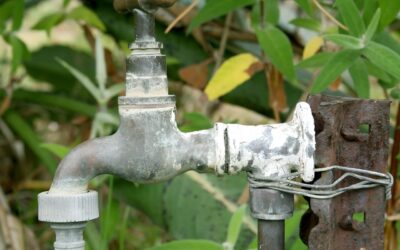
Water seeping out around the handle only when the faucet is running is a specific symptom with a specific meaning — and it is good news. A faucet leaking from handle means pressurized water is escaping past a seal that sits between the valve and the handle stem: an O-ring, a packing nut, or the cartridge body seals. Unlike a drip from the spout (worn seats and springs) or a puddle under the sink (supply connections), a handle leak is almost always a $2-$25 seal repair you can finish in under an hour. The fix depends entirely on which of the four faucet valve types you own, so start there.
- First: Identify Your Faucet Type
- Compression Faucets: Tighten or Repack the Packing Nut
- Cartridge Faucets: O-Rings or the Whole Cartridge
- Ball Faucets: The Kit Job
- Ceramic Disc Faucets: Body Seals, Rarely the Disc
- Tub, Shower, and Outdoor Handles: Same Logic, Different Access
- Matching Parts Without Guesswork
- When a Handle Leak Means Replace the Cartridge — or the Faucet
First: Identify Your Faucet Type
Confirm the symptom first, because the fix differs by leak location: run the faucet and watch with a dry paper towel wrapped at the handle base. Wet towel while running, dry when off — that is the handle-seal leak this guide covers. Dripping from the spout with the handle off is a seat/cartridge outlet problem, and moisture appearing only under the sink points to supply or drain connections instead.
Four valve designs cover virtually every faucet made since 1950:
- Compression — two handles that tighten down with multiple turns; the oldest design, still common on utility sinks and older homes.
- Cartridge — one or two handles moving smoothly through a partial turn; a plastic-and-brass cartridge does the sealing (Moen 1225/1222, Delta and Kohler two-handle cartridges, most modern faucets).
- Ball — single lever rotating over a dome, classically Delta/Peerless kitchen faucets; a slotted metal or plastic ball controls flow.
- Ceramic disc — single lever over a wide cylindrical body; two polished ceramic plates shear across each other (American Standard, Pfister, most high-end lines).
Before any disassembly: close both supply stops under the sink (or the main), open the faucet to bleed pressure, and plug the drain so screws don’t vanish. Tape your wrench jaws if the finish matters.
Compression Faucets: Tighten or Repack the Packing Nut
Compression handles leak at the stem because the packing — graphite string or a packing washer under the packing nut — has dried out or loosened. The five-minute sequence:
- Try the free fix first: snug the packing nut (the hex directly under or behind the handle) an eighth to a quarter turn clockwise. Overtightening makes the handle stiff and chews the stem, so go gently.
- Still weeping? Pull the handle screw and handle, back the packing nut off, and slide it up the stem.
- Replace what you find: either a beveled packing washer (match at the store, $2), an O-ring, or wraps of graphite packing string ($3-$4 a spool) wound 3-4 turns clockwise around the stem under the nut.
- While you are in there, unscrew the stem fully and replace the seat washer at the bottom — it stops future spout drips and costs pennies.
Cartridge Faucets: O-Rings or the Whole Cartridge
On cartridge faucets, handle leaks come from the O-rings on the cartridge body or a worn cartridge shell. Moen single-handles are the classic case:
- Pry the index cap, remove the handle screw and handle, then remove the retaining hardware — Moen uses a brass retaining clip you pull with needle-nose pliers; Delta and Pfister often use a threaded bonnet nut.
- Pull the cartridge straight up. A stuck Moen 1225 justifies the $10-$15 cartridge puller tool — twisting with pliers can shear the cartridge shell off in the body, turning a repair into a project.
- Inspect the O-rings on the cartridge body. Nicked, flattened, or gummy rings get replaced ($3-$5 assortment) with a smear of silicone plumber’s grease — never petroleum jelly, which swells rubber.
- If the shell is scored or the leak returns, replace the cartridge outright: Moen 1225 runs $15-$25 (free under Moen’s lifetime warranty if you call), Delta and Kohler cartridges $15-$40.
Reinstall in the same orientation — flipping a Moen cartridge 180 degrees reverses hot and cold, which is also the fix if yours ends up backward.
Ball Faucets: The Kit Job
Delta-style ball faucets leak at the handle when the adjusting ring loosens or the cam washer and ball seals wear. Quick fix: remove the handle (set screw under the lever), and tighten the adjusting ring inside the cap with the tool included in repair kits (or snap-ring pliers). If that fails, buy the full ball faucet repair kit ($15-$25, e.g., Delta RP3614 plus seats/springs kit): unscrew the cap, lift out the cam, packing, and ball, hook out the rubber seats and springs below, and rebuild in reverse order — springs first, seats over them, ball aligned to its slot, cam tab into the body notch, then cap and ring. Replace everything in the kit while it is open; the parts wear as a set.
Ceramic Disc Faucets: Body Seals, Rarely the Disc
Disc cartridges themselves rarely fail — the leak path is usually the rubber seals on the underside of the disc cartridge or the O-ring around the wide cylinder body. Remove handle and decorative cap, unscrew the cartridge mounting screws, lift the cylinder, and flip it: three or four rubber seals sit in ports on the bottom. Clean sediment out of the ports (mineral grit is the usual culprit), replace the seals ($5-$10 kit, brand-specific), and reseat. Important: after reassembly, open the faucet handle to neutral and turn supplies back on slowly — sudden pressure can crack a ceramic disc, which is the one way to turn this repair into a cartridge purchase.
Tub, Shower, and Outdoor Handles: Same Logic, Different Access
Handle leaks are not confined to sinks, and the same seal logic applies with different access problems. Two-handle tub and shower valves are usually compression or cartridge stems buried behind the wall — remove the handle and escutcheon, and use a deep tub socket wrench set ($10-$20) to back the stem out of the valve body; the packing and washers replace exactly like a sink compression stem. Outdoor hose bibs weeping at the handle when open are the textbook packing-nut case: a quarter-turn snug on the nut fixes most of them in ten seconds, and repacking with graphite string handles the rest. Laundry faucets and boiler drains follow the same pattern. The single caution behind walls: if the stem or cartridge will not budge, penetrating oil and patience beat force — a snapped stem in a wall-mounted valve body converts a $5 repair into an open-the-wall valve replacement.
Matching Parts Without Guesswork
A handle leak left running is not harmless, either — water tracking down the stem migrates under the escutcheon, into the countertop cutout, and into the cabinet, and the slow version of this leak rots MDF vanities and swells laminate decks over a season. Fix it the week you notice it.
Take the old cartridge, stem, or seal to the store — eyeball matching from a wall of blister packs fails constantly. Better: find the brand and model first (stamped on the faucet base, under the sink on the supply tag, or in old paperwork) and use manufacturer lookup lines. Moen, Delta, Kohler, and Pfister all honor lifetime function warranties for original homeowners and will ship cartridges free. Generic “fits Moen” cartridges cost less but tolerate looser; for a faucet you plan to keep, OEM parts are worth the few extra dollars.
When a Handle Leak Means Replace the Cartridge — or the Faucet
Replace the cartridge, not just its rubber, when the plastic shell is cracked or scored, when the handle has gotten stiff or gritty, when the leak returns within months of new O-rings, or when hot-cold mixing has gone mushy — all signs the internal surfaces are done. Replace the whole faucet when the body itself is pitted at the seal lands (rebuilds won’t hold), when it is a no-name unit with unobtainable parts, or when repair parts approach $40-$50 against a $90-$150 new faucet with a warranty. One caution as you decide: repeated handle leaks that follow water-heater work or pressure changes can indicate house pressure above 80 psi — check with a $12 gauge on a hose bib, because a failing pressure regulator will keep eating seals no matter how many you replace.