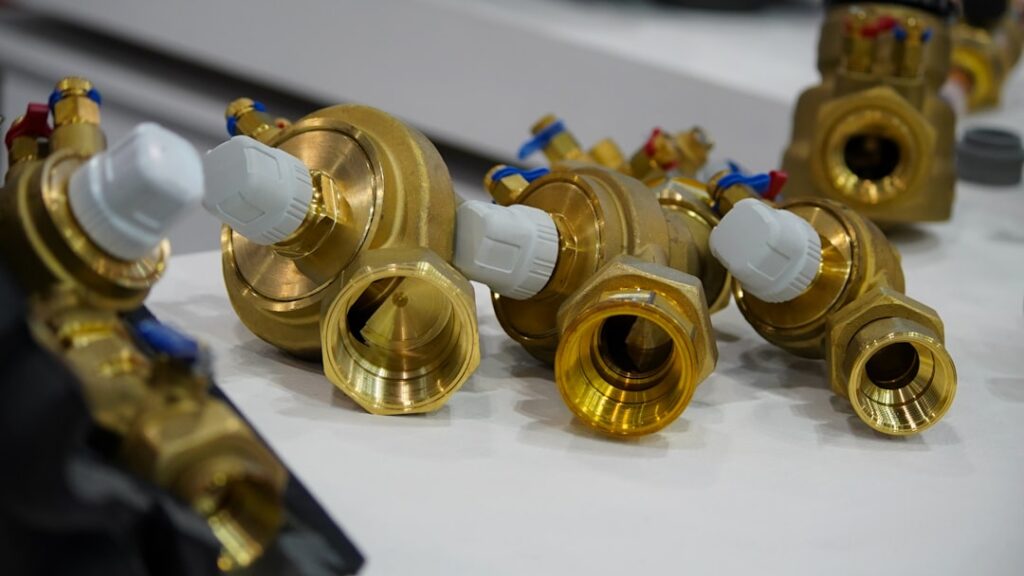
Nearly every drip, stiff handle, or temperature problem in a faucet traces back to one hidden component, and knowing which kind you have is half the repair. Faucet stems and cartridges are the internal parts that start and stop the flow of water when you move the handle, and there are four fundamentally different designs, each with its own failure modes, parts, and repair approach. Buy the wrong replacement and it simply won’t fit. This guide breaks down the four types, how to identify yours, and what to expect when you replace one, so you walk into the store knowing exactly what you need.
The Four Types at a Glance
Faucets fall into four camps based on how they control water. Two of them use rubber-and-brass sealing (older, more maintenance) and two use modern sealed cartridges (fewer parts, longer life). Here’s the lineup:
- Compression stems: the oldest design, with two handles and a rubber washer that screws down onto a seat.
- Ball valve: a single-handle design using a slotted metal or plastic ball over spring-loaded rubber seats.
- Ceramic disc: a durable cartridge with two polished ceramic discs that slide over each other to control flow.
- Cartridge: a self-contained plastic or brass cylinder with internal seals, used in both single- and two-handle faucets.
Compression and cartridge are the most common you’ll meet. Ball and ceramic disc show up in specific single-handle designs.
Compression Stems: The Classic Two-Handle
If you have separate hot and cold handles that you screw down tight to shut off, you almost certainly have compression stems. Inside each stem, at the bottom, is a rubber washer held by a brass screw. Turning the handle drives the washer down against a brass seat to stop the water. These are the faucets that drip most often, because that little washer flattens and wears. The upside is the repair is dirt cheap, a washer variety pack is about $4, and it’s the most forgiving fix in plumbing.
The catch is the seat. If the brass seat the washer presses against gets pitted, a new washer wears out fast. Feel the seat with a fingertip; if it’s rough, grind it smooth with a seat-dressing tool or replace it with a seat wrench. Compression faucets are common in homes built before the 1980s.
Ball Valve Faucets
Ball-type faucets are single-handle units, often found on older kitchen faucets, where the handle moves over a domed cap. Inside, a slotted ball rotates over a set of small rubber seats backed by springs; aligning the slots with the inlet ports controls temperature and flow. When these drip, it’s usually the springs and seats that have worn, and they’re sold as an inexpensive repair kit, around $10 to $15, that includes new seats, springs, O-rings, and often a cam and packing. You’ll want the brand’s kit; Delta’s ball faucets are the most familiar example. A special tool or the included wrench adjusts the adjusting ring that sets handle tension.
Ceramic Disc Cartridges
Ceramic disc faucets are the most durable of the bunch. A cartridge houses two ultra-smooth ceramic discs; as the handle moves, one disc slides over the fixed one, and aligning their openings lets water through. Because ceramic is so hard, these rarely wear out, but they can fail if grit or hard-water scale scratches the discs or if the rubber inlet seals underneath harden. Rather than rebuild, you generally replace the entire disc cartridge, typically $20 to $50 depending on brand. A telltale of ceramic disc faucets is a single lever that moves with a smooth, slightly firm feel and a short travel.
One quirk: after replacing a ceramic cartridge or if air gets in the line, the faucet can sputter. Remove the aerator and run water briefly to clear it.
Cartridge Faucets
The generic “cartridge” type is a sealed cylinder, plastic or brass, with O-rings and internal channels, that lifts and rotates within the faucet body. Moen and Kohler are the big names here. Single-handle cartridge faucets use one long cartridge; two-handle versions use a stem cartridge on each side. When they drip or get hard to turn, you pull the retaining clip and swap the whole cartridge. Costs range from $15 for a basic stem cartridge to $30 or more for a branded single-handle unit like a Moen 1225. Many brands sell a puller tool because mineral-locked cartridges can be stubborn to extract.
Cartridge faucets are the most common in homes built or remodeled in the last few decades, and they’re the easiest to service because the repair is a clean part swap with no washers or seats to fuss over.
How to Identify Which One You Have
You don’t have to guess. Work through these clues:
- Count the handles. Two handles you screw down tight suggest compression or two-handle cartridge; a single lever suggests ball, ceramic disc, or single cartridge.
- Feel the handle motion. Multiple full turns to shut off means compression. A quarter-turn or short lever throw means a cartridge or disc.
- Check the brand. Delta single-handle often means ball; Moen and Kohler often mean cartridge.
- Open it up. The surest method: shut off the water, remove the handle, and look. Bring the old part to the store to match exactly.
Which Type Lasts Longest
If you’re choosing a new faucet or deciding whether to repair or replace, durability differences matter. Ceramic disc cartridges are the clear winners for longevity; the polished discs are so hard they can last 20 to 30 years, which is why premium faucets use them. Modern cartridge faucets are close behind and offer the easiest repair, a clean part swap with no fussy small pieces. Ball valves work well but have the most individual parts, springs, seats, cam, and O-rings, so they need occasional rebuilding. Compression stems are the least durable in terms of the washer, which wears fastest of all, but paradoxically they’re the cheapest and simplest to keep going indefinitely because a new washer costs pennies.
Water quality drives all of this. Hard water and grit shorten the life of every type by scoring seals and building scale. If you’re on hard or well water, a whole-house filter or softener extends cartridge and disc life dramatically and is worth considering if you’re replacing valves often.
Handling a Stuck or Seized Cartridge
The single most common headache in this repair is a cartridge or stem that won’t budge, locked in place by years of mineral deposits. Don’t reach for brute force, twisting hard can snap a plastic cartridge or crack the faucet body. Instead, spray the cartridge with penetrating oil or white vinegar and let it soak for 15 to 30 minutes to dissolve the scale. Many brands sell a dedicated puller tool, Moen and Delta both offer one for a few dollars, that grips the cartridge and pulls it straight out without prying. Wiggling the cartridge gently side to side as you pull, rather than yanking, usually breaks the mineral bond. Once the old part is out, clean the bore of the faucet body with a nylon brush and vinegar before seating the new part, and coat it with silicone grease so the next replacement comes out easily.
One more habit saves grief down the road: take a photo of the old cartridge or stem before you remove it, noting its orientation, which way the flat, notch, or hot-side marking faces. Cartridges are frequently keyed, and installing one rotated 180 degrees reverses your hot and cold or throws off the temperature range. The photo is a free reference that turns reassembly into a two-minute job instead of a guessing game, and it’s especially useful if you get interrupted partway through and come back to a pile of parts.
Buying and Replacing the Right Part
Once you’ve identified the type, matching the part is straightforward but exacting, brand, model, and hot-versus-cold orientation all matter, and many stems are handed. Always shut off the supply and open the faucet to relieve pressure before disassembly, lay parts out in order, and coat new rubber and cartridges with silicone plumber’s grease so they seat smoothly and last longer. Understanding faucet stems and cartridges turns a mystery drip into a confident 30-minute repair, and it saves you the $150-plus a plumber charges to swap a $20 part you could have installed yourself.