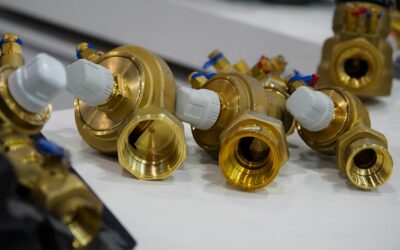
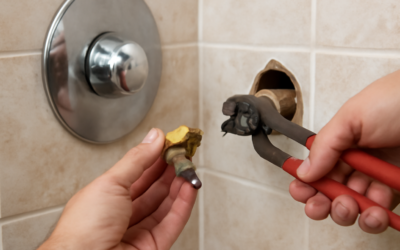
Walk into a plumbing supply house with a worn faucet stem in a zip-lock bag and the counter veteran will identify it in ten seconds using the same system you can learn in ten minutes. A faucet stem identification chart works off a handful of physical measurements — overall length, thread locations, the broach pattern where the handle attaches, and the seat end design — that together fingerprint the stem to a brand and part number. This matters because older two-handle faucets are repaired, not replaced, by swapping a $10 to $25 stem, and there are hundreds of look-alike stems that do not interchange. Here is how the identification system works and how to use it to walk out with the right part on the first trip.
What a Stem Is and When You Need to Identify One
A stem (or compression stem) is the mechanical heart of a traditional two-handle faucet: a threaded brass shaft that screws down to press a rubber washer against a seat, stopping flow. Symptoms that send you stem-shopping include drips that new seat washers no longer cure (worn stem threads), handles that turn forever without shutting off (stripped broach or threads), and leaks around the handle (worn packing on a scored stem). Stems dominate pre-1990s faucets, budget two-handle fixtures, outdoor sillcocks, and a huge share of tub and shower valves still in service — tens of millions of them.
Identification is the hard part precisely because there was never a standard. Each manufacturer — and often each product era within a brand — used proprietary lengths, threads, and broaches. The repair industry tamed the chaos with numbering systems: supply houses and brands like Danco and BrassCraft catalog stems by a size-and-brand code (you will see labels like “9D-” or “ST” series on Danco pegs), all keyed to the measurements below. The chart logic is universal even where the code prefixes differ.
The Four Measurements That Identify Any Stem
Pull the stem first — water off, handle and packing nut removed, stem unscrewed from the valve body — because every measurement is taken from the part in hand.
1. Overall Length
Measure tip to tip in inches, with the stem in the closed (extended) position. Sink stems typically run 1-5/8 to 3 inches; tub and shower stems run 3 to 6-plus inches because they reach through the wall. Length is the first sort — it instantly cuts the field by three-quarters.
2. Broach Pattern (the Handle Interface)
The broach is the splined or shaped end the handle grips, and it is the most brand-revealing feature. Count the splines and note the shape: 16-point, 20-point, and 12-point splines are common; some brands used square, D-shaped (“flat”), or oval broaches instead. Classic associations that counter guys carry in their heads: many Price Pfister stems broach 16-point; American Standard used 12-16 point patterns and D-broaches across eras; Gerber commonly 12-point; Sterling square. Broach gauges — inexpensive multi-hole cards from Danco or your supplier — let you match the pattern definitively rather than squinting at splines.
3. Thread Type and Location
Note where the packing/bonnet threads sit (near the top, middle) and the thread direction. Hot and cold stems are frequently mirror images — hot closes counterclockwise, cold clockwise — meaning you may need a left-hand and right-hand version of the same stem; a matched pair is the safe buy. Fine versus coarse operating threads at the seat end also distinguish otherwise similar stems.
4. Seat End and Washer Setup
Look at the business end: washer diameter (sized as 00, 0, 1/4, 3/8, 1/2 — matching beveled or flat washers), the retaining screw, and whether the stem ends in a flat washer face or a specialty design. Diverter stems from tub spout valves have distinctive extra ports and are their own catalog section.
Using the Chart at the Store or Online
With those four data points, the matching workflow is straightforward. At a hardware store, the Danco or BrassCraft rack displays stems on cards printed with brand fit (“Fits Price Pfister”), length, and broach count — compare your stem physically against the card through the packaging, checking length first, then broach, then thread positions. Online, both companies publish printable stem identification charts and searchable catalogs; measure, filter by brand if known, and confirm against the diagram’s dimensioned drawing. If the faucet’s brand is unknown, the escutcheons, handles, or valve body often carry a stamped logo or model — and a photo of the trim posted to a plumbing supplier often gets a same-day identification.
Three matching rules save wasted trips. Bring the actual stem, always; photos flatten the broach and hide thread detail. Buy the pair even if only one side drips, since the second stem has identical mileage. And match the seat too — stems press against a replaceable brass seat inside the valve body, and a new stem against a pitted seat will drip within weeks. Seats have their own thread-and-size chart; a seat wrench ($8) removes them for matching, and replacing stem, seat, and washer together is the difference between a repair that lasts one season and one that lasts fifteen years.
Brand Notes and the Oddballs
A few brand-specific realities help set expectations. Price Pfister, American Standard, Gerber, Central Brass, Union Brass, Sayco, Savoy, and Sterling all have deep aftermarket stem support — nearly anything from the 1950s onward is reproducible. Crane and some art-deco-era fixtures are harder; specialty houses and eBay serve those. Moen, Delta, and post-1980s Kohler largely do not use compression stems at all — they use cartridges (Moen 1225/1200, Delta balls and RP cartridges), which are identified by model rather than measurement, so if your “stem” is plastic-bodied with O-rings and no washer screw, you are in cartridge territory and the chart you need is a cartridge chart. Shower stems bring one more variable: sleeve and nipple lengths that must reach through variable wall thicknesses, which is why tub/shower stems come in multiple lengths for the same valve — measure from the valve body to the finished wall face and buy the length that puts the broach proud of the trim.
Replacement Tips Once You Have the Match
Installation is the easy 20 percent. Shut off supplies, plug the drain (small screws love drains), and remove the handle and packing nut. Unscrew the old stem with a wrench on its flats — or for recessed shower valves, a stem socket set ($15 to $25 for the six-piece set, and a bath-stem essential since ordinary sockets are too short and too thin-walled to reach). Chase the seat with a seat wrench and replace or dress it. Install the new stem with fresh packing or its included bonnet washer, a dab of plumber’s grease on threads and broach, and snug — not gorilla — torque on the packing nut: tight enough not to weep around the stem, loose enough that the handle turns freely. Total parts cost for a full two-handle refresh (two stems, two seats, washers) typically lands between $30 and $60, against $150-plus for a plumber visit or several hundred to replace a wall-mounted faucet outright.
When Identification Fails: The Decision Point
Occasionally a stem defeats the chart — a defunct regional brand, a builder-special import from the 1970s, or a valve body so worn that no new stem will seal. Set a practical limit: if two supply houses and the online catalogs cannot match it, or if replacement stems for an obscure faucet cost more than $40 each, the honest math usually favors replacing the faucet, and for in-wall tub valves, a universal replacement cartridge conversion or a remodel plate over a modern pressure-balanced valve. That last option matters for safety as well as convenience — old two-handle shower valves have no scald protection, and codes require pressure-balancing valves in new work for good reason. But do not give up too early: specialty suppliers stock stems for hundreds of dead brands, and the odds of a match on anything mass-produced after about 1950 are far better than the big-box aisle suggests.
Bottom Line
A faucet stem identification chart turns an unlabeled chunk of 70-year-old brass into an orderable part number using four measurements: length, broach, threads, and seat end. Pull the stem, measure it, match it against the Danco or BrassCraft chart or the supply-house counter rack, and replace stems, seats, and washers as a set. It is the cheapest fix in plumbing and the most satisfying — a $40 handful of parts that silences a drip the fixture has had since the Nixon administration.