A two-handle faucet that keeps dripping after you have already swapped the washer usually has a worn stem, and replacing it is one of the cheapest plumbing fixes you can make. Faucet stem replacement means shutting off the water, removing the handle and trim, unscrewing the old stem from the valve body, and threading in an exact match. Most stems cost $8 to $30, and the job takes about an hour per handle on a sink and a bit longer on a tub.
The trickiest parts are freeing a stem that has been locked in place by mineral scale and finding a replacement with the correct length, threads and broach, which is the splined tip the handle grips. This guide covers both, along with two-handle bathtub and sink stems and when it makes more sense to replace the whole faucet valve.
- Faucet Stem Replacement vs. Faucet Stem Repair
- Know Your Stem: Compression, Ceramic and Tub Types
- Tools and Materials
- How to Match Broach and Spline Counts
- Step-by-Step: Remove and Install a New Stem on a Sink Faucet
- How to Pull a Stuck Stem
- Replacing Two-Handle Tub Stems and a Bathtub Faucet Valve
- Troubleshooting After Installation
- Costs and When to Call a Plumber
- Frequently Asked Questions
Faucet Stem Replacement vs. Faucet Stem Repair
Before you buy a new stem, decide whether faucet stem repair will do the job. On compression faucets, a drip often comes from a worn seat washer or O-ring that costs under a dollar. Replace the stem when:
- The threads are stripped or worn so the handle spins without shutting off water.
- The splines at the top are rounded, so the handle slips.
- The stem body is corroded, pitted or bent.
- Water leaks around the stem even after new packing or O-rings.
- It is a ceramic-disc cartridge stem, which is usually replaced as a unit rather than repaired.
If only the washer and seat are worn, repair is fine. When in doubt, pull the stem and inspect it; you have to remove it either way.
Know Your Stem: Compression, Ceramic and Tub Types
Compression stems have a rubber washer on the bottom held by a brass screw. Turning the handle drives the washer against a seat to stop flow. They are common on older sink and tub faucets.
Ceramic disc stems turn a quarter or half turn and use two ceramic discs to control water. They seldom drip until the discs chip or the seals wear.
Tub and shower stems are usually longer, sit deeper in the wall and need a deep-socket wrench to remove. Three-handle tub fixtures have hot, cold and diverter stems, which are often different parts.
Tools and Materials
- Phillips and flathead screwdrivers
- Adjustable wrench and slip-joint pliers with tape-wrapped jaws
- Deep-socket tub and shower valve wrench set for recessed stems
- Handle puller for stuck handles
- Penetrating oil and white vinegar
- Seat wrench and replacement seats
- Replacement stems (bring the old one to match)
- Silicone plumber’s grease
- Small towel and a container for parts
How to Match Broach and Spline Counts
Stems look alike, but small differences matter. When shopping, compare these points side by side with the old stem:
- Broach or spline count. Count the ridges on the top where the handle attaches. Common counts include 16, 20 and 24 points, but many others exist. A mismatched count means the handle will not fit or will strip.
- Overall length. Measure end to end. Even a quarter inch difference can keep the handle from seating or prevent shutoff.
- Thread size and pitch. The threads that screw into the valve body must match exactly.
- Hot vs. cold direction. Some stems are marked hot or cold because they turn in opposite directions.
- Brand and model. Look for a name on the handle, escutcheon or spout. Hardware stores carry cross-reference charts, and many sell stems individually with the brand printed on the package.
Getting the match right is most of the work in any faucet stem replacement. Taking the old stem to the store is the most reliable approach. Many plumbing supply counters can match it within minutes.
Step-by-Step: Remove and Install a New Stem on a Sink Faucet
- Shut off the water. Close the hot and cold supply valves under the sink. Open the faucet to drain pressure and confirm the water is off.
- Protect the drain. Close the stopper or cover the drain with a rag so parts do not fall in.
- Remove the handle. Pry off the index cap, remove the screw and lift the handle. Use a handle puller if it is stuck.
- Remove the bonnet or packing nut. Using an adjustable wrench with taped jaws, turn the nut counterclockwise.
- Unscrew the stem. Turn the stem in the open direction to back it out. Pull it straight up and out of the valve.
- Inspect the seat. Look into the valve body. If the seat is rough or grooved, remove it with a seat wrench and install a new one.
- Clean the valve body. Wipe out mineral deposits with a rag dipped in vinegar.
- Prepare the new stem. Apply a thin coat of silicone grease to the threads and O-rings.
- Install the stem. Thread it in by hand to avoid cross-threading, then tighten the bonnet nut snugly with the wrench.
- Test. Reinstall the handle loosely, open the supply valve slowly and check for leaks at the stem and spout. Then fully reinstall the handle and cap.
How to Pull a Stuck Stem
Old stems can be fused to the valve body by scale and corrosion. Before you force anything:
- Apply penetrating oil around the bonnet nut and let it soak for 15 to 30 minutes. Reapply once.
- For heavy mineral buildup, soak a rag in white vinegar, wrap it around the nut and leave it for an hour.
- Brace the faucet body with a second wrench or pliers so you do not twist the valve or loosen supply connections.
- Use a six-point deep socket rather than an adjustable wrench on tub stems to avoid rounding the flats.
- A hair dryer can warm the fitting slightly and help break the bond. Avoid open flame near plastic parts or finished walls.
If the stem snaps or the valve body starts to twist, stop. A broken stem inside the valve often means the entire valve needs replacement.
Replacing Two-Handle Tub Stems and a Bathtub Faucet Valve
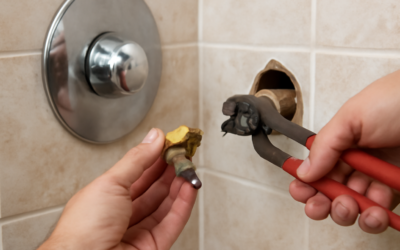
Tub stems follow the same process, but because they are recessed in the wall, you will remove the handle, escutcheon and sleeve, then use a deep socket to unscrew the stem. Shut off water at the access panel or main supply first. If the stem threads are corroded or you can see cracks in the valve body, you may need to replace the bathtub faucet valve itself. That is a bigger job: it requires opening the wall from behind or through the tile, cutting out the old valve and soldering or crimping a new one. Many homeowners hire a plumber for this, especially if they are upgrading to a pressure-balance valve for scald protection.
For a sink faucet valve that is worn beyond stem replacement, it is often cheaper and simpler to replace the whole faucet. Most standard sink faucets cost $60 to $250 and can be swapped in an afternoon.
Troubleshooting After Installation
Faucet still drips. The seat may be worn even though the stem is new. Replace the seat.
Water leaks around the handle. The bonnet nut may need tightening, or the stem O-ring may be pinched. Remove, regrease and reinstall.
Handle turns the wrong way. You likely installed the hot stem on the cold side or vice versa. Swap them.
Handle does not fit. The spline count does not match. Return the stem and find the exact part, or buy a matching handle kit.
Low flow after repair. Debris may have loosened during the work. Remove and clean the aerator.
Costs and When to Call a Plumber
DIY faucet stem replacement typically costs $8 to $30 per stem, plus a socket set or seat wrench if you do not own them. A plumber usually charges about $150 to $350 to replace stems on a sink or tub faucet, depending on location and difficulty. Replacing a bathtub faucet valve inside the wall can range from several hundred dollars to over $1,000 with tile and drywall repair.
Call a plumber if the valve body is cracked, the stem breaks off inside the valve, the shutoff valves fail to close, you see leaks inside the wall, or you want to replace an in-wall tub valve. Those jobs involve soldering or crimping connections and may need a permit and inspection.
Frequently Asked Questions
How do I know if my faucet stem needs replacing?
A drip that continues after a new washer, a handle that spins without stopping water, stripped splines or visible corrosion on the stem all point to replacement.
Are faucet stems universal?
No. Stems vary by length, thread size and spline count. Match the old stem exactly or use the manufacturer’s model number.
Can I replace a faucet stem without shutting off the water?
No. Always shut off the supply valves or the main water line. Removing a stem under pressure will spray water everywhere.
How long does a faucet stem last?
Many compression stems last 10 to 20 years depending on water hardness and use. Ceramic disc stems often last longer but can fail from sediment.