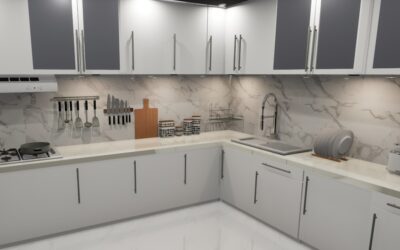
A single dropped paint can on hardwood costs roughly $400 to spot-refinish, while a $25 roll of construction paper would have absorbed it without a mark. That is the math that drives the entire flooring cover category — temporary and permanent products designed to shield, hide, or upgrade an existing floor without ripping it out. The right cover saves either money or square footage of replacement, and the wrong one traps moisture and creates a worse problem than it solved.
- Two Categories of Flooring Cover
- Temporary Construction Covers
- When Temporary Covers Make Sense
- Permanent Overlay Covers
- Pros of the Overlay Approach
- Cons and Real Risks
- Specific Product Picks
- Installation Tips That Save Time
- Maintenance Considerations
- Common Mistakes to Avoid
- Bottom Line on Flooring Cover
Two Categories of Flooring Cover
The first is temporary protection during construction, painting, moving, or events. These products go down for hours or weeks and come up clean. The second is permanent or semi-permanent overlays — vinyl, laminate, or area rugs installed over an existing floor as a long-term solution. The materials, costs, and installation realities are completely different between the two.
Temporary Construction Covers
- Ram Board — heavy 38-mil cellulose board, $0.50-0.80 per sq ft, the contractor standard for hardwood protection during remodels
- Construction paper — red rosin or builder’s paper at $0.05-0.10 per sq ft, OK for paint but wets through quickly
- Surface Shields Floor Shield — adhesive-backed plastic film, $0.15-0.25 per sq ft, sticks down so it does not slide
- Carpet film mask — 24-36 inch self-adhesive plastic for new carpet during final trades, $0.10-0.20 per sq ft
- Corrugated plastic sheets — reusable Coroplast at $0.40-0.70 per sq ft, common for moves and event setups
When Temporary Covers Make Sense
During a kitchen remodel that takes 6-10 weeks, leaving site-finished hardwood exposed to subcontractor boots and tile saws guarantees damage. Ram Board with seam tape and edge tape costs $300-500 for a typical first floor and saves $2,000-4,000 in spot refinishing. The same logic applies during interior painting, when oil-based primer drips can stain finished floors permanently.
For moves, plastic carpet film stops the worst of the dirt from a rainy moving day. Self-adhesive products beat loose plastic — anything that slides will come up under a moving dolly and pinch the carpet pile.
Permanent Overlay Covers
Floating LVP and laminate are the two dominant overlay materials. They install over existing tile, vinyl, hardwood, or even concrete with minimal prep, and they add only 5-10mm of height to the finished floor.
- Floating LVP/SPC — $2.50-5.00 per sq ft material, click-lock over almost any flat substrate, fully waterproof
- Floating laminate — $1.50-3.50 per sq ft material, similar install, less moisture tolerance
- Peel-and-stick vinyl planks — $1.00-2.50 per sq ft, fastest to install but shows every subfloor flaw
- Carpet tiles — Flor and Interface offer 19.7×19.7 inch options at $3-7 per sq ft, lay over existing flat surfaces
- Engineered wood overlay — 3/8 inch products designed to glue over existing flat floors, $5-9 per sq ft
Pros of the Overlay Approach
Speed beats demolition. A 600 sq ft living room overlay with LVP installs in 1-2 days with two people. The same room with full demo, subfloor prep, and new flooring takes 4-6 days. Disposal alone — often $200-400 for hauling old tile — disappears.
Cost drops by 30-50% versus tear-out plus replace. You skip the demolition labor, the subfloor patching, and the dumpster rental. Asbestos VAT or 9×9 vinyl tile floors from pre-1980 homes are especially good candidates because the abatement cost alone can run $4-8 per sq ft.
Cons and Real Risks
Height matters. Adding 8mm at every doorway means appliances may not fit back under counters, dishwashers may not pull out, and door swing clearance changes. Measure the toe kick under your fridge before committing.
Trapped moisture is the silent killer. Covering an old vinyl floor that already has moisture pushing up from a slab traps that vapor and grows mold under the new floor within 6-18 months. Run a 72-hour calcium chloride test or a Tramex moisture meter before any overlay.
Subfloor flatness limits matter. Most floating systems require the substrate to be within 3/16 inch over 10 feet. Older homes with cupped hardwood or lippage tile usually need self-leveling cement first, which adds $1.50-3.00 per sq ft.
Specific Product Picks
- Best contractor-grade temporary: Ram Board with Trimaco Easy Mask Painter’s Tape at edges
- Best DIY-grade temporary: 36 inch carpet protection film from Surface Shields
- Best overlay for waterproof rooms: Coretec Pro Plus or Mannington ADURA Max
- Best budget overlay: Lifeproof Rigid Core LVP from Home Depot
- Best premium overlay: Mirage Lock floating engineered hardwood
Installation Tips That Save Time
For temporary covers, run product 6 inches up the baseboards in painter’s tape to catch splatter. Tape every seam — wind from open windows lifts unsealed Ram Board overnight.
For overlays, leave 1/4 inch expansion gap at every wall, every transition, and around any column or pipe. Undercut door jambs with a flush-cut saw rather than scribing planks around them — the result looks 10x more professional. Plan transitions to existing rooms with T-molding or reducer strips chosen before the install starts.
Maintenance Considerations
Temporary covers need daily inspection during a project. Punctures get tape patches before grit works through. Permanent overlays follow the maintenance routine of whatever new material went down — sweeping, occasional damp mop, felt furniture pads.
Common Mistakes to Avoid
Using cheap construction paper as floor protection during a kitchen remodel is the classic false economy. Builder’s paper tears under tool boxes, soaks through with one spilled cup of coffee, and saves you $100 against the $2,000-4,000 in spot refinishing it does not prevent. Spend the extra on Ram Board.
Skipping moisture testing before an overlay is the second classic failure. Slabs that look dry can release 10-15 lbs of moisture per 1,000 sq ft into a sealed overlay system. Buy a $20 calcium chloride kit, test for 72 hours, and document the result before committing to any overlay.
Bottom Line on Flooring Cover
For short-term protection, $300-500 of Ram Board is the cheapest insurance on any home renovation. For long-term replacement, a quality LVP overlay over a flat, dry subfloor delivers a $4-8 per sq ft transformation that looks original. Both approaches work; the failure mode is using one when you needed the other.
Prefer to explore on your own?
See how new flooring looks in your actual room in seconds — free, no signup.
Try the free Floor Studio →