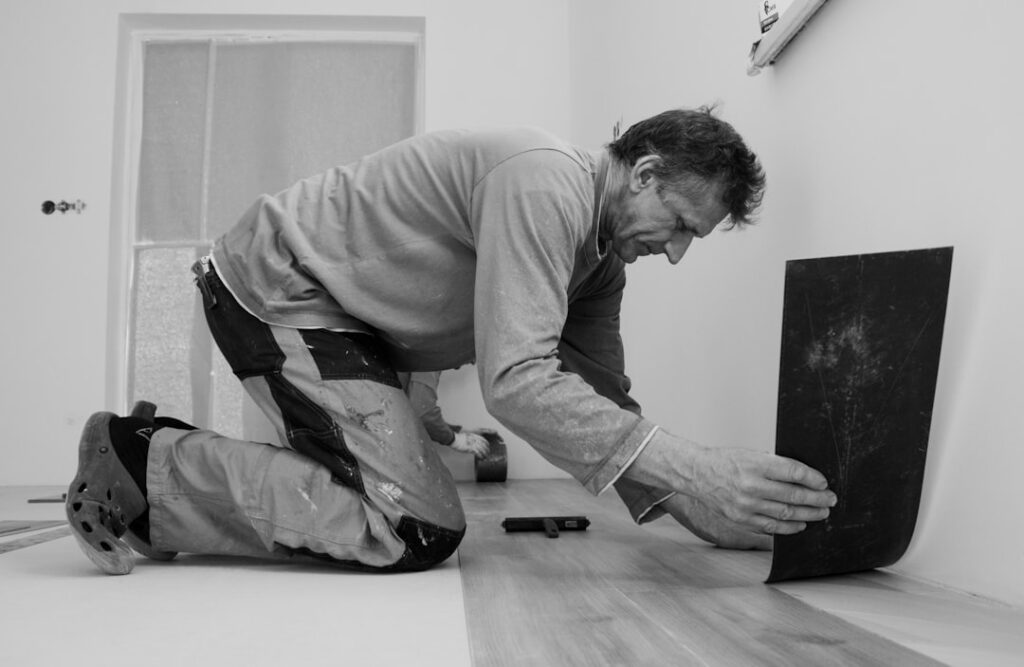
Flooring installation in Chicago, IL often means working around the city’s older buildings and its big seasonal swings. A vintage two-flat, a brick bungalow, a garden unit, and a downtown high-rise condo each call for a different approach. Homeowners here choose hardwood floors to match original oak, luxury vinyl plank for basements and rentals, and tile for kitchens, baths, and mudroom entries that see slush and road salt all winter.
Our network connects homeowners across the Greater Chicago area with vetted flooring installers. Describe your project once, get free quotes from several contractors, and compare before you commit.
- Our Flooring Installation Services in Chicago
- Chicago Housing and What Lies Under the Floor
- Cold Winters, Humid Summers, and Wood Movement
- Radiators and Radiant Heat
- Salt, Slush, and Entryways
- Safety in Older Chicago Homes
- Cost Factors in Chicago
- When to Book
- How It Works
- Helpful Flooring Guides
- Frequently Asked Questions
- How much does flooring installation cost in Chicago?
- How long does flooring installation take?
- Do I need to be home during installation?
- Are your Chicago flooring contractors licensed?
- Do you offer free estimates in Chicago?
- What flooring works best in a Chicago basement or garden unit?
- Does my condo require special underlayment?
- Can new hardwood match my original oak floors?
Our Flooring Installation Services in Chicago
- Hardwood floor installation
- LVP/vinyl plank installation
- Tile installation
- Carpet installation
- Laminate flooring installation
- Engineered wood installation
- Epoxy flooring
- Commercial flooring
Chicago Housing and What Lies Under the Floor
Bungalows, two-flats, and greystones
Much of the city’s housing stock dates from the late 1800s through the 1930s. Brick bungalows across the Bungalow Belt, two-flats and three-flats, and greystones in neighborhoods like Logan Square, Pilsen, and Lakeview usually have wood joists with plank subfloors and narrow oak strip flooring on top. Over a century, floors settle, joists sag, and old repairs leave uneven patches. A good installer will check for bounce and level before laying new flooring and may add a plywood underlayment.
Garden units and basements
Garden apartments and finished basements sit partly below grade on concrete. They can be damp, especially after heavy spring rain or snowmelt. Moisture testing the slab is a must, and waterproof LVP or tile is usually the safest choice. Avoid solid hardwood and standard laminate below grade.
High-rise and mid-rise condos
Downtown, River North, the South Loop, and the lakefront have many concrete condo towers. Associations commonly require sound-rated underlayment for hard flooring, approved contractor insurance certificates, elevator reservations, and specific work hours. Get your building’s flooring policy in writing before collecting quotes. Some buildings require board approval of the underlayment product.
Cold Winters, Humid Summers, and Wood Movement
Chicago has a humid continental climate: cold, snowy winters and warm, humid summers. Indoor air swings widely across the year. Radiator and forced-air heat can push winter humidity well below the 30 to 50 percent range that wood floors prefer, and summer humidity can push it well above.
- Expect solid hardwood to show small gaps in winter and close up in summer. That movement is normal.
- Engineered wood is more stable through the swings and works well over concrete in condos.
- A whole-house humidifier helps protect wood floors and trim during the heating season.
- Materials should acclimate in the home at normal living conditions before installation, not in a cold garage or unheated porch.
Radiators and Radiant Heat
Many vintage Chicago apartments still use cast iron radiators. Installers need to work around their feet and pipes, and sometimes a radiator must be lifted or disconnected by a heating contractor to lay flooring underneath. Ask whether that is in the quote. If you are adding radiant floor heat in a bathroom or basement, choose a flooring product rated for it and follow the warm-up schedule your installer gives you after the job.
Salt, Slush, and Entryways
Rock salt and calcium chloride tracked in from sidewalks can etch finishes and leave a white film. Porcelain tile or durable LVP works well in back entries, mudrooms, and kitchens that lead to the yard or alley. Pair any floor with a good boot tray and mats at every door during winter.
Safety in Older Chicago Homes
Many Chicago homes were built long before 1978, so trim, doors, and older floor paint may contain lead. Demolition and sanding should follow lead-safe practices. Basements and kitchens remodeled in the mid-twentieth century often have resilient tile or black mastic that may contain asbestos. Test these materials before removing them, or ask about covering them in place.
Cost Factors in Chicago
Chicago labor costs reflect a large urban market. Beyond the material itself, a few local factors push quotes up:
- Walk-up stairs in two-flats and three-flats, where every box and bag goes up by hand.
- Condo elevator booking, protective padding, and limited work windows.
- Street parking, alley access, and debris disposal. A dumpster on the public way may need city permission, so ask who handles it.
- Leveling old, uneven joists before new floors can go down.
Ask for prep, removal, and disposal to be listed separately so you can compare bids. Our flooring cost guide outlines typical ranges by material.
When to Book
Late spring and early fall are the easiest times for flooring work in Chicago. Humidity is moderate, windows can be opened for ventilation, and crews are not fighting snow or extreme heat. Winter installs are fine indoors, but plan for longer acclimation, and keep the heat and humidity steady.
How It Works
- Request a free quote: Tell us about your project, room size, and flooring preferences.
- Get matched with local pros: We connect you with up to 3 licensed flooring installation contractors in the Greater Chicago area.
- Compare and choose: Review quotes, credentials, and reviews. Pick the installer that fits your budget and timeline.
Helpful Flooring Guides
These guides cover materials, pricing, and installation basics:
Frequently Asked Questions
How much does flooring installation cost in Chicago?
It depends on the material, the square footage, and building access. LVP and laminate usually cost the least, while hardwood and tile cost more. Leveling old floors, walk-up stairs, and condo building requirements all add to the price. Free quotes from local installers give the best estimate.
How long does flooring installation take?
Most residential projects take 1 to 5 days. Older homes needing subfloor repair and condos with restricted hours can take longer. Your installer will give you a timeline during the estimate.
Do I need to be home during installation?
Be available at the start and for the final walkthrough. In condo buildings, you may also need to coordinate access with building staff. Many Chicago installers can work while you are at work once access is arranged.
Are your Chicago flooring contractors licensed?
Yes. Professionals in our Chicago, IL network are licensed, insured, and background-checked. We verify credentials before connecting them with homeowners.
Do you offer free estimates in Chicago?
Yes. Quotes from our Chicago flooring professionals are free with no obligation, and most contractors measure in your home at no cost.
What flooring works best in a Chicago basement or garden unit?
Waterproof LVP and porcelain tile are the most reliable below grade. Test the slab for moisture first, and fix any drainage or foundation leaks before installation.
Does my condo require special underlayment?
Many Chicago condo associations require sound-rated underlayment beneath hard floors in upper units. Check your building rules and share them with installers so their quotes include the right product.
Can new hardwood match my original oak floors?
Often, yes. Many older Chicago homes have narrow red or white oak strip flooring, which is still made today. A skilled installer can weave new boards into old ones and refinish the whole floor so it looks uniform.
Prefer to explore on your own?
See how new flooring looks in your actual room in seconds — free, no signup.
Try the free Floor Studio →