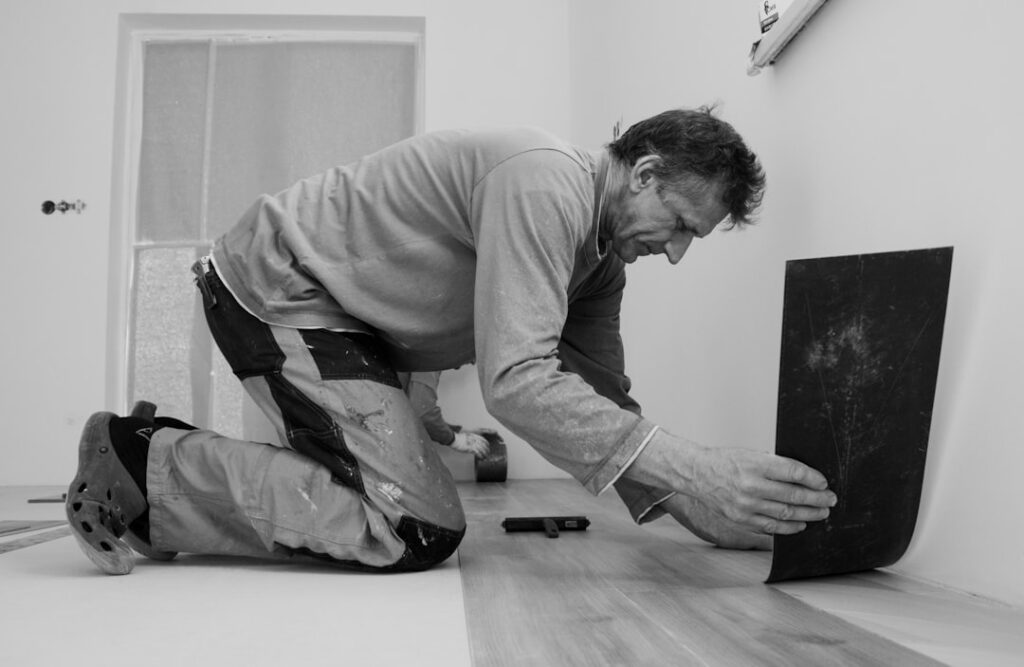
Flooring installation in San Francisco, CA comes with a few local twists: century-old Victorians and Edwardians, row houses built over garages, steep streets with almost no parking, and condo buildings with strict sound rules. Many owners choose hardwood floors that match the city’s classic oak and fir, luxury vinyl plank for in-law units and rentals, and tile for kitchens and baths.
Our network connects homeowners across the Greater San Francisco area with vetted flooring installers. Share your project, get free quotes from several contractors, and compare before you commit.
- Our Flooring Installation Services in San Francisco
- San Francisco Homes and Their Floors
- Fog, Mild Temperatures, and Wood Stability
- Seismic Retrofits and Floor Work
- Parking, Hills, and Access Costs
- Questions to Ask San Francisco Installers
- Permits, Safety, and Older Materials
- How It Works
- Helpful Flooring Guides
- Frequently Asked Questions
- How much does flooring installation cost in San Francisco?
- How long does flooring installation take?
- Do I need to be home during installation?
- Are your San Francisco flooring contractors licensed?
- Do you offer free estimates in San Francisco?
- Can new flooring match my Victorian's fir floors?
- Does my condo need special underlayment?
- Is my garage-level floor too damp for wood?
Our Flooring Installation Services in San Francisco
- Hardwood floor installation
- LVP/vinyl plank installation
- Tile installation
- Carpet installation
- Laminate flooring installation
- Engineered wood installation
- Epoxy flooring
- Commercial flooring
San Francisco Homes and Their Floors
Victorians and Edwardians
Homes in neighborhoods like the Haight, Noe Valley, the Mission, and Pacific Heights often date from the late 1800s and early 1900s. Original floors may be old-growth Douglas fir, sometimes with oak added in front rooms later. These houses have settled over time, so floors may slope and subfloors may need shimming or new plywood before installation. Installers should check for soft spots, especially near old bathrooms and kitchens.
Sunset and Richmond row houses
Thousands of homes in the Outer Sunset, Parkside, and Richmond districts were built in the 1920s through the 1940s with the living space over a ground-floor garage. They commonly have oak strip floors on wood joists. The garage below can be cold and damp, so ask about insulating under the floor and adding a vapor retarder if you are installing new wood.
Condos and TICs
From SoMa towers to converted flats held as tenancy-in-common, shared buildings usually have rules on flooring. Many require sound-rated underlayment, written approval before installing hard floors, and set work hours. Gather your building’s requirements before collecting quotes.
Fog, Mild Temperatures, and Wood Stability
San Francisco has a cool marine climate. Summers on the west side are often foggy and damp, while neighborhoods to the east get more sun. Winters are mild with most rain falling between roughly November and March. Many homes have little or no air conditioning and only light heating, so indoor humidity tracks outdoor conditions more closely than in other cities.
- Wood floors here rarely see extreme dryness, but foggy neighborhoods can run damp. Keeping indoor relative humidity roughly between 30 and 50 percent with a dehumidifier helps prevent cupping.
- Engineered wood handles damp spells well and works over concrete in newer buildings.
- Acclimate materials in the actual room, with windows closed and normal heat, for the time your installer recommends.
- September and October are often the city’s warmest, driest months, a good window for wood and finish work.
Seismic Retrofits and Floor Work
Many older homes have had or will have seismic retrofit work, which can involve the garage level and cripple walls. If a retrofit is planned, schedule it before new flooring so any structural changes or floor leveling happen first. Ask your installer whether the subfloor fastening is adequate, since loose subfloors squeak and can shift.
Parking, Hills, and Access Costs
Logistics drive costs in San Francisco more than in most places. Crews need to park vans and unload on steep, crowded streets, and some jobs require reserving curb space or paying for temporary parking. Flats up long stair runs, narrow Victorian stairways, and condo elevator booking all add labor time. Disposal of old flooring is also more involved.
When you compare bids, ask each installer to list access, protection of common areas, removal, disposal, and subfloor prep as separate items. Our flooring cost guide explains typical ranges by material, and you should expect Bay Area labor to sit toward the higher end.
Questions to Ask San Francisco Installers
- How will you handle parking and unloading on my block?
- Will you check and correct floor slope before installing, and how much leveling is realistic in an older house?
- Have you worked in my building or with my HOA’s underlayment rules before?
- How will you protect stairs, banisters, and common hallways?
- Can you weave new boards into existing oak or fir where rooms meet?
Permits, Safety, and Older Materials
Simple floor replacement usually does not need a building permit, but structural repairs, new subfloors over large areas, or work tied to a larger remodel might. Check with the city or your contractor. Homes built before 1978 may have lead paint on trim, and older vinyl tile, sheet flooring, or black mastic may contain asbestos. Test before demolition.
How It Works
- Request a free quote: Tell us about your project, room size, and flooring preferences.
- Get matched with local pros: We connect you with up to 3 licensed flooring installation contractors in the Greater San Francisco area.
- Compare and choose: Review quotes, credentials, and reviews. Pick the installer that fits your budget and timeline.
Helpful Flooring Guides
Read more about materials, pricing, and installation:
Frequently Asked Questions
How much does flooring installation cost in San Francisco?
Cost depends on the material, the size of the space, subfloor condition, and access. Bay Area labor is among the higher-priced markets in the country, and parking, stairs, and condo rules add more. Free quotes from local installers give you the clearest picture.
How long does flooring installation take?
Most projects take 1 to 5 days. Older homes that need subfloor work and condos with limited work hours can take longer. Your installer will give you a timeline at the estimate.
Do I need to be home during installation?
Be there at the start and for the walkthrough. You may also need to arrange parking, building access, or elevator time ahead of the first day.
Are your San Francisco flooring contractors licensed?
Yes. Professionals in our San Francisco, CA network are licensed, insured, and background-checked. We verify credentials before connecting them with homeowners.
Do you offer free estimates in San Francisco?
Yes. Quotes from our San Francisco flooring professionals are free with no obligation, and most contractors measure in your home at no cost.
Can new flooring match my Victorian’s fir floors?
Matching old-growth fir is tricky, since new fir looks different. Reclaimed fir is the best match. Many owners use new wood only in rooms that do not connect directly with the original floor.
Does my condo need special underlayment?
Most likely. Many San Francisco condo and TIC buildings require sound-rated underlayment beneath hard floors. Ask your HOA for the requirements and share them with installers.
Is my garage-level floor too damp for wood?
Ground-level rooms in foggy districts can be damp. Test the slab, use a vapor barrier, and consider LVP or tile instead of wood for in-law units at garage level.
Prefer to explore on your own?
See how new flooring looks in your actual room in seconds — free, no signup.
Try the free Floor Studio →