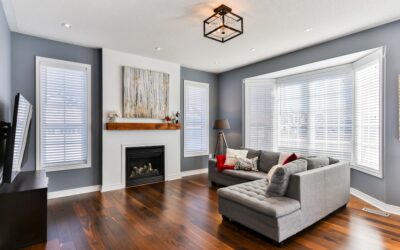
“Timber flooring” in Australian and British usage refers to what Americans call solid and engineered hardwood. The terminology change tracks with regional preferences — Australia uses jarrah, blackbutt, and spotted gum where the US uses oak; the UK leans toward European oak and ash. This flooring timber guide covers the species, grades, and install methods that matter when shopping outside the US oak-dominated market or sourcing premium imports for an American project.
Australian Timber Species
Australia produces some of the hardest residential flooring timber in the world. Five species dominate:
- Jarrah — Janka 1900, deep red-brown, classic Western Australian hardwood
- Blackbutt — Janka 1410, pale gold to honey, popular in modern coastal homes
- Spotted Gum — Janka 1660, swirling figure with dramatic grain
- Sydney Blue Gum — Janka 1100, pink-to-rose tones
- Tasmanian Oak — Janka 1010, marketing name for several similar Tas species
Janka hardness over 1300 means furniture indentations are minor concerns and resilience to pet claws is strong. Most Australian-grown timber is harder than American oak (Janka 1290) and significantly harder than European oak (Janka 1120).
European Oak and Ash
European hardwood markets are dominated by oak (Quercus robur and Q. petraea — English oak). European oak grows slower than American red or white oak, producing tighter rings and more uniform pale color. Brands like Junckers (Denmark), Boen (Norway), Kahrs (Sweden), and Lauzon (Canada, French-influenced) source primarily from European forests.
European ash, beech, and walnut also appear in premium European hardwood lines. Pricing in £/€ runs slightly higher than American hardwood but the wood is typically more dimensionally stable and takes finish more uniformly.
Solid vs Engineered Timber
Solid timber flooring is one piece of wood from face to back — typically 19mm (3/4 inch) thick in Australia, 18mm in the UK, 3/4 inch in the US. Engineered timber has a wood veneer (3-6mm) bonded to a multi-ply or HDF core (10-15mm total).
Solid lasts 80 to 100+ years with multiple sand-and-finishes. Engineered lasts 30 to 60 years with limited refinishing. The trade-off is dimensional stability — engineered moves much less with humidity changes, making it the right choice for radiant-heated floors, basements, and homes with seasonal humidity swings.
Grades and Quality
Australian timber grades:
- Select — minimal feature variation, prime grain
- Standard / Medium feature — some knots, gum vein, color variation
- Feature / High feature — visible character, knots up to 35mm, gum veins
- Rustic / Country — full character, large knots, dramatic figure
European oak grades use similar tiering: Select / Prime / Natural / Rustic. American grades use Clear / Select / #1 Common / #2 Common.
Higher grade is more expensive but not necessarily better-looking. Rustic and feature grades have visual character that prime grades lack and are often the right choice for traditional, farmhouse, and country homes.
Finish Options
Three finish categories cover most modern timber installations:
- Polyurethane (oil-based or water-based) — durable surface coating, 5 to 7-year recoat cycle, glossy to matte sheen
- Hardwax oil (Osmo Polyx, Rubio Monocoat, Tried & True) — penetrating oil with wax, natural matte finish, easy spot-repair
- Lacquered factory finish — UV-cured aluminum oxide, lasts 10 to 15 years before recoat
Site-finished polyurethane is the most common in custom installs. Pre-finished aluminum oxide is the most durable for high-traffic family homes. Hardwax oil is the choice for designer aesthetics where a hand-rubbed appearance matters.
Installation Methods
Three install methods for solid and engineered timber:
- Nail-down — solid hardwood over plywood subfloor, traditional method, mostly for solid only
- Glue-down — solid or engineered over concrete or wood subfloor, structural adhesive
- Floating — engineered timber clicks together, sits on underlayment without attachment to subfloor
Solid hardwood over concrete is generally not recommended due to moisture transmission. Engineered hardwood with vapor barrier underlayment handles concrete subfloors safely. Always acclimate solid and engineered to the home’s normal humidity for 5 to 7 days before install.
Sustainability Considerations
Australian and European timber are typically sustainably harvested under government-regulated forestry programs. Look for FSC (Forest Stewardship Council) or PEFC (Programme for the Endorsement of Forest Certification) certification on the box.
Reclaimed timber is the most sustainable option — old-growth wood salvaged from demolished buildings, with the carbon impact of new logging avoided. Specialty mills (Carlisle Wide Plank, Olde Wood) supply reclaimed at premium prices ($14 to $28 per sq ft for certified reclaimed).
Pricing Comparison
Material costs vary significantly by region:
- Australia (AUD/sqm): $80-$150 for engineered, $100-$200 for solid jarrah/blackbutt
- UK (£/sqm): £40-£90 for engineered oak, £70-£150 for solid premium
- US (USD/sq ft): $4-$12 for engineered, $5-$15 for solid hardwood
Installation adds $3-$8 per sq ft equivalents in each region. Total installed cost for premium engineered timber typically lands $9 to $20 per sq ft equivalent across markets.
Maintenance
Timber maintenance is consistent across regions: dust-mop daily, vacuum and damp-mop weekly with timber-safe cleaner (Bona, Method, or hardwax-oil-specific Osmo cleaner depending on finish), avoid water and steam, recoat every 7 to 10 years. Solid timber lasts 50 to 100 years with this routine; engineered 25 to 60 years.
Prefer to explore on your own?
See how new flooring looks in your actual room in seconds — free, no signup.
Try the free Floor Studio →