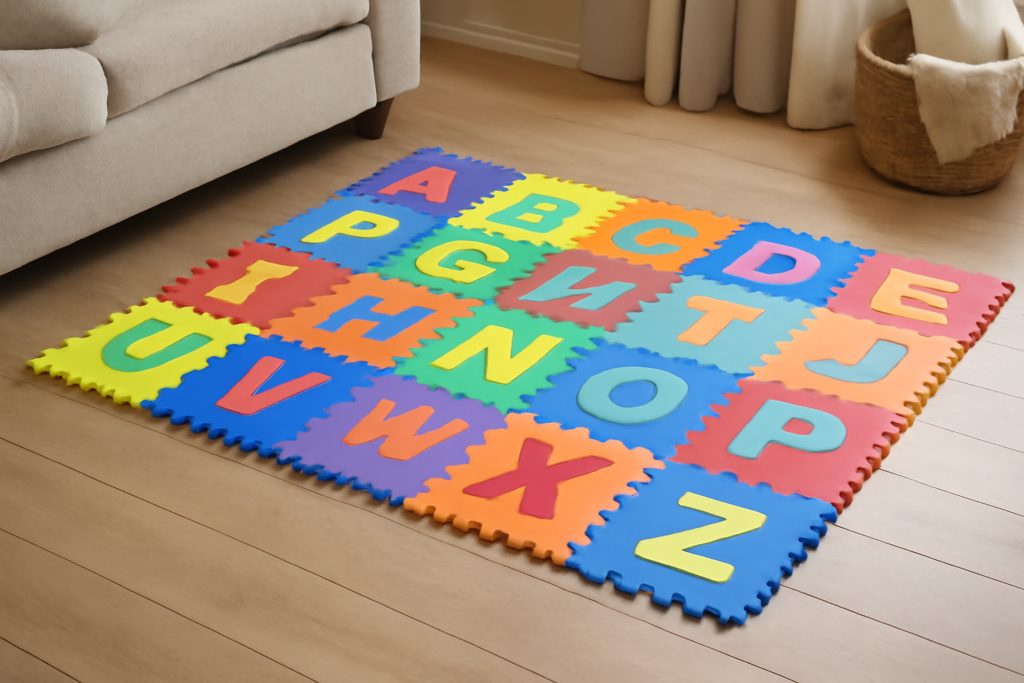
A foam floor alphabet puzzle mat is one of those rare kid products that does two jobs at once: it cushions tumbles and turns letter recognition into a hands-on game. Interlocking foam tiles snap together like a jigsaw, each square printed or embossed with a letter and often a pop-out number or character. Before you fill a playroom with them, though, it pays to understand what these mats are made of, which safety certifications matter, and how to size a layout that actually covers the play zone. This guide covers materials, safety, sizing, cleaning, and the specific features worth paying for.
- What a Foam Alphabet Puzzle Mat Actually Is
- Safety First: What to Look For
- Sizing and Layout: Cover the Whole Play Zone
- What These Mats Cost
- Cleaning and Maintenance
- Where These Mats Work Best
- Foam Mat vs. Other Soft Flooring
- Pros and Cons at a Glance
- How to Choose the Right Mat
- Frequently Asked Questions
What a Foam Alphabet Puzzle Mat Actually Is
Most alphabet mats are made from EVA foam, short for ethylene-vinyl acetate. EVA is the same lightweight, closed-cell foam used in flip-flop soles and yoga blocks. It is soft enough to cushion a fall, firm enough to crawl and walk on, and water-resistant so spills wipe away. A typical set includes 26 lettered tiles, 10 numbered tiles, and border pieces, giving you 36 squares that cover roughly 36 square feet when each tile measures about 12 by 12 inches.
The pop-out letters are a feature and a caveat. Kids love pushing the letters out to play with them, but those small pieces become a choking and loss hazard for children under three. Many parents leave the letters snapped in place for the youngest kids and only introduce the pop-outs once the child is past the mouthing stage.
Safety First: What to Look For
Because babies crawl, drool, and chew on these mats, material safety is the headline concern. Cheap imported foam has historically been the source of formamide worries, a compound sometimes used as a foaming agent. Reputable mats are now tested and certified to be free of it.
- Non-toxic certification — look for ASTM F963 compliance, the U.S. toy safety standard.
- Phthalate, BPA, and lead free — printed on the packaging of quality mats.
- Formamide free — especially important for foam sold to European and safety-conscious markets.
- CPSIA compliance — the U.S. Consumer Product Safety Improvement Act standard for children’s products.
Give a new mat the sniff test. A strong chemical odor means off-gassing; air the tiles out in a ventilated room for a day or two before use, and be skeptical of any smell that does not fade. A faint foam scent is normal, a harsh solvent smell is not.
The Choking Hazard Reality
The pop-out letters are small enough to fail the standard choke-tube test. For children under three, either buy a solid-tile mat without pop-outs or keep the letters pressed firmly in place and supervise play. This is the single most important safety decision with these products.
Sizing and Layout: Cover the Whole Play Zone
The mistake most parents make is buying one 36-tile set and discovering it barely covers a corner. Measure your play area in feet and match it to tile coverage. A standard 12-inch tile equals one square foot, so a 6-by-6-foot zone needs 36 tiles. Larger play areas or full nursery floors may need two or three sets.
- Measure the length and width of the space in feet.
- Multiply to get square footage.
- Divide by the coverage per tile (usually 1 sq ft) to get tile count.
- Add border pieces for clean edges against walls or open floor.
Thickness matters for cushioning. Budget mats run about 0.4 inches thick, while premium mats reach 0.55 to 0.6 inches. Thicker foam absorbs harder falls and feels more comfortable underfoot, which is worth the upgrade over hardwood or tile subfloors.
What These Mats Cost
Pricing is refreshingly reasonable. A basic 36-piece EVA alphabet set runs $20 to $35. Thicker, certified non-toxic sets from established brands cost $35 to $60. Extra-large or extra-thick mats designed to double as play-and-exercise surfaces can reach $70 to $100. Given that a set covers 36 square feet, the cost per square foot lands around $0.60 to $1.70, cheaper than nearly any permanent flooring.
Cleaning and Maintenance
EVA foam is easy to keep clean, which is a big part of its appeal for messy toddlers.
- Wipe daily spills with a damp cloth and a drop of mild dish soap.
- For a deeper clean, disassemble tiles and wash them in the tub with warm, soapy water.
- Avoid bleach and harsh solvents, which degrade the foam and can leave residue.
- Air dry completely before reassembling to prevent trapped moisture and mildew underneath.
Watch for moisture getting trapped between the tiles and the floor. Lift and air the mat every few weeks, especially over hardwood, since standing humidity can dull a wood finish or encourage mold in the seams.
Where These Mats Work Best
Alphabet puzzle mats shine in dedicated play zones, but they earn their keep in several spots around the house. In a nursery or playroom, they turn a hard floor into a safe crawl-and-tumble surface. In a basement, they add insulation against a cold concrete slab, which makes floor play more comfortable in winter. Parents also use them under high chairs and craft tables to catch spills, and grandparents keep a set that snaps together for visits and stores flat in a closet between them.
They also travel well. Because the tiles are lightweight and interlock without adhesive, you can pack a 9-tile square for a hotel room or a relative’s house and give a crawling baby a familiar, cushioned zone anywhere. The waterproof foam wipes clean after the trip and stacks flat in a suitcase.
Foam Mat vs. Other Soft Flooring
Compared with a plush area rug, a foam mat is easier to wipe clean, cushions falls better, and will not trap as much dust and dander, which matters for allergy-prone kids. Against rubber play tiles, EVA foam is softer and warmer underfoot but less durable under heavy furniture. Padded playmats that fold like a book offer a seamless surface with no crumbs in the cracks, but they lack the educational letters and cannot be resized tile by tile. For most families balancing safety, learning value, and price, the interlocking alphabet mat hits the sweet spot.
Pros and Cons at a Glance
Advantages
- Soft, cushioned surface that reduces bump-and-fall injuries.
- Doubles as an early-learning tool for letters and numbers.
- Waterproof, wipeable, and lightweight to reconfigure.
- Inexpensive and easy to expand tile by tile.
Drawbacks
- Pop-out pieces are a choking hazard for the youngest kids.
- Foam can dent under heavy furniture or sharp toy wheels.
- Low-quality mats may off-gas or lack safety certification.
- Seams can trap crumbs and moisture if not cleaned.
How to Choose the Right Mat
Prioritize certification over price. A mat that clearly lists ASTM F963, phthalate-free, and formamide-free is worth the few extra dollars. Match thickness to your subfloor: go thicker over tile, concrete, or hardwood, and standard thickness is fine over carpet. Buy enough tiles to cover the real play footprint the first time, since matching foam color and print across separate orders can be frustrating. If your child is under three, choose solid tiles or commit to supervising pop-out play.
Frequently Asked Questions
Are foam alphabet puzzle mats safe for babies?
Quality mats made from certified non-toxic EVA foam are safe for supervised play. The main risk is the small pop-out letters, which should stay in place or be removed for children under three. Always verify ASTM F963 and formamide-free labeling before buying.
How many tiles do I need for a nursery?
Measure the play area in square feet and match it to tile coverage, since each 12-inch tile covers one square foot. A single 36-piece set covers a 6-by-6-foot zone, so most nurseries need one or two sets.
Do foam mats damage hardwood floors?
Generally no, but trapped moisture underneath can dull a finish over time. Lift and air the tiles every few weeks and wipe up spills promptly to protect the wood beneath.
How do I get rid of the chemical smell?
Air the tiles out in a well-ventilated room for one to two days before use. A faint foam odor is normal and fades, but a harsh solvent smell that lingers signals a low-quality mat you should return.
A foam alphabet puzzle mat is an easy win for any home with young kids: cheap, cushioned, and quietly educational. Choose a certified non-toxic set, buy enough tiles to cover the whole play zone, and mind the pop-out pieces with the littlest crawlers, and you will get years of safe, colorful use out of it.
Prefer to explore on your own?
See how new flooring looks in your actual room in seconds — free, no signup.
Try the free Floor Studio →